Showing posts with label Constitution. Show all posts

Saturday, August 12, 2023

Ohio Issue 1 Defeated-- What Does It Mean?

The August 8 special election in Ohio produced a convincing victory for the opponents of Issue 1. If it had passed, Issue 1 would have increased the size of the majority necessary to amend the Ohio Constitution from the current 50% + 1 vote majority to a 60% majority.  In view of the steeper requirements of most other states, and the two-thirds majority necessary to amend our U.S. Constitution, the call for a 60% majority was certainly reasonable.

In addition to increasing the majority to 60%, Issue 1 would have required that any initiated petition to amend the Ohio Constitution after January 1, 2024 must contain the signatures of at least 5% of the population in each Ohio county.
 In this way, Issue 1 had aimed to ensure that all counties in Ohio, not just urban counties, can have a voice in the democratic process.  [Read more, click HERE.]

Were Ohio Voters Confused?
Admittedly, many of us were disappointed that Issue 1 failed by a wide margin, 57% to 43%.  Our first reaction was to believe that the vote did not reflect the values that a majority of Ohioans place on the sanctity of the life of unborn children, and of their mothers and fathers.  After all, both opponents and supporters focused their appeals on protecting the Ohio Constitution and suggested that, if we don’t vote their way, the will of Ohioans will cease to be represented. Because abortion was highlighted less by both sides, we thought the outcome might represent a confused electorate rather than their views on abortion.

However, when we looked at the polling data prior to the election, we discovered that the “confused voter theory” would not hold water.  Opinion polls taken prior to August 8 revealed that a majority of Ohioans had already declared their opposition to the Heartbeat Law.  In fact, a USA TODAY Network/Suffolk University poll (Click HERE.), conducted July 9-12, 2023 with a margin of error of + 4.4%, indicated that 58% of Ohio voters supported the abortion rights proposal that may be on the November, 2023 ballot, 32% opposed it, and 10% were undecided.   As noted earlier, an almost identical 57% of Ohioans voted against Issue 1.  Also, and Emerson College Poll (Click HERE.) conducted in October, 2022 registered a similar result with 54% opposed, 46% in support of the Heartbeat Law.

We might conclude that the defeat of Issue 1 was in fact reflective of Ohioan’s position on abortion law and not due to confusion from the campaign arguments.  But wait!  We ought to address three more questions that arise--one from the polling data, another from the distribution of the voting across the State of Ohio, and the third, “How Should We Respond?”

Are Polling Data Accurate?
The accuracy of any polling data depends upon how the sampling of public opinion was collected.  For example, how were the questions worded, how large was the sample size, and was the sampling representative, in this case, of the voting population of Ohio?  In our opinion, the USA TODAY Network/Suffolk University poll does not meet these standards.  The polling sample size was only 500 Ohio voters.  This number amounts to only one-half dozen voters per county, and it is unlikely that every Ohio county was represented.  Of the 500 voters questioned, only 46 people were registered voters!  So, the conclusions made from this poll was based largely on 454 individuals, many of whom may not have cared enough to invest the time to become informed and then actually vote.

Nevertheless, we might be tempted to accept the polling results based on the fact that, as we noted above, its results predicted very closely how the vote on Issue 1 would fall.  On the surface, this logic appears sound.  However, we must remember that while pre-election polls can predict the outcome, there is also the possibility that polls can influence an outcome.  For example, voters who have a weak moral foundation and/or who are easily swayed by the direction of the crowd or culture could be influenced by polling data favorable toward abortion.

We now turn to our third question:  Was the outcome of the special election representative of the opinion of Ohioans as a whole?   Just as polling data can fail to represent the opinion of a population at-large; so, a political issue can be decided without a large sector of the population being represented.  Let’s look at the distribution of the August 8 voter returns.

Did the Vote Represent All of Ohio?

Results of the election in each county suggest that the wishes of the rural population of Ohioans, spread over much of the area of the state and representing 67 counties, were not represented in the outcome.  Instead, the outcome was determined largely by urban voters in only 21 counties out of 88 Ohio counties.  Granted, Issue 1 failed on the basis of vote count.  But it is unfortunate that high population densities in relatively few Ohio cities can overpower the wishes of voters in hundreds of small cities, towns, and rural areas.

Perhaps there are at least two challenges given by the defeat of Issue 1.  First, the defeat is an example of the will of “urban Ohio culture” being exercised over the will of “rural Ohio culture.” This outcome emphasizes all the more the importance of the requirement stated within Issue 1.  Namely, if both cultures in Ohio are to be represented in major lawmaking decisions, then any constitutional amendment should require supporting signatures from all Ohio counties.  Second
Ohio will become further divided politically, culturally, and spiritually, unless we work to improve communication and understanding between urban and rural cultures.  If we do not, Ohio will join other states like Illinois, Michigan, and California where cultural values of the more conservative rural landscape are held hostage by deteriorating urban areas.

How can we accomplish bridging the “two Ohio’s?”  From a Christian viewpoint, we have many examples of how the church has been effective in bringing people out of hopelessness to salvation and restoration.  Throughout history and around the world, God’s people have given their love, treasures, and message of hope to urban dwellers.  Many urbanites have never traveled to a rural landscape or been exposed to rural culture and values.  Perhaps readers will join us in praying, seeking God’s leading on how to respond to this need which is increasing with the increase in urban lawlessness and the influx of migrants.  For example, we just published an article, “Community Caring for People and Land” (CLICK HERE.)  What if the example of community caring for people and land exercised in small town Ohio through parks and recreation organizations, churches, etc. could be expanded to build bridges into larger urban communities?  Please let us hear from you.  Use “Comments” below or contact us at silviusj@gmail.com.

How Should We Respond?
No one likes to lose, especially in an important election.  But we must press on realizing that the Heartbeat Law may be on the ballot in November.  We can be informed, advocate, and pray on behalf of lives of the unborn.  We can continue to use the 6-Week Prayer Guide for Ohio, the Unborn, and Women entitled More Than Conquerers, which is freely available for individuals, churches, or groups from the Center for Christian Virtue, an Ohio advocacy group (CLICK HERE for more information.).

Prayer reminds us that we serve on behalf of God’s purposes and His coming kingdom.  Prayer helps us develop a distinct hate and aversion to sin while loving the sinner as Christ loves all of us sinners, both the redeemed and those who still need to repent and receive Christ as their Savior.

Again, our readers should understand that we do not condemn mothers who elect to have an abortion, or the fathers who support or press for that decision.  Rather, we condemn the act of abortion and regret the sin and the judgment that follows this violation of God’s command not to murder (Genesis 9: 6:  Exodus 20: 13).  Isn’t it tragic when mothers who are alive because their mothers chose life decide that their babies have no right to live?  Even apart from the penalty of violating God’s law are the natural consequences of violating the “sowing and reaping principle (Galatians 6: 7-8)”:

Do not be deceived: God is not to be mocked.
Whatever a man sows, he will reap in return. 
The one who sows to please his flesh,
from the flesh will reap destruction;
but the one who sows to please the Spirit,
from the Spirit will reap eternal life.


We conclude with a challenging call from the six-week prayer booklet,
More Than Conquerers, cited above.  The call is to worship and lift our prayers to God on behalf of the unborn, mothers, and fathers:
 
“American culture is captivated by instant gratification. As our attention spans have waned, so has our ability to wait; to endure moments of discomfort and distress; even to understand why sometimes we shouldn't get everything we want the moment we want it.

In such a culture, patient and persistent prayer to the God of the universe is a radical idea. Prayer is stillness. Prayer takes time. Prayer requires honesty and, even sometimes, discomfort. Prayer acknowledges that we are not in control.

Through prayer, Christians are invited to "humble yourselves under the mighty hand of God so that at the proper time He may exalt you, casting all your anxieties on Him, because He cares for you" (1Peter 5: 7).

Not only is prayer counter-cultural to those outside the church; often it's misunderstood inside.  Prayer is not a moment that we decide to spend in God's presence, as if He lives in our world.  Rather, prayer is a moment in which we discipline our hearts to focus on God's constant presence.

Through prayer, we worship God.  Through that worship, we tune our hearts to His goodness.  We remind ourselves of who He is, and of the gift of knowing and trusting Him.  And yes, we bring Him our supplications-- because that is what Jesus told us to do when He said to pray for His Kingdom to come and His will to be done (Matthew 6: 10).

Praying for the protection of preborn babies in a culture captivated by instant gratification, the worship of "individualism," and a growing disdain for the value of human life can feel like a futile endeavor.  But let us remember, again, how God delivered His people from slavery in Egypt.  Exodus 3 contains five of the most radical words in all of Scripture: "I have heard their cries."  And because God heard those cries, with a "mighty hand and an outstretched arm (Deuteronomy 26: 8), He brought justice. 

Pray this week, with confidence in God's goodness and His deliverance, that He would hear the cries of His people for the protection of new life.   Pray that He would turn the hearts of mothers toward their children and away from fear, and that He would thwart all plans of the Enemy to persist in building a culture of death.  Pray that his justice would "roll down like waters" (Amos 5: 24).   
Pray that his Kingdom would come, where every human life no matter how new or small or "planned," is valued and protected. Pray that his will would be done.  (From:  More Than Conquerers, Center for Christian Virtue, pages 13-14.)

Comments:
As always, we welcome “Comment” from readers.   We are particularly interested in your thoughts about the “two Ohio’s,” one urban and the other rural as the Ohio map of Issue 1 voting clearly shows.  If you reside in another state, or in a smaller town or city, you may still experience this two-culture phenomenon.  How can we make a difference?  Please use the “Comment” link below for ideas or questions; or, contact us personally at silviusj@gmail.com

Tuesday, August 8, 2023

Reasons to Vote For or Against Ohio Issue 1

The Akron Beacon Journal Editorial Board, on July 19, 2023, published “8 Reasons for Why Issue 1 Is Wrong for All Ohioans, Even Conservatives.”  
We would like to respectfully respond to each of the 8 points.

1. The arguments are contradictory:  Reason #1 argues that August elections are wrong, if not illegal.  This reason is based on the claim that Ohio lawmakers “largely banned” August elections (but stopped short of doing so) on the basis of low voter turnout that can allow important decisions to be made by “a very small minority of Ohioans.”  But in what seems contradictory, their Reason #2 argues that “Ohio voters are smarter than politicians give us credit” and “can be trusted to do the right thing.”  If Ohio voters are “smart” and “can be trusted,” then why not encourage Ohio voters to turn out next week, vote according to their conscience, and respect the outcome to represent the will of smart Ohioans who cared enough to want what they think is best for Ohio?  After all, when we Ohioans are challenged, we rise to the occasion, don’t we?

2.  The arguments are biased:  Reason #3 rightly claims that “majority rules in a democracy.” And, Reason #4, claims that “citizens should preserve their power.”  The question is, “which side’s majority” will rule, and “which side’s power” will bring the best for Ohioans.  Voting YES on Issue #1 does not mean “one county could stop a petition campaign before it even begins.”  On the contrary, Issue 1 aims to ensure that all counties in Ohio, not just urban counties, can have a part in enlisting us smart, trustworthy Ohioans to “preserve their power” (Reason #4) by participating in the democratic process.  Issue 1 also would assure that the wishes of the rural counties of Ohio which can easily be ignored are given a voice in our constitutional process.

3.  Reason #5 to vote “NO” on Issue 1 is actually a reason to vote “YES:” Opponents of Issue 1 which largely represent a liberal-progressive vision for Ohio say, “Vote NO” because one day, their conservative opponents may be in the minority and have to face the 60% majority requirement if Issue 1 passes.  However, this logic actually favors voting “YES” on Issue 1.  Regardless of which political view occupies the majority, to change our Ohio constitution is a serious matter and should be decided by more than 1 vote more than the current 50% majority. I believe the conservative philosophy of government welcomes the caution exerted by steep majority requirements that can serve as a brake to slow unwise, ill considered changes.

4.  Reason #6—the claim that “supporters of Issue 1 are lying:”  Let’s be honest on both sides of Issue 1.  There is an “elephant in the room” (no pun intended) on both sides.  Opponents of Issue 1 wish to reinstate the right to abort up to a point far beyond when the heartbeat is first detected.  Some favor extending abortion to the point of birth.  On the other hand, supporters of Issue 1 want to raise the bar to change current Ohio law that currently protects the lives of unborn children.  Let’s be forthright on both sides of Issue 1.  Thousands of unborn lives are at stake, as well as the impact on mothers and fathers of these children.  If we honestly define what is at stake, perhaps voter turnout will improve.

5.  Reason #7 rightly claims “Ohioans deserve a fair ‘majority rules’ vote on abortion.”  Unfortunately, opponents of Issue 1 define “fair ‘majority rules vote” as the current “50% plus 1 vote” rather than the proposed, broader-based 60% majority vote which is not too much to ask for major Ohio constitutional changes.  Who of us would want to be the “1 vote” to decide on Ohio law, especially on issues in which thousands of lives are at stake?

6.  Finally, Reason #8 rightly claims that “one-party rule harms Ohio.”  Again, if we honestly admit that the August 8 special election vote on Issue 1 is about whether or not abortion rights are expanded, then it should not be a partisan issue.  When human lives of children and parents are at stake, we ought to vote on moral principle and moral conscience, not according to party affiliation!

Thank you for reading.  Let’s reason carefully, ask what kind of people we are and what kind of people we want to be as Ohioans.  Then, vote with conviction, compassion, and a moral conscience you will be proud to share with your children and grandchildren.

John Silvius
Wooster, Ohio

August 4, 2023

NOTE:  As of this morning, August 8, our “Letter to the Editor” to both the Akron Beacon Journal and the Wooster Daily Record, sister newspapers, has not been published.

COMMENTS are welcomed if you choose to clarify or rebut any point shared in this article.  Please vote today, August 8, if  you are an Ohio resident.

Sunday, July 2, 2017

Celebrate July 4th! Learn from History!

This weekend, Americans pause to celebrate the Fourth of July, or Independence Day.  Many patriotic Americans associate “the 4th” with the beginning of the great American experiment in constitutional, democratic government—an experiment the likes of which the world had never seen.

Fittingly, in celebration of our great nation at this time of year, Abby and I have just finished reading The American Miracle: Divine Providence in the Rise of the Republic, by Michael Medved.   In it, Medved argues along the lines of the famous thesis of one of the Founding Fathers, Benjamin Franklin.  You may recall some of Franklin’s words when, in 1787, he challenged a deadlocked Constitutional Convention to consider having a session of prayer.  Here is part of Franklin’s call to humility, prayer, and dependence upon Divine Providence (emphasis mine):

I have lived, Sir, a long time, and the longer I live, the more convincing proofs I see of this truth- that God governs in the affairs of men. And if a sparrow cannot fall to the ground without his notice, is it probable that an empire can rise without his aid? We have been assured, Sir, in the sacred writings, that “except the Lord build the House they labour in vain that build it.” I firmly believe this; and I also believe that without his concurring aid we shall succeed in this political building no better than the Builders of Babel: We shall be divided by our little partial local interests; our projects will be confounded, and we ourselves shall become a reproach and bye word down to future ages. And what is worse, mankind may hereafter from this unfortunate instance, despair of establishing Governments be Human Wisdom and leave it to chance, war and conquest.

Michael Medved’s book details several major turning points in America’s history from Washington to Lincoln in which  the fate of America hung in the balance but was allowed to move forward with no seeming explanation other than the hand of Divine Providence.  Medved makes a strong case for “American exceptionalism,” a term that is heavily debated these days.  He writes,

For nearly four hundred years, Americans nourished the notion that God maintained an intimate, protective connection to their singular nation.  Only recently, with the emphasis on guilt over gratitude in our teaching of American history, has the public grown uncomfortable with the idea that fate favors American endeavors.

On the other hand, many Americans argue that America is not exceptional and are quick to point out America’s “dark side.”  Our history classes rightly include the deplorable treatment of Native Americans, American support for the institution of slavery, and other injustices of the past.  Medved admits that these actions were inexcusable, but counters with the following argument:

The idea of America’s higher purpose didn’t produce the instances of obvious injustice in the Republic’s past, nor did it excuse them, but it has inevitably motivated efforts to correct those crimes and to mitigate their negative and unjust impacts.   Medved adds:  Every nation on Earth flagrantly mistreated indigenous peoples and participated at some point in ruthless systems of slavery.  But the American desire to deserve God’s special blessing inspired movements to do better than the rest of the world and to overcome the cruelty—however halting and imperfect those attempts might have been.

On this Fourth of July, America is once again divided over many issues from health care to immigration.  Most of the disagreements stem from a basic disagreement about who is ultimately responsible for the affairs of mankind and of our nation.  About half of Americans seem to believe that we are the masters of our fate and therefore responsible to engineer a more perfect society.  And, roughly the other half of Americans believe we must turn to God “from Whom all blessings flow” for wisdom to bring guidance necessary for healing of a divided America.

Fortunately, our nation is still blessed with men and women of integrity and who are committed to serve their constituents in the true sense of being “public servants.”  To this human resource we can add another blessed benefit of the Founding Fathers.  Not long after Benjamin Franklin’s reminder of the importance of acknowledging the Providence of God, the Constitutional Convention successfully resolved their impasse regarding the balance of power between the federal government and the individual states.  As a result of the birth of “The United States,” we now have the benefit of fifty “laboratories” in which the American genius of government can continue to adjust to our changing times and the demands of our people.  The citizens of each state can elect a governor and legislators who then lead by crafting policies that work best for that state.
Two states take markedly different fiscal paths.  Lesson?
Sometimes, one state's successes can provide a model or a lesson for the other states to follow.  For example, consider the current fiscal situation in the two neighboring states, Illinois and Wisconsin.  What might current Illinois residents and the residents of many other states learn from the “experiment” currently running in Wisconsin?  And, more importantly, what could all Americans, particularly the generation now populating social studies classes in our schools and colleges learn?  Let’s visit the “laboratories” housed within the borders of Illinois and Wisconsin.

In 2010, both Illinois and Wisconsin were suffering under a huge debt burden after many years of liberal political leadership. But that year, the two states took dramatically different paths. Illinois continued with pretty much the status quo which has led to its current debt to the tune of $14 billion dollars.  This week, Illinois has been reported to be on the verge of bankruptcy.  Years of financial irresponsibility under liberal, progressive policies at the state level and particularly in the City of Chicago have apparently led to a day of reckoning. 
Wisconsin Governor Scott Walker

On the other hand, a majority of Wisconsin voters wisely chose to do something about their state’s mounting debt following years of irresponsible liberal policies.  Badger state voters elected a Republican legislature and a conservative governor, Scott Walker.  Governor Walker immediately instituted conservative fiscal policies and was excoriated by the liberal establishment through state house demonstrations bolstered by bused-in demonstrators that made national news.  Walker overcame an attempt to oust him as governor by winning re-election and his policies are working.  Unemployment rate has dropped from 9.2 percent in 2009 to the current 6.1 percent; and Wisconsin can boast a projected $977 million surplus which Governor Walker proposes using to assist technical colleges and reduce income taxes by $98 million.  According to The Blaze, “The end result would be a $131 reduction a median home’s tax bill this December and $46 in annual income tax savings for the average worker.”

Since the successes of Wisconsin have become nationally publicized, voters in other states have elected conservative governors and legislators.  Unfortunately, Illinois has not learned a lesson from its neighbor to the north, and now its fiscal status hangs in the balance.  Similarly, our nation has suffered many  setbacks in the past because we failed to learn our history lessons.  Today, many Americans are ignorant of our history.  Public schools and colleges often deemphasize American history and government.  In many cases, history is ignored or “revised” because true American history is so rich with “His-story”—God’s story.

On this Fourth of July, I am concerned that more and more Americans are suffering from historical amnesia.  At a time when access to historical information has never been greater, parents in our homes and teachers in our schools have every opportunity to enrich the next generation by exposing young people to American history in creative ways.  As already mentioned above, Michael Medved makes a strong case for the powerful hand of God in the rise of our nation.  Another great resource is Gov. Mike Huckabee’s Learn Our History Series on DVD.   Or, simply take time to read and discuss our founding documents and recommit to your faith in God as our Creator and the Source of our “inalienable rights” as outlined in the Declaration of Independence.  As the Declaration states,

We hold these Truths to be self-evident, that all Men are created equal, that they are endowed by their Creator with certain unalienable Rights, that among these are Life, Liberty, and the Pursuit of Happiness….
Abraham Lincoln reunited America in reliance on God's mercy.

When we study American history, our need for great heroes can be satisfied.  At the same time, our lives are enriched by great heroes of faith like George Washington, John Adams, Harriet Tubman, and Abraham Lincoln.  Each of these Americans were flawed human beings who served in a divided, tumultuous culture of their time.  But, they succeeded because they exercised faith in God and cultivated a personal relationship with the greatest Christian Hero of all time, Jesus Christ. 

May the faith commitment of these great Americans remind us and our divided nation today that the God Who used these heroes to raise up a great nation is the God Who can unite Americans once again and heal our land.  As in the great American revivals of the past, we must humble ourselves before God, repent of our pervasive sinfulness, pray for our president and other public servants, and follow Christ’s example of firmness in His convictions seasoned with humility and selfless service toward others.

Wednesday, February 1, 2017

Shaping the Future of America

 
Last night another history-making announcement came to us when President Trump announced his nomination of Neil Gorsuch to fill the vacant position on the U.S. Supreme Court.  Thus begins what may be weeks or months of deliberation and bantering between those who approve and those who oppose his nomination.  

As I have thought about President Trump’s pick, I began to wonder if there are any points on which most supporters and opponents could agree.  Here is what I have come up with so far, and feel free to add or comment:

1.   Americans should agree that President Trump’s pick is really his attempt to keep his promise to voters who elected him to the presidency in November.  NOTE:  Those who still deny Trump’s legitimacy to hold the office of the presidency because he did not garner a majority of the popular vote should remember that he was legitimately elected according to the Constitution.

2.  Americans should not be surprised by the president’s nominee because Justice Gorsuch’s name was on Trump’s list of possible nominees which he provided early in the campaign.  Indeed, President Trump’s promise was to nominate a justice like the late Justice Antonin Scalia  who would interpret the Constitution and not legislate new law from the bench.

3.   Americans who take time to read up on the education and experience of Justice Gorsuch ought to agree that he is imminently qualified to serve on the High Court.  If you agree, you are joining the ranks of U.S. senators including Democratic senators Biden, Clinton, Schumer, Feinstein, and Obama who participated in a unanimous confirmation of Gorsuch to serve on the 10th Circuit Court of Appeals, in 2006.

4.   Americans who have studied the history of our nation’s founding and who understand the importance, even the brilliance, of having a separation of powers among the executive, legislative, and judicial branches of the federal government, ought to agree that in recent years we have witnessed an erosion of the intended authority of the Supreme Court.  Justices of the High Court are supposed to objectively interpret the Constitution and not be swayed by personal preference or the will of the people.  Instead, our Founding Fathers intended that the will of the people be expressed through elected legislators and senators.   But in recent  years, liberal justices on the Supreme Court have viewed the Constitution as an evolving document that ought to be subject to the changing morality of American society.  Result: rulings from the Court have foisted moral and social changes upon American culture against the will of the majority of Americans.  These include rulings that affirmed the right of the mother to dismiss the rights of her unborn child through abortion (Roe v. Wade, 1973) and the ruling in 2015 that redefined marriage to include marriage between two individuals of the same gender (Obergefell v. Hodges).  In both cases, the Court decision left behind the muddy, stormy waters of division and angry protests across our land.

5.   Americans ought to agree that the notion of “legislating from the bench” is not always easy to define or detect.  While conservatives who usually support “legislating from the bench” generally define it as overriding the will of democratically elected representatives in the legislative and executive branches, Mark Bennett, Houston criminal defense lawyer and author of the blog, Defending People claims he has a more objective test when he writes:

The test for real judicial activism is this: absent judicial review, would the result have been different? This definition and this test have the virtue of not being in the eye of the beholder. Whether the courts have allowed the other branches to do what they want is easy to determine.

Bennett goes on to evaluate landmark Supreme Court cases such as Roe v. Wade and Dred Scott v. Sanford using his definition.   Although the tone of his 2009 blog article, “Legislating Policy from the Bench: Five Examples” was a bit harsh to me, I found it instructive, which leads me to my sixth (the number signifying “incomplete;” I know--and so is this analysis) and final point.

6.  Americans ought to agree that the U.S. Senate decision on whether or not to appoint Justice Neil Gorsuch to the U.S. Supreme Court will have major influence on the landscape of American culture.  We ought also to agree that this time of senate deliberation ought to be a time for serious study of both the man and the role he is being appointed to play in our justice system.  We all ought to ask, “What kind of America do we want for the future?”  Furthermore, those of us who believe in the sovereignty of God Who is the Author of all rights and all authority ought to commit to regular and reverent prayer.  

Personally, as I consider our desperate need for integrity in all of our halls of government, I must recognize that my own heart is deceitfully flawed (Jeremiah 17: 9), rebellious by default, and in need of constant reproof, correction, and training in righteousness through the Word of God (2 Timothy 3: 16) and the instruction of godly friends, teachers, and mentors (2 Timothy 2: 2). 

As we pray for wisdom for our leaders and for ourselves, what better place to go than to the Book of Proverbs.  Here is just one relevant sample from Proverbs 14: 33-35:

Wisdom rests in the heart of one who has understanding,
But in the hearts of fools it is made known.
Righteousness exalts a nation,
But sin is a disgrace to any people.
The king's favor is toward a servant who acts wisely,
But his anger is toward him who acts shamefully.


When I consider our need for wisdom as a nation of diverse ethnic groups and socioeconomic backgrounds, I want to try to empathize with those whose life is very different from mine; but who also seek representation in our great nation.  Here are some particular examples of those I want to remember and learn to possess more compassion toward:

1.    I want to remember those who are devastated because their presidential candidate did not win the November election and who are fearful of what their future holds. 

2.   I want to understand how many who feel forgotten in “the American dream” would see the need to change America into a society where they can have another chance at life, but possibly themselves forgetting that with rights come responsibilities to family, neighbor, and to God. 

3.   I want to try to empathize with the woman who has chosen to abort at least one child, or the father of that child, both of whom may bear a weight of guilt. 

4.  I want to love and encourage those who have never known the love of two parents, many of whom may be very confused about their sexuality either because they have not had mom and dad to love them into maturity or because they have been sexually abused.  

5.   I also want to understand more of the hate that weighs upon those who hate people of faith, including Christian leaders in our churches, schools, and government whom they blame for the guilt they bear.

In order to be more compassionate toward others and  “practice what I preach,” I must remember Micah 6: 8 (emphasis mine),

He [God[has told you, O man, what is good; And what does the LORD require of you But to do justice, to love kindness, And to walk humbly with your God?

How about You?  What about this article has helped you think more clearly about this momentous time?   Where do you disagree or wish to add your thoughts?   I’d love to read your responses—just  use the “Comment” box.

Friday, January 29, 2016

World History Without HIS Story

It is estimated that approximately 93 percent of Europe’s Jewish children younger than age 16 were exterminated in the Holocaust orchestrated by Adolph Hitler’s Third Reich.  Approximately 1.5 million children of age 12 or younger were murdered in Nazi concentration camps.  Most Americans either cannot fathom the Jewish Holocaust or simply regard it as one more tragic historical event.  However, astute Americans have taken note that Holocaust history may be repeating itself, this time in the form of radical Islamic extremists who are waging genocide against Christians in Iraq and Syria, executing thousands and driving tens of thousands from their homes.   Could this be a case in which failure to learn a lesson from history dooms us to watch history being repeated?


John Koenigsberg, Jewish Holocaust survivor
According to a newspaper report in the Newark (Ohio) Advocate, John Koenigsberg considers himself one of the lucky Jewish boys who avoided death in the Jewish Holocaust during WW II.  John was graciously taken in by a loving Catholic family, the Snijckers, who provided him shelter from the Nazis during the war by welcoming him to their southern Holland home.  After the war, John was able to reunite with his mother, father, and aunt.  But 90 percent of his family had died in concentration camps.  He and his parents lived in Holland until his sophomore year of high school when they immigrated to the U.S. and settled in Cincinnati.  His business career led him to Central Ohio in 1972.

Now, as he nears 80, Mr. Koenigsberg lives in the Columbus, Ohio area and he has devoted his life to what he considers an important cause in addition to being a successful businessman.  He has made dozens of presentations to citizen groups over the years to remind the younger generations of the horrors of the Holocaust so that it will serve as a lesson from history not to be repeated.

In May, 2015, Abby and I were invited by her sister, Mary, to attend one of John Koenigsberg’s presentations.  This one was held in the New Philadelphia, Ohio Library. 

Mr. Koenigsberg began his presentation with a statement of his testimony and purpose. “I am very fortunate to be here,” he said. “I believe the lessons of the Holocaust must not be diminished to just a footnote in history.”

Koenigsberg proceeded to deliver a very stirring and interesting presentation of his experience of being spared the unspeakable horror of falling into the hands of the Nazis.  His passion for telling his story, complete with visual aids and Holocaust memorabilia, made it seem as though it had just happened.  The account also provided a striking contrast between unspeakable evil on the one hand, and the overflowing love and generosity that provided John with a safe and loving haven in the Snijckers’ home.

During the Q and A session at the end of the presentation, I thanked Mr. Koenigsberg for his commitment to teach the realities of the Holocaust.  I also allowed that it must have been a very difficult experience for this gracious Holocaust survivor to reconcile the trauma of this chapter of his life with his maturing outlook in the post-war years.  Then, I asked if he had come to an explanation for how humankind is at once capable of such atrocities and yet, such kindness?"  Mr. Koenigsberg paused and looked at me as if he were slowly gathering his thoughts.  Then, he said, “I wish I knew.”

My reaction to Mr. Koenigsberg’s inability to answer my question was one of disappointment but not surprise.  He had not mentioned God or religious faith specifically in his presentation, although the evidence of God’s providence was written all over the story, particularly in the unselfish risk his protectors took to conceal him.  Furthermore, I had to allow for the possibility that he had simply chosen not emphasize God and religion.  Yet, it seems clear to me that unless Mr. Koenigsberg presents at least some explanation of the origin of good and evil that spawns many bloody chapters in human history, his presentation will have missed its mark.

Several days later, I was able to communicate again with John Koenigsberg by phone.  Perhaps in a more private conversation he would answer my question about the existence of good and evil in humanity.  I greeted him, thanked him again for his presentation, and then repeated my question.  His answer was the same.  I thanked him for taking my call and we said, “Good-bye.” A few days later, I wrote a lengthy e-mail to Mr. Koenigsberg explaining as best I could my understanding of the origin of good and evil in mankind, but did not receive a reply.

During the months that followed, I mentally replayed the experience of Mr. Koenigsberg’s Holocaust presentation and his inability to account for the good and bad in human beings.  I debated whether it would be appropriate to publicly share my encounter with Mr. Koenigsberg.  After all, who was I to question this man who had lived through such a horrendous chapter of world history?  How would I have processed this experience myself?  Would I have had the same passion to share my story with the aim of making a difference in the lives of others? 

An entrance to the crematoria at Auschwitz, Germany
Regardless of Mr. Koenigsberg’s reasons for not offering an explanation for the evil represented in the Holocaust, I do not want to be critical of this dear man or minimize the significance of his experience and his passionate attempt to retell the history of the Holocaust.  However, I now believe it is appropriate to present a valid basis for why such horrors occur and recur throughout human history.   In fact, I hope readers will see this article as contributing at least a bit to Koenigsberg’s cause.

Two worldviews vie for human acceptance and each offers a lens through which to view the world.  Each of us holds to one or the other of these two worldviews that determines our understanding of reality and the human condition.  One of these worldviews denies that reality exists outside of the realm of matter-energy and random chance events.  In this naturalistic worldview, there is no supernatural reality and no God; nor is there any purpose or any objective foundation upon which to base law and justice.

The other worldview allows that reality includes not only the realm of energy-matter and time but also the existence of a Supreme Being, a personal God Who created and sustains the realm of energy-matter.  This God has revealed and continues to reveal knowable Truth through divine revelation and through the “natural” order and operation of His creation. 

Throughout history, all human cultures have demonstrated an ability to honor God and give thanks (Romans 1: 20-21) or at least to acknowledge the existence of some “higher being” or beings in their definition of reality.  The Judeo-Christian Scriptures of the Bible, regarded as divinely inspired revelation, teach that God specially and uniquely created the first man and woman in His image with “personality” and the ability to worship, exercise rational thought and behavior, and do meaningful work as part of the dominion-stewardship mandate (Genesis 1: 26-28; 2: 15). 

But the first man and woman rebelled (sinned) against God’s command not to eat of the Tree of the Knowledge of Good and Evil (Genesis 3). Instead, they chose to believe that God had withheld knowledge and better things from them.  So, they ate the forbidden fruit in pursuit of the better things, being the first humans to worship at the altar of human reason.  But their sin separated them from God. “Professing to be wise, they became fools (Romans 1: 22).” The rest of the account in Romans 1 explains how the seeds from the fruit of human rebellion by fallen mankind and their descendents have sprouted and produced a harvest of more fruit that permeates our culture today:

being filled with all unrighteousness, wickedness, greed, evil; full of envy, murder, strife, deceit, malice; they are gossips, slanderers, haters of God, insolent, arrogant, boastful, inventors of evil, disobedient to parents, without understanding, untrustworthy, unloving, unmerciful… (Rom. 1: 29-31).

Francis Schaeffer in his “The Abolition of Truth and Morality” (From: A Christian Manifesto, 1980, Crossway Books) explains the inevitability of different outcomes (“fruit”) of these two different worldviews, the Judeo-Christian worldview and the impersonal, matter-energy, random chance worldview (emphasis mine):

It is not that these two world views are different only in how they understand the nature of reality and existence. They also inevitably produce totally different results. The operative word here is inevitably. It is not just that they happen to bring forth different results, but it is absolutely inevitable that they will bring forth different results.

Schaeffer points out that Christians have tended to view the implications of their faith in pieces rather than realizing that “Christianity is Truth—Truth about all of reality.”  God’s Truth should transform individual lives but also impact the moral and ethical standards in every area of culture—science, education, the arts, government, etc.  Christians and others who have not developed a comprehensive worldview will not connect the dots among a host of social upheavals like the sexual revolution, the undermining of biblical marriage, the breakdown of the family, and the disregard for law and order.  All of these and more are inevitable results of the disregard for the Truth claims of Christianity by both the church and the secular world.   And, these social changes have contributed to an even larger “holocaust” than the Jewish Holocaust; namely, the “abortion holocaust” that is responsible for nearly 60 million abortions since Roe v. Wade, in 1973. 

Returning to Mr. Koenigsberg, we can now see that he is not unique in his apparent inability to connect the pieces.  Like so many, he apparently mistakenly views the Jewish Holocaust as a separate piece and not one of many consequences of the evil that can result from rejection of Judeo-Christian Truth claims in favor of a worldview of material-energy and chance.  But how exactly does this emergence of evil occur?

As Schaeffer predicted, there is an ensuing inevitability that follows rejection of the Christian worldview in favor of the material-energy and chance worldview which lacks any objective basis for ethical and moral guidelines.  Humans are devalued and relegated to the level of animal populations in competition according to the Darwinian theory of survival of the fittest.  Without objective truth, survival belongs to those who weld enough power to survive.  For example, Darwinian evolution provided the basis for Nazi Germany’s eugenics experiment involving the Holocaust to deliberately exterminate Jews and favor the Aryan race.  Likewise, without respect for moral values such as the sanctity of human life, the rights of the mother over her unborn child are used to justify abortion.   Legal definition of marriage, religious freedom, right to bear arms, and many more legal protections are all under assault because the U.S. Constitution is no longer viewed in objective terms.  After all, a worldview that rejects the ultimate reality, God, does not recognize “inalienable rights” that come from above.

Holocaust survivor prays at 71st Anniversary of liberation.
This week, dozens of Holocaust survivors lit candles commemorating the 71st anniversary of the closing of the death camps at Auschwitz.  Certainly, news reports of this commemoration as well as the presentations by survivors like John Koenigsberg ought to remind us of this horrible chapter in human history.  Yet, if you consider my logic in the previous paragraph, doesn’t it seem that the lessons of history are being lost on many in America and the Western World today?  Again, I believe Francis Schaeffer offers the answers to how then we as Christians ought to think and live today. 

First, we must recognize that God’s Truth is powerful and comprehensive enough to address all of reality.  The Gospel of Jesus Christ can not only transform our individual lives in Christ, but also they empower the outworking of our servant stewardship as Christian ambassadors to transform culture.  Second, Schaeffer reminds us, as it were, to present [ourselves] approved unto God as a workman who [do] not need to be ashamed, accurately handling the word of truth (2 Timothy 2: 15).  In so doing, we can see the current culture through a robust Christian worldview and accurately assess the causes and effects of when Scriptural truth is or is not represented in the marketplace of ideas.  

Third, Schaeffer challenges Americans to realize how unique our democratic republic is in all of world history.  The United States, Canada, and a few other nations of the West are unique in having achieved a form-freedom balance in government—that is, a balance that acknowledges the obligations of the individual to society while also protecting the rights of the individual.  It is this form-freedom balance that characterizes our constitutional system of government that enables America to withstand mass demonstrations, even recent, violent ones such as that in Ferguson and in Baltimore, provided our law enforcement and judicial system function as intended.  Without this form-freedom balance, American governance would wobble back and forth between anarchy and tyranny like an airplane without a stabilizing gyroscope.  

John Witherspoon (seated 2nd from right, facing table)
among signers of the Declaration of Independence (1776)
What we must recognize, according to Schaeffer, is that America’s democratic republic came about by an historical progression heavily influenced by men who stood in the stream of the Judeo-Christian worldview.  These included British judge Henry de Bracton (1210-1268), Scottish Presbyterian pastor Samuel Rutherford (1600-1661), Presbyterian minister and president of what is now Princeton University, John Witherspoon (1723-1794).  In 1644, Rutherford’s Lex Rex gave the bold assertion that “law is king” which stood against the tide of history marked by rex lex (“king is law”).   Lex Rex opened the door wider to what became our constitutional heritage of “rule of law.”  In our system of government, “the king” was transformed into “the president” who is supposed to serve America as an executive, who like any citizen is subject to the law. 

Yet, the form-freedom balance also respects the rights of each individual living under the law.  Each possesses “certain inalienable rights”—rights from above, not rights that the state can take away, but rights granted because the constitutional framers believed there is Someone there—the God Who is full of justice and mercy.  British judge Henry de Bracton, centuries before America’s founding pointed out that God has ultimate power to crush wrongdoers, but the true mercy of God chose this most powerful way to destroy the devil’s work, He would not use the power of force but the reason of justice.”  Schaeffer explains, “…Christ died that justice, rooted in what God is, would be the solution.”  Henry de Bracton’s emphasis on the authority of Scripture was influential in the Reformation three centuries later.

Jewish children and mothers walking to the gas chambers.
Is it possible to feel the heat from the pit of Hell amid the darkened world of the Jewish Holocaust and yet not be able to account for how that evil originates and causes men to do what they do?   The answer is “yes.”  And apparently there are multitudes today including John Koenigsberg in that camp.  Indeed, today, thanks to the materialist, time-chance worldview and its liberal, humanist following, we are led to believe that truth is relative, laws should be enforced subjectively, the U.S. Constitution should evolve, and there is no such thing as “evil.” 

History without HIStory of perfect creation, fall of mankind, and Christ’s death to redeem fallen man is leaving our culture helpless and adrift.  Adrift without  moral clarity in the face of the evil and lawlessness being manifested in events like the “Christian Holocaust” in the Middle East today, mass murder in San Bernardino,  and riots in Ferguson and Baltimore.  The old saying, “Those who fail to learn from history are doomed to repeat it” should better be stated, “Those who fail to study history that includes HIStory are doomed to repeat it.”

We thank John Koenigsberg and others for standing against those who would deny the Jewish Holocaust and even dismiss “evil.”  Today, more than ever, we need to be reminded of past atrocities under Lenin, Hitler, and Pol Pot.  And, let’s also pray for those who are enduring hardship today for their faith living under totalitarian governments like Iran, Syria, and the ISIS Caliphate.  Finally, we ought also to pray  for the multitudes around the world in whose case the god of this world has blinded the minds of the unbelieving so that they might not see the light of the Gospel of the glory of Christ, who is the image of God (2 Corinthians 4: 4). 

Dedication and special thanks to my sister-in-law, Mary Johnson, Dennison, Ohio.

Your Comments Welcomed:  And I’d like to hear your thoughts particularly on one or more of the following:
1.   In his A Christian Manifesto, written 36 years ago, Schaeffer noted, “The humanists push for ‘freedom,’ but having no Christian consensus to contain it, that ‘freedom’ leads to chaos or to slavery under the state (or under an elite).”  What indications if any do you see that Schaeffer’s scenario is becoming reality once again America?
2.  According to A Christian Manifesto, a culture must have a Judeo-Christian worldview in order to successfully establish a form-freedom balance of government so rare in world history.  Is there support for this claim in the difficulty the United States has had in establishing democracy in Iraq from the top down?
3.  Does the message of this article, and particularly, the message of A Christian Manifesto, serve to warn those who, in the name of compassion, would support the alteration or bending of U.S. constitutional law so as to aid the oppressed—e.g. illegal immigrants, unwed pregnant women, those who cannot earn an income above poverty level, or those who “are offended” when they encounter Christian truth claims or symbols?

Saturday, July 5, 2014

High Court Defines & Defends Free Expression

The Supreme Court ruled this week that Hobby Lobby and Conestoga, two for-profit corporations, do not have to provide certain contraceptives to their employees pursuant to the Affordable Care Act (ACA) if such provision is deemed in violation of the employer’s faith convictions.  Less widely reported by the media was the fact that the two “closely held corporations” had already included sixteen other contraceptives in their employee health coverage.  In addition, the wages provided by these corporations are so generous (Hobby Lobby employees start at $14/hr and $9.50/hr, respectively, for full-time and part-time employees) that even a part-time employee could purchase a month’s supply of contraceptives (estimated, $9.00) on their own for approximately one hour’s work.
Supreme Court case was about more than "women's rights."
Nevertheless, the respective corporate owners, the Green Family and the Hahn family, were taken to court for refusing to include four additional contraceptives as mandated under the ACA.  Why?  These four products are known to destroy the human embryo.  Thus, including them along with the 16 products they had approved would compromise their faith position which holds that each human life begins at conception.

In the 5-4 opinion written by Justice Samuel Alito, the Court held that the ACA contraceptive mandate violates the Religious Freedom Restoration Act (RFRA).  Alito was joined by Chief Justice John Roberts and justices Scalia, Thomas, and Kennedy.   Monday’s close decision is now highly contested in the court of public opinion.  Opponents of the decision argue along the lines of Justice Ginsburg’s opposing decision.  Ginsburg claimed that the Court was wrong in denying free access to contraceptives to thousands of women employed by Hobby Lobby and Conestoga or dependents of persons those corporations employ...who do not share the corporation owners’ religious faith.  Thus, the case is being targeted by opponents as a “women’s rights” violation. 

Defenders of the Court’s decision do not see their victory as imposing unnecessarily on the rights of women. First, the two corporations had already been providing insurance coverage for all approved non-abortificient products.  Second, as noted above, both corporations are very generous with their hourly wage schedule.  Therefore, defenders of the court decision have honest reason for celebration which defends their deeply held conviction about the rights of the unborn.  More broadly, the decision affirms the right of people of faith to act upon their belief system outside church doors and in their workplaces.

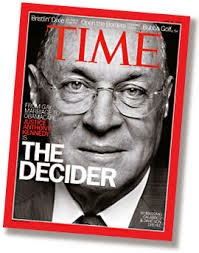
Along with the Supreme Court Ruling, Justice Anthony Kennedy filed a concurring opinion which is a valuable reminder of the constitutional nature and intent of the founding fathers regarding religious expression under the First Amendment of the U.S. Constitution.  Justice Kennedy wrote (emphasis mine):
Justice Anthony Kennedy
In our constitutional tradition, freedom means that all persons have the right to believe or strive to believe in a divine creator and a divine law. For those who choose this course, free exercise is essential in preserving their own dignity and in striving for a self-definition shaped by their religious precepts. Free exercise in this sense implicates more than just freedom of belief. It means, too, the right to express those beliefs and to establish one’s religious (or nonreligious) self-definition in the political, civic, and economic life of our larger community.

Secularists applaud “tolerance” of differing views as a virtue.  However, the rules of tolerance do not apply to folks with “religious views” because they "force their views on others.”  This week the Supreme Court affirmed
the right of all Americans, whether “religious” or “non-religious,” to hold to a world-and-life view, or worldview.  Furthermore, the Court held that regardless of their worldview, free exercise is essential in preserving their own dignity and in striving for a self-definition shaped by their religious precepts as relates to their daily participation in our larger community.

When I read Justice Kennedy’s concurring decision affirming my right to express and practice my Christian faith in public, I said, “YES!”  But then it struck me.  The Constitution also guarantees free expression to those who hold very different beliefs from mine or who are enemies of America.  Then, I realized that “free expression” in this great “land of the free” will only be possible if we are willing to take individual responsibility to be respectful of differing views.  As the Apostle James writes, we must be quick to hear, slow to speak and slow to anger; for the anger of man does not achieve the righteousness of God. (James 1: 19-20).   

In a world that is increasingly divided over issues and resentful of Christians attempting to apply the salt and light of the Gospel to these issues, we will need to exercise gentleness and mercy.  As Os Guinness wrote in A Free People’s Suicide (emphasis mine),

It is possible to be free at the constitutional level in terms of the structures of liberty, but to lose freedom and become servile or anarchic at the citizens’ level in terms of the spirit of liberty.

When asked by Marvin Olasky (WORLD Magazine, June 29, 2013) if this is already happening in America, Guinness responded (emphasis mine):

It is happening.  Freedom is the greatest enemy of freedom.  We’ve got a permissiveness in almost every area, and Americans have lost the capacity to say “no” to things that are wrong.  A general ungluing, unraveling, permissive license leads to chaos.  Freedom requires and assumes you know who you are and who you’re to be.  It’s not just a formlessness; it’s the power to do what you ought, as Lord Acton used to put it.

How should God’s people function in a culture where the moral compass is being abandoned and where self-definition is lacking?  Guinness is critical of the Christian right for, in his words,
trusting politics to do more than politics can do.  He elaborates in the same interview:

To put it in the language of William Wilberforce, they did the Lord’s work, but in the world’s way.  Wilberforce had an incredible love for the people who hated him, mugged him, and attacked him physically twice—but he prevailed through love, and he wasn’t gushy in any sentimental way.  The Christian right often shamelessly demonized and stereotyped, and we’re paying for the bad ways they fought it.  But on the issues, I’m with them.

In response to Justice Kennedy’s decision, Jennifer Raught Brock, a Cedarville University graduate, expressed to me some of the hard challenges of true servants of Christ who exercise the right of free expression of their Christian faith in their public life for the glory of God and for the service to their neighbor.  Jennifer wrote:

For Christians, kingdom work includes redeeming culture. Loving one's neighbor involves promoting justice and freedom. It's not an earthly, political kingdom we seek; God never promised us religious freedom. Nor did God promise freedom from pain. Yet that shouldn't stop us from trying to alleviate suffering.  He never said we should expect financial stability, but that doesn't mean we don't work hard or give to those who are poor.  He informed us that we're all going to die someday, but that doesn't mean that we refuse medicine when we're sick or that we fail to care about the overall quality of medical care in our society.

Supporting free expression of faith in the "larger community."
Our “free expression” comes at a great price through the sacrifice of Christ Who laid the foundation for our spiritual freedom; and later, the sacrifices of American men and women who have fought and died to give birth and then defend this nation during more than two centuries.  Many did so because they believed
that all men are created equal, that they are endowed by their Creator with certain unalienable Rights, that among these are Life, Liberty and the pursuit of Happiness.  May God help us to exercise our freedom in a Christ-like manner with firmness and boldness, yet with gentleness and reverence.

If we are in Christ, the Apostle Paul states, we are new creatures (2 Corinthians 5: 17), no longer conformed to this world, but transformed by the renewing of our minds (Romans 12: 2).  Of all people, being set free from sin and self, now free in Christ and free under the Constitution, we ought to know who we are, who we’re to be, and have the power to do what we ought.  We ought to be “about” self-definition, but more basically, “all about” Christ-definition as we give witness to the fruit of His Spirit—love, joy, peace, patience, kindness, self-control as we participate in the broken and divided political, civic, and economic life of our larger community.