Showing posts with label sanctity of life. Show all posts

Saturday, August 12, 2023

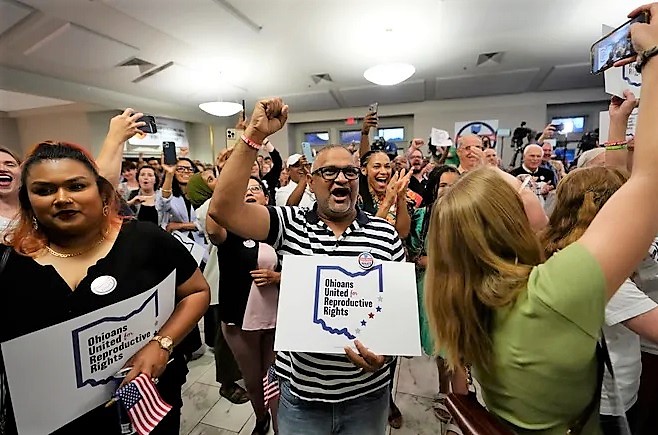
Ohio Issue 1 Defeated-- What Does It Mean?

The August 8 special election in Ohio produced a convincing victory for the opponents of Issue 1. If it had passed, Issue 1 would have increased the size of the majority necessary to amend the Ohio Constitution from the current 50% + 1 vote majority to a 60% majority.  In view of the steeper requirements of most other states, and the two-thirds majority necessary to amend our U.S. Constitution, the call for a 60% majority was certainly reasonable.

In addition to increasing the majority to 60%, Issue 1 would have required that any initiated petition to amend the Ohio Constitution after January 1, 2024 must contain the signatures of at least 5% of the population in each Ohio county.
 In this way, Issue 1 had aimed to ensure that all counties in Ohio, not just urban counties, can have a voice in the democratic process.  [Read more, click HERE.]

Were Ohio Voters Confused?
Admittedly, many of us were disappointed that Issue 1 failed by a wide margin, 57% to 43%.  Our first reaction was to believe that the vote did not reflect the values that a majority of Ohioans place on the sanctity of the life of unborn children, and of their mothers and fathers.  After all, both opponents and supporters focused their appeals on protecting the Ohio Constitution and suggested that, if we don’t vote their way, the will of Ohioans will cease to be represented. Because abortion was highlighted less by both sides, we thought the outcome might represent a confused electorate rather than their views on abortion.

However, when we looked at the polling data prior to the election, we discovered that the “confused voter theory” would not hold water.  Opinion polls taken prior to August 8 revealed that a majority of Ohioans had already declared their opposition to the Heartbeat Law.  In fact, a USA TODAY Network/Suffolk University poll (Click HERE.), conducted July 9-12, 2023 with a margin of error of + 4.4%, indicated that 58% of Ohio voters supported the abortion rights proposal that may be on the November, 2023 ballot, 32% opposed it, and 10% were undecided.   As noted earlier, an almost identical 57% of Ohioans voted against Issue 1.  Also, and Emerson College Poll (Click HERE.) conducted in October, 2022 registered a similar result with 54% opposed, 46% in support of the Heartbeat Law.

We might conclude that the defeat of Issue 1 was in fact reflective of Ohioan’s position on abortion law and not due to confusion from the campaign arguments.  But wait!  We ought to address three more questions that arise--one from the polling data, another from the distribution of the voting across the State of Ohio, and the third, “How Should We Respond?”

Are Polling Data Accurate?
The accuracy of any polling data depends upon how the sampling of public opinion was collected.  For example, how were the questions worded, how large was the sample size, and was the sampling representative, in this case, of the voting population of Ohio?  In our opinion, the USA TODAY Network/Suffolk University poll does not meet these standards.  The polling sample size was only 500 Ohio voters.  This number amounts to only one-half dozen voters per county, and it is unlikely that every Ohio county was represented.  Of the 500 voters questioned, only 46 people were registered voters!  So, the conclusions made from this poll was based largely on 454 individuals, many of whom may not have cared enough to invest the time to become informed and then actually vote.

Nevertheless, we might be tempted to accept the polling results based on the fact that, as we noted above, its results predicted very closely how the vote on Issue 1 would fall.  On the surface, this logic appears sound.  However, we must remember that while pre-election polls can predict the outcome, there is also the possibility that polls can influence an outcome.  For example, voters who have a weak moral foundation and/or who are easily swayed by the direction of the crowd or culture could be influenced by polling data favorable toward abortion.

We now turn to our third question:  Was the outcome of the special election representative of the opinion of Ohioans as a whole?   Just as polling data can fail to represent the opinion of a population at-large; so, a political issue can be decided without a large sector of the population being represented.  Let’s look at the distribution of the August 8 voter returns.

Did the Vote Represent All of Ohio?

Results of the election in each county suggest that the wishes of the rural population of Ohioans, spread over much of the area of the state and representing 67 counties, were not represented in the outcome.  Instead, the outcome was determined largely by urban voters in only 21 counties out of 88 Ohio counties.  Granted, Issue 1 failed on the basis of vote count.  But it is unfortunate that high population densities in relatively few Ohio cities can overpower the wishes of voters in hundreds of small cities, towns, and rural areas.

Perhaps there are at least two challenges given by the defeat of Issue 1.  First, the defeat is an example of the will of “urban Ohio culture” being exercised over the will of “rural Ohio culture.” This outcome emphasizes all the more the importance of the requirement stated within Issue 1.  Namely, if both cultures in Ohio are to be represented in major lawmaking decisions, then any constitutional amendment should require supporting signatures from all Ohio counties.  Second
Ohio will become further divided politically, culturally, and spiritually, unless we work to improve communication and understanding between urban and rural cultures.  If we do not, Ohio will join other states like Illinois, Michigan, and California where cultural values of the more conservative rural landscape are held hostage by deteriorating urban areas.

How can we accomplish bridging the “two Ohio’s?”  From a Christian viewpoint, we have many examples of how the church has been effective in bringing people out of hopelessness to salvation and restoration.  Throughout history and around the world, God’s people have given their love, treasures, and message of hope to urban dwellers.  Many urbanites have never traveled to a rural landscape or been exposed to rural culture and values.  Perhaps readers will join us in praying, seeking God’s leading on how to respond to this need which is increasing with the increase in urban lawlessness and the influx of migrants.  For example, we just published an article, “Community Caring for People and Land” (CLICK HERE.)  What if the example of community caring for people and land exercised in small town Ohio through parks and recreation organizations, churches, etc. could be expanded to build bridges into larger urban communities?  Please let us hear from you.  Use “Comments” below or contact us at silviusj@gmail.com.

How Should We Respond?
No one likes to lose, especially in an important election.  But we must press on realizing that the Heartbeat Law may be on the ballot in November.  We can be informed, advocate, and pray on behalf of lives of the unborn.  We can continue to use the 6-Week Prayer Guide for Ohio, the Unborn, and Women entitled More Than Conquerers, which is freely available for individuals, churches, or groups from the Center for Christian Virtue, an Ohio advocacy group (CLICK HERE for more information.).

Prayer reminds us that we serve on behalf of God’s purposes and His coming kingdom.  Prayer helps us develop a distinct hate and aversion to sin while loving the sinner as Christ loves all of us sinners, both the redeemed and those who still need to repent and receive Christ as their Savior.

Again, our readers should understand that we do not condemn mothers who elect to have an abortion, or the fathers who support or press for that decision.  Rather, we condemn the act of abortion and regret the sin and the judgment that follows this violation of God’s command not to murder (Genesis 9: 6:  Exodus 20: 13).  Isn’t it tragic when mothers who are alive because their mothers chose life decide that their babies have no right to live?  Even apart from the penalty of violating God’s law are the natural consequences of violating the “sowing and reaping principle (Galatians 6: 7-8)”:

Do not be deceived: God is not to be mocked.
Whatever a man sows, he will reap in return. 
The one who sows to please his flesh,
from the flesh will reap destruction;
but the one who sows to please the Spirit,
from the Spirit will reap eternal life.


We conclude with a challenging call from the six-week prayer booklet,
More Than Conquerers, cited above.  The call is to worship and lift our prayers to God on behalf of the unborn, mothers, and fathers:
 
“American culture is captivated by instant gratification. As our attention spans have waned, so has our ability to wait; to endure moments of discomfort and distress; even to understand why sometimes we shouldn't get everything we want the moment we want it.

In such a culture, patient and persistent prayer to the God of the universe is a radical idea. Prayer is stillness. Prayer takes time. Prayer requires honesty and, even sometimes, discomfort. Prayer acknowledges that we are not in control.

Through prayer, Christians are invited to "humble yourselves under the mighty hand of God so that at the proper time He may exalt you, casting all your anxieties on Him, because He cares for you" (1Peter 5: 7).

Not only is prayer counter-cultural to those outside the church; often it's misunderstood inside.  Prayer is not a moment that we decide to spend in God's presence, as if He lives in our world.  Rather, prayer is a moment in which we discipline our hearts to focus on God's constant presence.

Through prayer, we worship God.  Through that worship, we tune our hearts to His goodness.  We remind ourselves of who He is, and of the gift of knowing and trusting Him.  And yes, we bring Him our supplications-- because that is what Jesus told us to do when He said to pray for His Kingdom to come and His will to be done (Matthew 6: 10).

Praying for the protection of preborn babies in a culture captivated by instant gratification, the worship of "individualism," and a growing disdain for the value of human life can feel like a futile endeavor.  But let us remember, again, how God delivered His people from slavery in Egypt.  Exodus 3 contains five of the most radical words in all of Scripture: "I have heard their cries."  And because God heard those cries, with a "mighty hand and an outstretched arm (Deuteronomy 26: 8), He brought justice. 

Pray this week, with confidence in God's goodness and His deliverance, that He would hear the cries of His people for the protection of new life.   Pray that He would turn the hearts of mothers toward their children and away from fear, and that He would thwart all plans of the Enemy to persist in building a culture of death.  Pray that his justice would "roll down like waters" (Amos 5: 24).   
Pray that his Kingdom would come, where every human life no matter how new or small or "planned," is valued and protected. Pray that his will would be done.  (From:  More Than Conquerers, Center for Christian Virtue, pages 13-14.)

Comments:
As always, we welcome “Comment” from readers.   We are particularly interested in your thoughts about the “two Ohio’s,” one urban and the other rural as the Ohio map of Issue 1 voting clearly shows.  If you reside in another state, or in a smaller town or city, you may still experience this two-culture phenomenon.  How can we make a difference?  Please use the “Comment” link below for ideas or questions; or, contact us personally at silviusj@gmail.com

Saturday, July 5, 2014

High Court Defines & Defends Free Expression

The Supreme Court ruled this week that Hobby Lobby and Conestoga, two for-profit corporations, do not have to provide certain contraceptives to their employees pursuant to the Affordable Care Act (ACA) if such provision is deemed in violation of the employer’s faith convictions.  Less widely reported by the media was the fact that the two “closely held corporations” had already included sixteen other contraceptives in their employee health coverage.  In addition, the wages provided by these corporations are so generous (Hobby Lobby employees start at $14/hr and $9.50/hr, respectively, for full-time and part-time employees) that even a part-time employee could purchase a month’s supply of contraceptives (estimated, $9.00) on their own for approximately one hour’s work.
Supreme Court case was about more than "women's rights."
Nevertheless, the respective corporate owners, the Green Family and the Hahn family, were taken to court for refusing to include four additional contraceptives as mandated under the ACA.  Why?  These four products are known to destroy the human embryo.  Thus, including them along with the 16 products they had approved would compromise their faith position which holds that each human life begins at conception.

In the 5-4 opinion written by Justice Samuel Alito, the Court held that the ACA contraceptive mandate violates the Religious Freedom Restoration Act (RFRA).  Alito was joined by Chief Justice John Roberts and justices Scalia, Thomas, and Kennedy.   Monday’s close decision is now highly contested in the court of public opinion.  Opponents of the decision argue along the lines of Justice Ginsburg’s opposing decision.  Ginsburg claimed that the Court was wrong in denying free access to contraceptives to thousands of women employed by Hobby Lobby and Conestoga or dependents of persons those corporations employ...who do not share the corporation owners’ religious faith.  Thus, the case is being targeted by opponents as a “women’s rights” violation. 

Defenders of the Court’s decision do not see their victory as imposing unnecessarily on the rights of women. First, the two corporations had already been providing insurance coverage for all approved non-abortificient products.  Second, as noted above, both corporations are very generous with their hourly wage schedule.  Therefore, defenders of the court decision have honest reason for celebration which defends their deeply held conviction about the rights of the unborn.  More broadly, the decision affirms the right of people of faith to act upon their belief system outside church doors and in their workplaces.

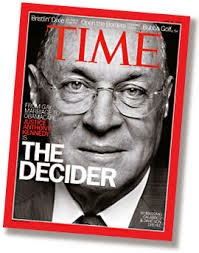
Along with the Supreme Court Ruling, Justice Anthony Kennedy filed a concurring opinion which is a valuable reminder of the constitutional nature and intent of the founding fathers regarding religious expression under the First Amendment of the U.S. Constitution.  Justice Kennedy wrote (emphasis mine):
Justice Anthony Kennedy
In our constitutional tradition, freedom means that all persons have the right to believe or strive to believe in a divine creator and a divine law. For those who choose this course, free exercise is essential in preserving their own dignity and in striving for a self-definition shaped by their religious precepts. Free exercise in this sense implicates more than just freedom of belief. It means, too, the right to express those beliefs and to establish one’s religious (or nonreligious) self-definition in the political, civic, and economic life of our larger community.

Secularists applaud “tolerance” of differing views as a virtue.  However, the rules of tolerance do not apply to folks with “religious views” because they "force their views on others.”  This week the Supreme Court affirmed
the right of all Americans, whether “religious” or “non-religious,” to hold to a world-and-life view, or worldview.  Furthermore, the Court held that regardless of their worldview, free exercise is essential in preserving their own dignity and in striving for a self-definition shaped by their religious precepts as relates to their daily participation in our larger community.

When I read Justice Kennedy’s concurring decision affirming my right to express and practice my Christian faith in public, I said, “YES!”  But then it struck me.  The Constitution also guarantees free expression to those who hold very different beliefs from mine or who are enemies of America.  Then, I realized that “free expression” in this great “land of the free” will only be possible if we are willing to take individual responsibility to be respectful of differing views.  As the Apostle James writes, we must be quick to hear, slow to speak and slow to anger; for the anger of man does not achieve the righteousness of God. (James 1: 19-20).   

In a world that is increasingly divided over issues and resentful of Christians attempting to apply the salt and light of the Gospel to these issues, we will need to exercise gentleness and mercy.  As Os Guinness wrote in A Free People’s Suicide (emphasis mine),

It is possible to be free at the constitutional level in terms of the structures of liberty, but to lose freedom and become servile or anarchic at the citizens’ level in terms of the spirit of liberty.

When asked by Marvin Olasky (WORLD Magazine, June 29, 2013) if this is already happening in America, Guinness responded (emphasis mine):

It is happening.  Freedom is the greatest enemy of freedom.  We’ve got a permissiveness in almost every area, and Americans have lost the capacity to say “no” to things that are wrong.  A general ungluing, unraveling, permissive license leads to chaos.  Freedom requires and assumes you know who you are and who you’re to be.  It’s not just a formlessness; it’s the power to do what you ought, as Lord Acton used to put it.

How should God’s people function in a culture where the moral compass is being abandoned and where self-definition is lacking?  Guinness is critical of the Christian right for, in his words,
trusting politics to do more than politics can do.  He elaborates in the same interview:

To put it in the language of William Wilberforce, they did the Lord’s work, but in the world’s way.  Wilberforce had an incredible love for the people who hated him, mugged him, and attacked him physically twice—but he prevailed through love, and he wasn’t gushy in any sentimental way.  The Christian right often shamelessly demonized and stereotyped, and we’re paying for the bad ways they fought it.  But on the issues, I’m with them.

In response to Justice Kennedy’s decision, Jennifer Raught Brock, a Cedarville University graduate, expressed to me some of the hard challenges of true servants of Christ who exercise the right of free expression of their Christian faith in their public life for the glory of God and for the service to their neighbor.  Jennifer wrote:

For Christians, kingdom work includes redeeming culture. Loving one's neighbor involves promoting justice and freedom. It's not an earthly, political kingdom we seek; God never promised us religious freedom. Nor did God promise freedom from pain. Yet that shouldn't stop us from trying to alleviate suffering.  He never said we should expect financial stability, but that doesn't mean we don't work hard or give to those who are poor.  He informed us that we're all going to die someday, but that doesn't mean that we refuse medicine when we're sick or that we fail to care about the overall quality of medical care in our society.

Supporting free expression of faith in the "larger community."
Our “free expression” comes at a great price through the sacrifice of Christ Who laid the foundation for our spiritual freedom; and later, the sacrifices of American men and women who have fought and died to give birth and then defend this nation during more than two centuries.  Many did so because they believed
that all men are created equal, that they are endowed by their Creator with certain unalienable Rights, that among these are Life, Liberty and the pursuit of Happiness.  May God help us to exercise our freedom in a Christ-like manner with firmness and boldness, yet with gentleness and reverence.

If we are in Christ, the Apostle Paul states, we are new creatures (2 Corinthians 5: 17), no longer conformed to this world, but transformed by the renewing of our minds (Romans 12: 2).  Of all people, being set free from sin and self, now free in Christ and free under the Constitution, we ought to know who we are, who we’re to be, and have the power to do what we ought.  We ought to be “about” self-definition, but more basically, “all about” Christ-definition as we give witness to the fruit of His Spirit—love, joy, peace, patience, kindness, self-control as we participate in the broken and divided political, civic, and economic life of our larger community.

Friday, September 7, 2012

Cardinal Dolan’s Prayers for America

Timothy Cardinal Dolan, Archbishop of New York, is emerging as a respected voice and moral conscience on behalf of foundational Christian truths that are under attack in the secular American culture.  Most recently, Cardinal Dolan was invited to conclude both the Republican and Democratic conventions in prayer.  Links to the full texts of each of the prayers are provided below.

As I listened to both prayers, it was difficult for me to “pray along with” Cardinal Dolan.  Rather, I focused on points that would either affirm or contradict the platform and policies of the respective parties.   After all, how can a "man of the cloth" pray at a political convention without sending a message that is politically charged?   On that point, it should be noted that there had already been a lively discussion over which party should have the most “right” to His Eminence’s presence and blessing.  Perhaps the better question is, “With which party “planks” would the Cardinal agree?”

Since hearing Cardinal Dolan’s prayers, I have taken time to read the texts of each and to consider more carefully what is in them for me as a registered Republican, but more importantly, as a Christian and as an American citizen.  Let me offer a few pairings of “platform planks” with “points in the prayer” of Cardinal Dolan.   I do not claim to know Cardinal Dolan’s heart or intent in forming his prayers.

The Republican National Convention (RNC) in Tampa emphasized the theme, “We Believe in America.”  Their platform states (emphasis mine):

This platform affirms that America has always been a place of grand dreams and even grander realities; and so it will be again, if we return government to its proper role, making it smaller and smarter.  If we restructure government’s most important domestic programs to avoid their fiscal collapse. If we keep taxation, litigation, and regulation to a minimum.  If we celebrate success, entrepreneurship, and innovation.

In sharp contrast to the GOP’s emphasis on liberty, rugged individualism, entrepreneurship, and success, the Democratic platform drafted in Charlotte, NC, emphasizes collectivism through government establishment of “rules of the road” (emphasis mine):

We know that the free market only works when there are rules of the road to ensure that competition is fair, open, and honest.  Mitt Romney and the Republicans would roll back financial reform and let Wall Street write its own rules again.   And two paragraphs later, adding:   Mitt Romney's opposition to commonsense campaign finance is nothing less than support for corporate and special-interest takeovers in our elections.  We believe America prospers when everyone, from Main Street to Wall Street, does their fair share and plays by the same rules.

To the Republicans with their vision of “freedom, rugged individualism, and entrepreneurship” for America, Cardinal Dolan offered this request to God:

Make us truly free by tethering freedom to truth and ordering freedom to goodness. Help us live our freedom in faith, hope and love, prudently and with justice, courageously and in a spirit of moderation.  And later:  We pray for all those who seek honest labor, as we thank you for the spirit of generosity to those in need with which you so richly blessed this nation.

From the heart of the cardinal in prayer comes a challenge to Americans, Republicans in particular, who want freedom to pursue their dreams with less government control—your freedom must be tethered to truth and justice expressed through the virtues of goodness, moderation, and generosity.  Only then, will the “free market” be free to operate in such a way that all have an opportunity to pursue happiness.

On the other hand, Democrats place their hopes in a collectivist approach in which government will enforce rules by which the ‘free market’ should operate so that all who enter will have their ‘fair share’ and those who achieve greater power and wealth will ‘pay their fair share’ out of their accountability to the ‘rules of the road.’   To the Democrats who place this kind of faith in humanity to produce ‘fairness’ Cardinal Dolan prays as he did for Republicans:

May our liberty be in harmony with truth; freedom ordered in goodness and justice.  Help us live our freedom in faith, hope, and love.   And later, he prays,  Help [our leaders to] remember that the only just government is the government that serves its citizens rather than itself.

With regard to the issue of abortion and the sanctity of human life, the Republican platform states (emphasis mine):

Through Obamacare, the current Administration has promoted the notion of abortion as healthcare.  We, however, affirm the dignity of women by protecting the sanctity of human life.  Numerous studies have shown that abortion endangers the health and well-being of women, and we stand firmly against it.

In sharp contrast,

The Democratic party strongly and unequivocally supports Roe v. Wade and a woman's right to make decisions regarding her pregnancy, including a safe and legal abortion, regardless of ability to pay.

With the Republicans, Cardinal Donan prays:   We ask your benediction upon those yet to be born, and on those who are about to see you at the end of this life.

And, with Democrats whose platform allows for “abortion as healthcare,” the cardinal prays:

Thus do we praise you for the gift of life.  Grant us the courage to defend it, life, without which no other rights are secure.  We ask your benediction on those waiting to be born, that they may be welcomed and protected

The Republican platform strongly states,

we believe that marriage, the union of one man and one woman must be upheld as the national standard, a goal to stand for, encourage, and promote through laws governing marriage.  We embrace the principle that all Americans should be treated with respect and dignity.  [See Republican platform (link below) for detailed rationale for their support of traditional marriage.]

The Democratic platform states:

We support marriage equality and support the movement to secure equal treatment under law for same-sex couples.  And later, the platform adds, The Administration has said that the word ‘family' in immigration includes LGBT (lesbian, gay, bisexual, transgender) relationships…

With the Republicans, Cardinal Donan prays from the perspectives of both natural law ethics and the Judeo-Christian Scriptures (See Romans 1: 16-25)  (emphasis mine),

May we know the truth of your creation, respecting the laws of nature and nature’s God and not seek to replace it with idols of our own making.  Give us the good sense not to cast aside the boundaries of righteous living you first inscribed on our hearts even before inscribing them on tablets of stone.

Similarly, with Democrats, Donan prays,

Show us anew that happiness is found only in respecting the laws of nature and of nature’s God.  Empower us with your grace so that we might resist the temptation to replace the moral law with idols of our own making, or to remake those institutions you have given us for the nurturing of life and community.


In conclusion, I have presented excerpts from Cardinal Dolan’s prayers at both Republican and Democratic conventions, and then related the prayers to the stated positions of each party in regard to three major moral issues.  First, should the future of America be characterized by promotion of individual freedom or by promotion of a collectivist approach to distribute wealth.  Second, which is the best way to protect the well being of women, by maintaining their right to an abortion (including late-term); or by protection of the life of the unborn while encouraging acceptable alternatives for the well being of both mother and child?   Third, should marriage be defined as between one man and one woman, or more broadly defined to include same-sex relationships?

One can read in detail on Cardinal Dolan’s blog his positions on the three topics and thus, gain insight into why he prayed as he did at the conventions.   I conclude this entry with an excerpt from his August 1, 2012 entry entitled “Fighting the Good Fight for Religious Freedom” followed by his prayer for the candidates and for us as we choose wisely.

… the Secretary of Health and Human Services[has decreed ] that the Patient Protection and Affordable Care Act requires employer health care plans to include contraceptive services for women, including drugs called abortifacients.  Although, in America’s finest tradition, the bill allows an exemption for religious reasons, it presumes to define just what a church’s ministry must be to qualify, a dramatic and unprecedented intrusion into the integrity of all faiths.  My brother bishops and I – in welcome collaboration with other religious leaders – think that this mandate is wrong and misguided and have tried to work with the Administration to correct it.

Over the course of the coming year, the effort to protect religious liberty and the freedom of conscience will continue.  In the end, this is not about bishops, it is not about Catholics, it is not about contraceptives.  It is about the ideals our nation was founded upon: Congress shall make no law respecting an establishment of religion, or prohibiting the free exercise thereof.  You can’t do much better than the First Amendment to the Constitution.  The founding fathers got it right.  The HHS mandate gets it wrong.  We are fighting to correct that wrong, in order to make sure that religious freedom continues for the generations to come after us.

Prayer (Cardinal Dolan, DNC, Sept. 6, 2012):
Oh God of wisdom, justice, and might, we ask your guidance for those who govern us:  President Barack Obama, Vice President Joseph Biden, Congress, the Supreme Court, and all those, including Governor Mitt Romney and Congressman Paul Ryan, who seek to serve the common good by seeking public office.  Make them all worthy to serve you by serving our country.  Help them remember that the only just government is the government that serves its citizens rather than itself. With your grace, may all Americans choose wisely as we consider the future course of public policy.

Links:
Democratic Party Platform 2012 -- http://www.democrats.org/democratic-national-platform
Republican Party Platform 2012 -- http://www.gop.com/2012-republican-platform_home/
Cardinal Dolan’s Prayer at GOP Convention:  http://video.foxnews.com/v/1816923221001/cardinal-dolan-delivers-benediction-at-gop-convention
Oikonomia: Stewardship of Creation and “Natural Law June 10, 2011) -- http://oikonomiajes.blogspot.com/2011/06/stewardship-of-creation-and-natural-law.html
Oikonomia: Is Romney's Rhetoric Backed by Character?   September 5, 2012 -- http://oikonomiajes.blogspot.com/2012/09/is-romneys-rhetoric-backed-by-character.html

Wednesday, September 5, 2012

Is Romney’s Rhetoric Backed by Character?


This year, Americans have a choice of who will occupy the White House for the next four years.  The presumed nominee for the Democratic Party, Barack Obama, is the only self-proclaimed evangelical on the two presidential tickets.  His Republican opponent, Mitt Romney, is a self-proclaimed Mormon, a member of the Church of Jesus Christ of Latter Day Saints.  Obama has the advantage of name recognition; and, perhaps a disadvantage in having a track record as president for four years that offers vulnerable targets for his critics.

A majority of self-professing evangelical Christians uphold the sanctity of human life, the sanctity of marriage as being between one man and one woman, and the freedom from coercion toward acts that violate religious convictions in the workplace.  President Obama upholds none of these basic foundations of morality and freedom.   Many social conservatives would say President Obama’s walk is inconsistent with his talk and with the Judeo-Christian principles that have undergirded and distinguished western civilization.   All of these positions should be taken into consideration between now and election day.

But what about Mitt Romney?   Are his actions consistent with his religious faith?  If we wish to be objective, both presidential candidates must be subjected to the same standards.   For example, unlike President Obama, Mitt Romney clearly defends the rights of the unborn, the sanctity of marriage as between a man and a woman, and exercise of religious freedom.  But is this lesser known candidate the “genuine article,” a person with integrity.   To choose a good leader, voters should know whether his walk matches his talk; and, that means seeing more than his tax returns.  [For elaboration, see Oikonomia, March 31, 2012 .]

So, is Mitt really a “good man” as some have said?  And, is he a “good man for the job.”   We may never agree as a nation on either count; or, on how to determine Romney’s “goodness.”  But, let’s see what we can glean from Romney’s own words and from the testimony of those who know him.  Then, we’ll use a third approach.   Because Mitt Romney appears to be reluctant to talk about himself and his accomplishments, we may gain more insights into the man from the answers he seems reluctant to give when he is pressed hard by questioners

First, from Romney himself [Commencement Address, Liberty University, May 12, 2012]:

The American culture promotes personal responsibility, the dignity of work, the value of education, the merit of service, devotion to a purpose greater than self, and, at the foundation, the pre-eminence of the family.   The power of these values is evidenced by a Brookings Institution study [reporting that for]… those who graduate from high school, get a full-time job, and marry before they have their first child, the probability that they will be poor is 2%. But, if those things are absent, 76% will be poor.   Culture matters. 

Marriage is a relationship between one man and one woman.

Someone once observed that the great drama of Christianity is not a crowd shot, following the movements of collectives or even nations.  The drama is always personal, individual, unfolding in one’s own life. We’re not alone in sensing this.  Men and women of every faith, and good people with none at all, sincerely strive to do right and lead a purpose-driven life.

Our relationship with our Maker… is entirely in our control, for He is always at the door, and knocks for us.  Our worldly successes cannot be guaranteed, but our ability to achieve spiritual success is entirely up to us, thanks to the grace of God.  The best advice I know is to give those worldly things your best but never your all, reserving the ultimate hope for the only one who can grant it.

People of different faiths, like yours and mine, sometimes wonder where we can meet in common purpose, when there are so many differences in creed and theology.  Surely the answer is that we can meet in service, in shared moral convictions about our nation stemming from a common worldview.  The best case for this is always the example of Christian men and women working and witnessing to carry God’s love into every life – people like the late Chuck Colson.

Those who know Romney claim that it is just not his nature to speak up about his accomplishments.  Meanwhile, his opponents in the primaries, and more recently the Obama campaign, have portrayed him as a wealthy entrepreneur who gained his fortune through the ruthless maneuvering of Bain Capital.   But, here are some fact-checked bits of information that contradict the negative portrayal of Romney:  

Ilyn Ross blogs in “Reason Reigns:”

At the Winter Olympics in Salt Lake City, he inherited a $370 million deficit. He left behind a $100 million surplus, contributing $1 million of his own money, & drawing no salary for 3 years. As MA governor with both houses of the MA legislature having large Democratic majorities, Romney faced an immediate $650 million shortfall & a projected $3 billion deficit for the next year. By 2006, MA had a $600–700 million surplus. Romney drew a salary of $1 per year.

Mr. Grant Bennett, CEO of CPS Technologies and former consultant with Bain Capital stated at the recent RNC:

I have spent thousands of hours over many years with Mitt Romney.  We spent our time together serving our fellow men and women - we spent it serving in our church.  We embraced Christ's admonition: "Inasmuch as ye have done it unto one of the least of these my brethren, ye have done it unto me."

In our early morning calls, Mitt didn't discuss questions of theology. He found the definition of religion given by James in the New Testament to be a practical guide: "Pure religion ... is to visit the fatherless and widows in their affliction."

So, what specifically did Mitt Romney do as our pastor?   For one or two evenings each week and several hours every weekend -- week after week and year after year -- he met with those seeking help with the burdens of real life, burdens we all face at one time or another: unemployment, sickness, financial distress, loneliness.  Mitt prayed with and counseled church members seeking spiritual direction, single mothers raising children, couples with marital problems, youth with addictions, immigrants separated from their families, and individuals whose heat had been shut off.

Mitt seldom delivered the sermon himself - he gave that opportunity to fellow church members.
He sought to involve everyone so everyone could grow.  Mitt taught faith in God, personal integrity, self-reliance and service to our fellow men.   And Mitt did what he challenged us to do. He led by example.   I treasure every minute we served together.  I am grateful for my apprenticeship in "the things that matter most" under the hands of a deeply good man named Mitt Romney.

From Ted Oparowski whose 14-year-old son was diagnosed with non-Hodgkins lymphoma:

You cannot measure a man's character based on words he utters before adoring crowds during happy times. The true measure of a man is revealed in his actions during times of trouble.  The quiet hospital room of a dying boy, with no cameras and no reporters -- that is the time to make an assessment.

From Pam Finlayson, who gave birth to a daughter 3½ months premature resulting in severe heart and lung problems:

As I sat with her in intensive care, consumed with a mother’s worry and fear, dear Mitt came to visit and pray with me,” she continued, as the partisan crowd listened in rapt silence. “I will never forget that when he looked down tenderly at my daughter, his eyes filled with tears, and he reached out gently and stroked her tiny back.   I could tell immediately that he didn’t just see a tangle of plastic and tubes; he saw our beautiful little girl, and he was clearly overcome with compassion for her.

When it comes to loving our neighbor, we can talk about it or we can live it.  The Romneys live it every single day.

What is Romney hiding?  We may or may not agree with what Mitt Romney says, or with the positions he takes as a political leader.   We may also question the validity of what his close friends say.  But, we must at least consider those things Romney has only revealed when it seems he’d rather not ‘go there’ or which are revealed by reports from fact-finding research into his past.  Consider a few examples.

Because Mitt is the son of George Romney, former CEO of American Motors, he is sometimes portrayed as having been “born with a silver spoon in his mouth.”  However, when he has been pressed to speak about his inheritance, he responds as recorded by the NY Times:  

Except for a loan from his father to purchase his and Ann’s first home, in Belmont, MA for $42,000, Romney states:   I gave [my inheritance from my father] to a school which Brigham Young University established in his honor, the George W. Romney School of Public Management.

According to Monique Hamm reporting in Human Events (8/26/2012),

One instance that highlights Romney’s style of silent charity is Joey’s Park, a playground named in memory of Joey O’Donnell, who died of cystic fibrosis and was the son of a Romney neighbor.  Romney led the effort to build the park as well as its upkeep. “There he was with a hammer, a Mitt nobody sees,” Joseph O’Donnell, the father of the late boy, told the authors of “The Real Romney.” After the construction, Romney returned with a local Boy Scout troop to ensure that the memorial was maintained. “He did it for like the next five years, without ever calling to say, ‘We did this,’ without a reporter in tow, not looking for any credit.

In the final analysis, voting citizens of this great land must ask themselves, first, “How important is it that a candidate possess a character marked by virtues of humility and reverence for God, love for neighbor, respect for the sanctity of life and sanctity of marriage, valuing of individual effort and hard work, and respect of religious groups and their freedom to worship and practice their faith?”

Second, “Is it important that character virtues like those listed above are demonstrated through the candidate’s promises, actions, and policies?” And, third, “Are we willing to take the time to identify and evaluate the candidates on the basis of how well their words and their actions demonstrate virtuous character?”  As we individually hold ourselves to these standards, and then prayerfully seek answers to at least the three questions above, we will gain a better sense of which presidential candidate best demonstrates the qualities necessary to exercise leadership that America needs.