This
weekend, youth from 150 countries were so concerned about the global threat of
climate change that they left their classrooms and took to the streets to urge
world leaders to act. As a science educator,
I encouraged student involvement in learning.
So, I commend these students for their initiative, but I wonder if they
are knowledgeable enough to preach to adults, many of whom lack consensus on
whether or how much humans are responsible for climate change.
I am often asked, “Do you believe in ‘climate change?’” or, “Do you think humans
can stop climate change?” or, “What do you think about “climate change?”
The first two questions are easy. My answers
are, “Yes” and “No,” respectively. Yes, according
to science, climate change has been occurring for as far back as we have
records or can extrapolate. Geologic
evidence suggests quite a few sudden, major, catastrophic changes in both the
atmosphere and landscape of Earth—the kind of catastrophic events that can bury
and preserve animals and plants within rocks or polar ice. Because climate change has been occurring
since long before human impacts on the Earth were significant, it is doubtful
that we can stop climate change now. If
we could, what climatic conditions would we prefer for each latitude and biome? Would we eliminate deserts? Expand rain forests?
My answer to the third question, “I don’t always know what to think,” reflects
my attempt to approach scientific issues with humility and healthy
skepticism. Therefore, I want to use
this first of a series of articles on “Climate Change in Context” to emphasize
the importance of two virtues that seem necessary in our discussion of global
scale issues like climate change-- civility and humility. If we want to make any headway on climate
change or any other issue, there must be an “atmosphere” of civility and
humility.
We can easily fill the atmosphere of our discussions with “hot air” and
accomplish little else when we lack civility. Polite communication must underly
every discussion, and this means both listening and speaking politely with one
another. The Apostle James wrote, Everyone
should be quick to listen, slow to speak and slow to become angry (James
1:19). Perfect advice, isn’t it? However, notice in the verses just before v.
19, James urges readers to humble themselves, recognize their proneness toward pride
and selfishness, and their need to seek wisdom that comes from a gracious God.
David Rupert’s article in Patheos entitled “What
the Bible Says about Civility” has numerous Scriptures encouraging civility
through a spirit of humility, kindness, and self-control. These are fruit of the indwelling Spirit of
God (Galatians 5: 22-23) which ought to enable Christ-followers to be examples
and to be winsome contributors to discussions of controversial issues (1 Peter
3: 15).
Rupert quotes Jim Brown, author of Ending our Uncivil War: A Path to
Political Recovery and Spiritual Renewal who said,
We’re in a Binary Age, where nuance is rare, complexity is verboten and
sharp political battle lines are drawn. Churchgoers on both sides of our
national mess are reluctant to turn a cheek, fine with abandoning the least of
our brothers or condemning anyone who is wealthy, and adamantly opposed to
loving their enemy. In fact, some want blood. They want Barabbas.
Those who purpose to engage in conversation, debate, and social media messaging
with civility and humility can create an atmosphere in which contention can give
way to understanding of one another’s differing motives and perspectives. Polite
humility is essential when discussing the nuances of complex scientific data
and differing interpretations. For
example, read the following pairs of “climate change claims” and consider how
you might participate in polite dialog in an effort to understand them:
Notice that neither claim denies that increased global temperatures have been measured.. But the two claims disagree as to which is
the cause and which is the effect. If increasing global CO2 is the result
and not the cause of changes in global temperatures, then climate science needs
to objectively tell us like it is lest our policy proposals miss the mark. As we will see later, Allan M.R. MacRae supports Scientific Claim #2 in “CO2,
Global Warming, Climate, and Energy.”
Humility among scientists and reviewers of research manuscripts is essential if
we are to avoid ethics violations. I
have written in “The
Conscience of Science” of the many incidents in which scientists reportedly
falsify data, suppress or hide contradictory results, or refuse to review
research that may favor an opposing claim. So, it is important that our electorate be
educated not only in the science of global ecology and climate science, but
that we learn to be discerning of the political motivations and forces that
take opposing sides in the debate about climate change.
First, are policies being grounded on the basis of “good
science” and correct conclusions about climate trends? Second, are proposed solutions properly
targeted to solve the environmental problem, or are they aimed instead at
simply justifying the concentration of more power in Washington, DC as part of
a social experiment?
Clearly, we can see that “climate change” has a context—one that demands of all
Americans our best efforts based on high moral and ethical standards of conduct
in both the sciences and in politics.
For this, I will suggest that we need fewer street marches and more
classrooms that teach at least the historical importance of the foundation
provided by our Judeo-Christian heritage.
In particular, a good atmosphere for dealing with climate change will demand
that we understand and apply the biblical narrative of Genesis 1 and 2 which we
will consider in Part 2. We can only
wonder sadly as how many of the estimated 4 million people who marched this
weekend for climate change have any knowledge or understanding of how important
Judeo-Christian ethics have been to the foundation of human civilization.
As I watched a Swedish schoolgirl, Greta Thunberg, likely not familiar with the
biblical narrative, spawn a global movement, I am reminded to exercise humility
and restraint lest I jump to conclusions about her qualifications to lead. In this regard, I conclude with another quote
from Jim Brown by David Rupert, as a prescription that may go far toward
improving the “atmosphere” of our classrooms, conference rooms, and even the street
marches for climate change:
The path to political recovery and spiritual renewal requires work. We can turn the cheek, but not be weak. We can lift up the least among us, as
uncorrupted religions teach, while we respect and improve our laws. We can love our enemies deeply – “agape,” as
the Greeks, Christ, and Dr. King encouraged.
But David Rupert wonders, “Are we too far gone?”
οἰκονομία, (oy-kon-om-ee'-ah), Greek for STEWARDSHIP, a fundamental concept through which Christians can integrate issues of SCIENCE, FAITH, and CULTURE.
Showing posts with label civility. Show all posts
Saturday, September 21, 2019
Wednesday, July 4, 2018
What to Do about ‘Fireworks’ in America
When
I was an elementary school student, in the 1950’s, we were regularly asked to
stand and participate in the Pledge of Allegiance. I do not remember ever saying the pledge
without the words “under God.” These words had been added by Congress in 1954
in the face of the threat of godless communism.
Today, the words “one nation under God, indivisible, with liberty and justice for all” are still recited by all who are willing to make this pledge. However, it has become clear that many Americans no longer submit to God, and many no longer consider America a “godly nation” if indeed it ever was. Our nation is deeply divided, particularly over competing visions of what America ought to be with respect to “liberty and justice for all.”
On this Fourth of July, the deep moral and ideological divisions are manifested in social and political turmoil that centers upon President Donald J. Trump and his administration. Mr. Trump is one of the most controversial and, some would say, divisive and even hated presidents in modern history. Many on the political left despise him because they believe he stole the presidential election of 2016. They have resorted to attempts to tarnish and disrupt the Trump presidency by convicting him of collusion with the Russians. There are also attempts to trap him in regard to inflammatory social issues, most recently his now cancelled policy of separating illegally immigrating children from their adult “guardians.”
Meanwhile, many in the evangelical community disrespect President Trump because they believe he falls short of God’s moral and spiritual standards for the office he occupies. Evangelical mistrust and moral criticism of the president continues in spite of his successful appointment of one excellent Supreme Court justice, and his intention to appoint a second. In addition, President Trump’s policies seem to flow from his genuine respect for America, his emphasis on free enterprise and a good work ethic, and his respect for the sanctity of human life.
It is clear that the "fireworks" of political division in America will continue long after this Fourth of July. Instead of arguing over competing visions of what America ought to be and the best ways to get there, I believe that Christ-follower’s, those who have surrendered their lives to the Person of Jesus Christ and His Word, are called to pray. I do not see praying as a convenient cop-out from the “real world problems” we face. Instead, those who have studied American history will know the vital part the providential hand of God played in the birth of our nation.
Today in the midst of storm clouds of disruption and division, it is only fitting that Christ-followers pray for America and for her leaders. The commands in Scripture to pray include those from the inspired pen of the Apostle Paul:
I urge, then, first of all, that petitions, prayers, intercession and thanksgiving be made for all people. Pray this way for kings and all who are in authority so that we can live peaceful and quiet lives marked by godliness and dignity. This is good and pleases God our Savior, who wants everyone to be saved and to understand the truth (1 Timothy 2: 1-4 (NIV)).
Paul is urging Christ-followers to enter into spiritual communication with God through the indwelling Holy Spirit. Our access to God is made possible by the shed blood of Christ who sits at the right hand of God. Christ is glorified when we enter worshipful prayer in His Name. [Click on box, “What Happens When We Pray?”]
When we commune with God in prayer, we ought to realize that we are not in a position to inform Him of what He doesn’t know. Rather, as Gordon T. Smith (The Voice of Jesus, IVP 2003) writes (p. 163):
…in true prayer God has a “privileged voice,” one might say. And the final objective of prayer is not experienced in our speaking so much as in our allowing God to speak, to have the final word, but more, to have THE word that speaks into our lives. It is this word that empowers, liberates, sustains and guides; it is the word we long to hear.
Referring back to 1 Timothy 2: 1, the Scripture commands us to pray in several ways. First, we are to petition (make requests of ) God according to His character and purposes. Then, notice Paul also calls us to intercede (pray on behalf of the needs of others) and offer thanksgiving to God for others and for the blessings (and trials) He brings our way.
How then should we pray for our nation and specifically “for kings” on this Fourth of July, or on any other day? After all, we do not have a king ruling over us as was the case when Paul wrote to Timothy around AD 63. In fact, when Paul wrote the command to Christ-followers to pray “for kings and all who are in authority,” the godless Roman emperor Nero was in power. The date of Paul’s writing was approximately one year before the Great Fire in Rome. Nero, who many believe may have been involved in starting the fire, laid the blame on Christians and ordered the execution of many innocent believers.
Instead of an unelected, godless emperor, we have a president who was elected to serve as the executive of a democratic, republican government. Historically, presidents elected by the will of the people have been shown respect even among those who did not vote for him. By all indications as I have already indicated, President Trump is sincerely trying against much opposition to keep his campaign promises for the benefit of our nation. However, hatred of Mr. Trump and his conservative policies is continually expressed by vicious personal attacks as well as verbal attacks upon his wife, family, and members of his administration.
Christ-followers ought to expect a disregard for authority from those who disregard the authority of God’s Word. But the souls of both nonbelievers and believers are worth much more than winning political arguments. Therefore, Christ ought to be honored in all of our conversations and actions. If we return to the Apostle Paul’s writing in 1 Timothy we can find Paul’s basis for showing respect for authority and being civil in conversation.
Immediately preceding Paul’s command to “pray for kings,” he writes, “I urge, then….” which may be translated “I urge, therefore...” If we back up to 1 Timothy 1: 15-16 (NASB), we can see what the “therefore” is there for. Paul reveals his own humility in the face of Christ’s patience toward him. He writes (emphasis mine),
It is a trustworthy statement, deserving full acceptance, that Christ Jesus came into the world to save sinners, among whom I am foremost of all. Yet for this reason I found mercy, so that in me as the foremost, Jesus Christ might demonstrate His perfect patience as an example for those who would believe in Him for eternal life.
As Christ-followers perform the important work of praying for our nation and all those in authority, including President Trump and his administration, we ought to meditate on Paul’s testimony as the “foremost of all” sinners. Like Paul, we should never forget that we were also forgiven an infinite debt of sin. Then, as we confess our own sin and take the log out of [our] own eye…so we can see clearly to take the speck out of [our] brother's eye (Matthew 7: 5), perhaps our prayers will be heard and answered for the benefit of our own personal relationships, our families, and our nation, that by God's grace it could be “one nation under God, indivisible, with liberty and justice for all.”
Application -- What About You?
If you are like me, you read lots of articles and books but fail to make specific applications to your own spiritual life as a believer and Christ-follower. For example, you may have just read my article, "What to Do about 'Fireworks' in America" and are asking, "What will I do?" If you are asking this question, here's a suggestion.
The heart of this article is a call to PRAY. If you re-read or scan the article, you will notice some thoughts on what prayer is and how to pray. My thoughts on prayer are derived from what Daniel Henderson calls "Scripture-Fed, Spirit-Led Prayer." For the past 20 months I have been blessed to pray in a small group at our church in which we use Henderson's approach, led by a former student and now brother in Christ, Kirk Fairhurst. May I encourage you to read more about "Scripture-Fed, Spirit-Led Prayer" by checking out the following links, and then beginning to practice praying in this way individually and, as God allows, with other Christ-followers. To God be the glory, great things He has done!
Links from Daniel Henderson's Strategic Renewal website:
Today, the words “one nation under God, indivisible, with liberty and justice for all” are still recited by all who are willing to make this pledge. However, it has become clear that many Americans no longer submit to God, and many no longer consider America a “godly nation” if indeed it ever was. Our nation is deeply divided, particularly over competing visions of what America ought to be with respect to “liberty and justice for all.”
On this Fourth of July, the deep moral and ideological divisions are manifested in social and political turmoil that centers upon President Donald J. Trump and his administration. Mr. Trump is one of the most controversial and, some would say, divisive and even hated presidents in modern history. Many on the political left despise him because they believe he stole the presidential election of 2016. They have resorted to attempts to tarnish and disrupt the Trump presidency by convicting him of collusion with the Russians. There are also attempts to trap him in regard to inflammatory social issues, most recently his now cancelled policy of separating illegally immigrating children from their adult “guardians.”
Meanwhile, many in the evangelical community disrespect President Trump because they believe he falls short of God’s moral and spiritual standards for the office he occupies. Evangelical mistrust and moral criticism of the president continues in spite of his successful appointment of one excellent Supreme Court justice, and his intention to appoint a second. In addition, President Trump’s policies seem to flow from his genuine respect for America, his emphasis on free enterprise and a good work ethic, and his respect for the sanctity of human life.
It is clear that the "fireworks" of political division in America will continue long after this Fourth of July. Instead of arguing over competing visions of what America ought to be and the best ways to get there, I believe that Christ-follower’s, those who have surrendered their lives to the Person of Jesus Christ and His Word, are called to pray. I do not see praying as a convenient cop-out from the “real world problems” we face. Instead, those who have studied American history will know the vital part the providential hand of God played in the birth of our nation.
Today in the midst of storm clouds of disruption and division, it is only fitting that Christ-followers pray for America and for her leaders. The commands in Scripture to pray include those from the inspired pen of the Apostle Paul:
I urge, then, first of all, that petitions, prayers, intercession and thanksgiving be made for all people. Pray this way for kings and all who are in authority so that we can live peaceful and quiet lives marked by godliness and dignity. This is good and pleases God our Savior, who wants everyone to be saved and to understand the truth (1 Timothy 2: 1-4 (NIV)).
Paul is urging Christ-followers to enter into spiritual communication with God through the indwelling Holy Spirit. Our access to God is made possible by the shed blood of Christ who sits at the right hand of God. Christ is glorified when we enter worshipful prayer in His Name. [Click on box, “What Happens When We Pray?”]
When we commune with God in prayer, we ought to realize that we are not in a position to inform Him of what He doesn’t know. Rather, as Gordon T. Smith (The Voice of Jesus, IVP 2003) writes (p. 163):
…in true prayer God has a “privileged voice,” one might say. And the final objective of prayer is not experienced in our speaking so much as in our allowing God to speak, to have the final word, but more, to have THE word that speaks into our lives. It is this word that empowers, liberates, sustains and guides; it is the word we long to hear.
Referring back to 1 Timothy 2: 1, the Scripture commands us to pray in several ways. First, we are to petition (make requests of ) God according to His character and purposes. Then, notice Paul also calls us to intercede (pray on behalf of the needs of others) and offer thanksgiving to God for others and for the blessings (and trials) He brings our way.
How then should we pray for our nation and specifically “for kings” on this Fourth of July, or on any other day? After all, we do not have a king ruling over us as was the case when Paul wrote to Timothy around AD 63. In fact, when Paul wrote the command to Christ-followers to pray “for kings and all who are in authority,” the godless Roman emperor Nero was in power. The date of Paul’s writing was approximately one year before the Great Fire in Rome. Nero, who many believe may have been involved in starting the fire, laid the blame on Christians and ordered the execution of many innocent believers.
Instead of an unelected, godless emperor, we have a president who was elected to serve as the executive of a democratic, republican government. Historically, presidents elected by the will of the people have been shown respect even among those who did not vote for him. By all indications as I have already indicated, President Trump is sincerely trying against much opposition to keep his campaign promises for the benefit of our nation. However, hatred of Mr. Trump and his conservative policies is continually expressed by vicious personal attacks as well as verbal attacks upon his wife, family, and members of his administration.
Christ-followers ought to expect a disregard for authority from those who disregard the authority of God’s Word. But the souls of both nonbelievers and believers are worth much more than winning political arguments. Therefore, Christ ought to be honored in all of our conversations and actions. If we return to the Apostle Paul’s writing in 1 Timothy we can find Paul’s basis for showing respect for authority and being civil in conversation.
Immediately preceding Paul’s command to “pray for kings,” he writes, “I urge, then….” which may be translated “I urge, therefore...” If we back up to 1 Timothy 1: 15-16 (NASB), we can see what the “therefore” is there for. Paul reveals his own humility in the face of Christ’s patience toward him. He writes (emphasis mine),
It is a trustworthy statement, deserving full acceptance, that Christ Jesus came into the world to save sinners, among whom I am foremost of all. Yet for this reason I found mercy, so that in me as the foremost, Jesus Christ might demonstrate His perfect patience as an example for those who would believe in Him for eternal life.
As Christ-followers perform the important work of praying for our nation and all those in authority, including President Trump and his administration, we ought to meditate on Paul’s testimony as the “foremost of all” sinners. Like Paul, we should never forget that we were also forgiven an infinite debt of sin. Then, as we confess our own sin and take the log out of [our] own eye…so we can see clearly to take the speck out of [our] brother's eye (Matthew 7: 5), perhaps our prayers will be heard and answered for the benefit of our own personal relationships, our families, and our nation, that by God's grace it could be “one nation under God, indivisible, with liberty and justice for all.”
Application -- What About You?
If you are like me, you read lots of articles and books but fail to make specific applications to your own spiritual life as a believer and Christ-follower. For example, you may have just read my article, "What to Do about 'Fireworks' in America" and are asking, "What will I do?" If you are asking this question, here's a suggestion.
The heart of this article is a call to PRAY. If you re-read or scan the article, you will notice some thoughts on what prayer is and how to pray. My thoughts on prayer are derived from what Daniel Henderson calls "Scripture-Fed, Spirit-Led Prayer." For the past 20 months I have been blessed to pray in a small group at our church in which we use Henderson's approach, led by a former student and now brother in Christ, Kirk Fairhurst. May I encourage you to read more about "Scripture-Fed, Spirit-Led Prayer" by checking out the following links, and then beginning to practice praying in this way individually and, as God allows, with other Christ-followers. To God be the glory, great things He has done!
Links from Daniel Henderson's Strategic Renewal website:
Thursday, September 21, 2017
Are There Lessons for America from the 1950’s?
![]() |
| Reminders of the era of the 1950's. |
I am a
member of the “baby boomers,” representing children born from roughly the end
of World War II to the period of the early 1960’s. While American culture in this era was not
without need of moral and spiritual revival, many would consider the 1940’s and
1950’s as one of the most favorable times in which to grow up as a child in
America. For the sake of brevity, I will refer to this
era, which encompassed my elementary school years, as “the 1950’s.”
So, I was interested to learn that two university professors have published an op-ed in The Philadelphia Inquirer entitled, “Paying the price for breakdown of the country's bourgeois culture.” Amy Wax is the Robert Mundheim professor at the University of Pennsylvania Law School; and, Larry Alexander is the Warren distinguished professor at the University of San Diego School of Law.
Wax and Alexander open their article with what many of us would agree is a pretty accurate summary of the current state of socio-economic affairs in America today:
Too few Americans are qualified for the jobs available. Male working-age labor-force participation is at Depression-era lows. Opioid abuse is widespread. Homicidal violence plagues inner cities. Almost half of all children are born out of wedlock, and even more are raised by single mothers. Many college students lack basic skills, and high school students rank below those from two dozen other countries.
So, I was interested to learn that two university professors have published an op-ed in The Philadelphia Inquirer entitled, “Paying the price for breakdown of the country's bourgeois culture.” Amy Wax is the Robert Mundheim professor at the University of Pennsylvania Law School; and, Larry Alexander is the Warren distinguished professor at the University of San Diego School of Law.
Wax and Alexander open their article with what many of us would agree is a pretty accurate summary of the current state of socio-economic affairs in America today:
Too few Americans are qualified for the jobs available. Male working-age labor-force participation is at Depression-era lows. Opioid abuse is widespread. Homicidal violence plagues inner cities. Almost half of all children are born out of wedlock, and even more are raised by single mothers. Many college students lack basic skills, and high school students rank below those from two dozen other countries.
![]() |
| "I don't shrink from the word 'superior'." -- Dr. Amy Wax |
Get married
before you have children and strive to stay married for their sake.
Get the education you need for gainful employment, work hard, and avoid
idleness. Go the extra mile for your employer or client. Be a patriot, ready to
serve the country. Be neighborly, civic-minded, and charitable. Avoid coarse
language in public. Be respectful of authority. Eschew substance abuse and
crime.
![]() |
| Evidence of moral decline in America. |
According to the two law professors, these cultural values “reigned” in the era of the 1950’s for two reasons. They “could be followed by people of all backgrounds and abilities,” and they were “backed up by almost universal endorsement.” The principle assertion of the authors is that adherence to these values and disciplines “was a major contributor to the productivity, educational gains, and social coherence of that period.”
As if to anticipate the skepticism and pessimism of our divided culture, Wax and Alexander quickly admit that not everyone of the 1950’s era adhered to these values:
There are always rebels--and hypocrites, those who publicly endorse the norms but transgress them. But…even the deviants rarely disavowed or openly disparaged the prevailing expectations. Was everything perfect during the period of bourgeois cultural hegemony? Of course not. There was racial discrimination, limited sex roles, and pockets of anti-Semitism. However, steady improvements for women and minorities were underway even when bourgeois norms reigned. Banishing discrimination and expanding opportunity does not require the demise of bourgeois culture. Quite the opposite: The loss of bourgeois habits seriously impeded the progress of disadvantaged groups. That trend also accelerated the destructive consequences of the growing welfare state, which, by taking over financial support of families, reduced the need for two parents. A strong pro-marriage norm might have blunted this effect. Instead, the number of single parents grew astronomically, producing children more prone to academic failure, addiction, idleness, crime, and poverty.
Whether or not you agree with Wax and Alexander, most readers will not be surprised at the harsh manner in which their article was received. And if it were not enough for the authors to laud the values the values of the 1950’s, they also claim that “All cultures are not equal. Or at least they are not equal in preparing people to be productive in an advanced economy.”
Note that the authors are not saying one culture is better than another--only better at preparing human beings to have productive lives in the cultural context within which they will live. Nevertheless, in several articles, including articles in the U. Penn student newspaper, the Daily Pennsylvanian, the authors are accused of using “hate speech” and preaching “white supremacy.” One of these articles, entitled “Notions of 'bourgeois' cultural superiority are based on bad history,” was written by five of Amy Wax’s own law faculty colleagues at U. Penn. Imagine that occurring to you as a professor at the beginning of a new academic year.
Professor Dorothy E. Roberts and colleagues consider Wax and Alexander’s “nostalgia for the 1950’s ‘bourgeois’ culture” to be “bad history” and compare it to a defense of Confederate statues that promote white supremacy. They add that, “nostalgia for 1950’s ‘bourgeois’ culture erases its historical context and serves as a thinly veiled argument for… Anglo-Protestant superiority….”
In defense of Amy Wax and “1950’s values,” Heather Mac Donald, asks readers of National Review:
Were you planning to instruct your child about the value of hard work and civility? Not so fast! According to a current uproar at the University of Pennsylvania, advocacy of such bourgeois virtues is “hate speech.”
Mac Donald then points out the flawed and biased approach of Roberts et al and other liberal progressives who view “1950’s values” with disdain and who accuse Wax and Alexander of promoting cultural bias and racial supremacy. Mac Donald summarizes by putting her finger on what she calls the “primary sin” of Wax and Alexander—the need to change human behavior with emphasis on individual responsibility:
The op-ed’s primary sin was to talk about behavior. The founding idea of contemporary progressivism is that structural and individual racism lies behind socioeconomic inequalities. Discussing bad behavioral choices and maladaptive culture is out of bounds and will be punished mercilessly by slinging at the offender the usual fusillade of “isms” (to be supplemented, post-Charlottesville, with frequent mentions of “white supremacy”). The fact that underclass behaviors are increasingly common among lower-class whites, and not at all limited to poor blacks and Hispanics, might have made it possible to address personal responsibility. That does not appear to be the case.
Some of my readers will question the notion that America ought to consider returning to the values of the 1950’s. Questioning is a good thing--if accompanied by an objective analysis. I hope my article does not discourage readers from doing just that.
Some of you who may be skeptical of the Wax-Alexander assertions are not “baby boomers.” Others, like me were not yet adults during the 1950’s. I was an elementary schoolboy who had seen little of the wider world outside my rural, farm community. I have great memories of those years, but I was not immune from learning of moral and ethical transgressions within our family and our community. Thankfully, God was already showing me His provision through Christ to forgive my sin, make me His child, and teach me to understand the world and His plan for me.
So, let no reader think that I look back on the 1950’s with a fog of nostalgia or with colored glasses. Rather, I believe the articles I have cited and others are affording our nation with the opportunity to have a polite discussion and debate about what is good and redeemable about American culture of past and present, and where changes are needed. I hope you will read the assertions of the Wax-Alexander article and of opposing articles such as Roberts et al; and, critiques such as that of Mac Donald. I am not optimistic that a “polite discussion” will or even can happen without a moral and spiritual revival. As long as we choose to view our history with an arrogant disdain that refuses to acknowledge the importance of individual responsibility for moral and ethical choices, there is little hope.
The Book of Proverbs teaches the connection between wise discernment by the individual and the corporate benefit of individual righteousness to the nation as a whole:
Wisdom rests in the heart of the discerning;
it is known even in the heart of fools.
Righteousness exalts a nation,
but sin is a disgrace to any people.
Prov. 14: 33-34 (NET Bible)
We must realize that “individual righteousness” is not “self-righteousness.” The Bible says that all of our self-righteousness is but filthy rags to God (Isaiah 64:6). Therefore, God instructs us in Titus 2: 12-14 to deny ungodliness and worldly desires and to live sensibly, righteously and godly in the present age, looking for the blessed hope and the appearing of the glory of our great God and Savior, Christ Jesus, who gave Himself for us to redeem us [give us right standing before a Holy God] from every lawless deed, and to purify for Himself a people for His own possession, zealous for good deeds.”
Heather Mac Donald does not offer much optimism for American culture. She concludes her article asking,
What if the progressive analysis of inequality is wrong, however, and a cultural analysis is closest to the truth? If confronting the need to change behavior is punishable “hate speech,” then it is hard to see how the country can resolve its social problems.
When I read the progressive liberal critique that considers the mention of timeless, multicultural values like hard work, moral uprightness, and civility as “hate speech,” I am reminded of the Prophet Isaiah’s warning of coming judgment:
Therefore My people go into exile for their lack of knowledge;
Woe to those who call evil good, and good evil;
Who substitute darkness for light and light for darkness;
Who substitute bitter for sweet and sweet for bitter!
-- Isaiah 5: 13a, 20
What About You? Do you have good memories of the 1950’s or of reading about that era? Do you agree with authors Amy Wax and Larry Alexander that America would benefit if we were to return to some of the values the 1950’s? What is your answer to the hope for America as a nation, and more broadly for human civilization?
Saturday, July 5, 2014
High Court Defines & Defends Free Expression
The Supreme Court ruled this week that Hobby
Lobby and Conestoga, two for-profit corporations, do not have to provide certain
contraceptives to their employees pursuant to the Affordable Care Act (ACA) if such
provision is deemed in violation of the employer’s faith convictions. Less widely reported by the media was the fact
that the two “closely held corporations” had already included sixteen other contraceptives
in their employee health coverage. In
addition, the wages provided by these corporations are so generous (Hobby Lobby
employees start at $14/hr and $9.50/hr, respectively, for full-time and part-time
employees) that even a part-time employee could purchase a month’s supply of
contraceptives (estimated, $9.00) on their own for approximately one hour’s
work.
Nevertheless, the respective corporate owners, the Green Family and the Hahn
family, were taken to court for refusing to include four additional contraceptives
as mandated under the ACA. Why? These four products are known to destroy the
human embryo. Thus, including them along
with the 16 products they had approved would compromise their faith position which
holds that each human life begins at conception.
In the 5-4 opinion written by Justice Samuel Alito, the Court held that the ACA contraceptive mandate violates the Religious Freedom Restoration Act (RFRA). Alito was joined by Chief Justice John Roberts and justices Scalia, Thomas, and Kennedy. Monday’s close decision is now highly contested in the court of public opinion. Opponents of the decision argue along the lines of Justice Ginsburg’s opposing decision. Ginsburg claimed that the Court was wrong in denying free access to contraceptives to thousands of women employed by Hobby Lobby and Conestoga or dependents of persons those corporations employ...who do not share the corporation owners’ religious faith. Thus, the case is being targeted by opponents as a “women’s rights” violation.
Defenders of the Court’s decision do not see their victory as imposing unnecessarily on the rights of women. First, the two corporations had already been providing insurance coverage for all approved non-abortificient products. Second, as noted above, both corporations are very generous with their hourly wage schedule. Therefore, defenders of the court decision have honest reason for celebration which defends their deeply held conviction about the rights of the unborn. More broadly, the decision affirms the right of people of faith to act upon their belief system outside church doors and in their workplaces.
Along with the Supreme Court Ruling, Justice Anthony Kennedy filed a concurring opinion which is a valuable reminder of the constitutional nature and intent of the founding fathers regarding religious expression under the First Amendment of the U.S. Constitution. Justice Kennedy wrote (emphasis mine):
In our constitutional
tradition, freedom means that all persons have the right to believe or strive
to believe in a divine creator and a divine law. For those who choose this course, free exercise is
essential in preserving their own dignity and in striving for a self-definition
shaped by their religious precepts. Free exercise in this sense implicates more than just freedom of belief. It
means, too, the right to express
those beliefs and to establish one’s religious (or nonreligious)
self-definition in the political, civic, and economic life of our larger
community.
Secularists applaud “tolerance” of differing views as a virtue. However, the rules of tolerance do not apply to folks with “religious views” because they "force their views on others.” This week the Supreme Court affirmed the right of all Americans, whether “religious” or “non-religious,” to hold to a world-and-life view, or worldview. Furthermore, the Court held that regardless of their worldview, free exercise is essential in preserving their own dignity and in striving for a self-definition shaped by their religious precepts as relates to their daily participation in our larger community.
When I read Justice Kennedy’s concurring decision affirming my right to express and practice my Christian faith in public, I said, “YES!” But then it struck me. The Constitution also guarantees free expression to those who hold very different beliefs from mine or who are enemies of America. Then, I realized that “free expression” in this great “land of the free” will only be possible if we are willing to take individual responsibility to be respectful of differing views. As the Apostle James writes, we must be quick to hear, slow to speak and slow to anger; for the anger of man does not achieve the righteousness of God. (James 1: 19-20).
In a world that is increasingly divided over issues and resentful of Christians attempting to apply the salt and light of the Gospel to these issues, we will need to exercise gentleness and mercy. As Os Guinness wrote in A Free People’s Suicide (emphasis mine),
It is possible to be free at the constitutional level in terms of the structures of liberty, but to lose freedom and become servile or anarchic at the citizens’ level in terms of the spirit of liberty.
When asked by Marvin Olasky (WORLD Magazine, June 29, 2013) if this is already happening in America, Guinness responded (emphasis mine):
It is happening. Freedom is the greatest enemy of freedom. We’ve got a permissiveness in almost every area, and Americans have lost the capacity to say “no” to things that are wrong. A general ungluing, unraveling, permissive license leads to chaos. Freedom requires and assumes you know who you are and who you’re to be. It’s not just a formlessness; it’s the power to do what you ought, as Lord Acton used to put it.
How should God’s people function in a culture where the moral compass is being abandoned and where self-definition is lacking? Guinness is critical of the Christian right for, in his words, trusting politics to do more than politics can do. He elaborates in the same interview:
To put it in the language of William Wilberforce, they did the Lord’s work, but in the world’s way. Wilberforce had an incredible love for the people who hated him, mugged him, and attacked him physically twice—but he prevailed through love, and he wasn’t gushy in any sentimental way. The Christian right often shamelessly demonized and stereotyped, and we’re paying for the bad ways they fought it. But on the issues, I’m with them.
In response to Justice Kennedy’s decision, Jennifer Raught Brock, a Cedarville University graduate, expressed to me some of the hard challenges of true servants of Christ who exercise the right of free expression of their Christian faith in their public life for the glory of God and for the service to their neighbor. Jennifer wrote:
For Christians, kingdom work includes redeeming culture. Loving one's neighbor involves promoting justice and freedom. It's not an earthly, political kingdom we seek; God never promised us religious freedom. Nor did God promise freedom from pain. Yet that shouldn't stop us from trying to alleviate suffering. He never said we should expect financial stability, but that doesn't mean we don't work hard or give to those who are poor. He informed us that we're all going to die someday, but that doesn't mean that we refuse medicine when we're sick or that we fail to care about the overall quality of medical care in our society.
Our “free expression” comes at a great price through the sacrifice of Christ
Who laid the foundation for our spiritual freedom; and later, the sacrifices of
American men and women who have fought and died to give birth and then defend this
nation during more than two centuries. Many did so because they believed
that all men are created equal, that they are endowed by their
Creator with certain unalienable Rights, that among these are Life, Liberty and
the pursuit of Happiness. May God help us to exercise our
freedom in a Christ-like manner with firmness and boldness, yet with gentleness
and reverence.
If we are in Christ, the Apostle Paul states, we are new creatures (2 Corinthians 5: 17), no longer conformed to this world, but transformed by the renewing of our minds (Romans 12: 2). Of all people, being set free from sin and self, now free in Christ and free under the Constitution, we ought to know who we are, who we’re to be, and have the power to do what we ought. We ought to be “about” self-definition, but more basically, “all about” Christ-definition as we give witness to the fruit of His Spirit—love, joy, peace, patience, kindness, self-control as we participate in the broken and divided political, civic, and economic life of our larger community.
![]() |
| Supreme Court case was about more than "women's rights." |
In the 5-4 opinion written by Justice Samuel Alito, the Court held that the ACA contraceptive mandate violates the Religious Freedom Restoration Act (RFRA). Alito was joined by Chief Justice John Roberts and justices Scalia, Thomas, and Kennedy. Monday’s close decision is now highly contested in the court of public opinion. Opponents of the decision argue along the lines of Justice Ginsburg’s opposing decision. Ginsburg claimed that the Court was wrong in denying free access to contraceptives to thousands of women employed by Hobby Lobby and Conestoga or dependents of persons those corporations employ...who do not share the corporation owners’ religious faith. Thus, the case is being targeted by opponents as a “women’s rights” violation.
Defenders of the Court’s decision do not see their victory as imposing unnecessarily on the rights of women. First, the two corporations had already been providing insurance coverage for all approved non-abortificient products. Second, as noted above, both corporations are very generous with their hourly wage schedule. Therefore, defenders of the court decision have honest reason for celebration which defends their deeply held conviction about the rights of the unborn. More broadly, the decision affirms the right of people of faith to act upon their belief system outside church doors and in their workplaces.
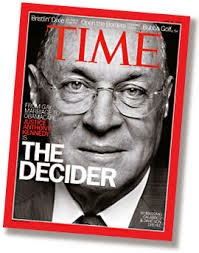
Along with the Supreme Court Ruling, Justice Anthony Kennedy filed a concurring opinion which is a valuable reminder of the constitutional nature and intent of the founding fathers regarding religious expression under the First Amendment of the U.S. Constitution. Justice Kennedy wrote (emphasis mine):
![]() |
| Justice Anthony Kennedy |
Secularists applaud “tolerance” of differing views as a virtue. However, the rules of tolerance do not apply to folks with “religious views” because they "force their views on others.” This week the Supreme Court affirmed the right of all Americans, whether “religious” or “non-religious,” to hold to a world-and-life view, or worldview. Furthermore, the Court held that regardless of their worldview, free exercise is essential in preserving their own dignity and in striving for a self-definition shaped by their religious precepts as relates to their daily participation in our larger community.
When I read Justice Kennedy’s concurring decision affirming my right to express and practice my Christian faith in public, I said, “YES!” But then it struck me. The Constitution also guarantees free expression to those who hold very different beliefs from mine or who are enemies of America. Then, I realized that “free expression” in this great “land of the free” will only be possible if we are willing to take individual responsibility to be respectful of differing views. As the Apostle James writes, we must be quick to hear, slow to speak and slow to anger; for the anger of man does not achieve the righteousness of God. (James 1: 19-20).
In a world that is increasingly divided over issues and resentful of Christians attempting to apply the salt and light of the Gospel to these issues, we will need to exercise gentleness and mercy. As Os Guinness wrote in A Free People’s Suicide (emphasis mine),
It is possible to be free at the constitutional level in terms of the structures of liberty, but to lose freedom and become servile or anarchic at the citizens’ level in terms of the spirit of liberty.
When asked by Marvin Olasky (WORLD Magazine, June 29, 2013) if this is already happening in America, Guinness responded (emphasis mine):
It is happening. Freedom is the greatest enemy of freedom. We’ve got a permissiveness in almost every area, and Americans have lost the capacity to say “no” to things that are wrong. A general ungluing, unraveling, permissive license leads to chaos. Freedom requires and assumes you know who you are and who you’re to be. It’s not just a formlessness; it’s the power to do what you ought, as Lord Acton used to put it.
How should God’s people function in a culture where the moral compass is being abandoned and where self-definition is lacking? Guinness is critical of the Christian right for, in his words, trusting politics to do more than politics can do. He elaborates in the same interview:
To put it in the language of William Wilberforce, they did the Lord’s work, but in the world’s way. Wilberforce had an incredible love for the people who hated him, mugged him, and attacked him physically twice—but he prevailed through love, and he wasn’t gushy in any sentimental way. The Christian right often shamelessly demonized and stereotyped, and we’re paying for the bad ways they fought it. But on the issues, I’m with them.
In response to Justice Kennedy’s decision, Jennifer Raught Brock, a Cedarville University graduate, expressed to me some of the hard challenges of true servants of Christ who exercise the right of free expression of their Christian faith in their public life for the glory of God and for the service to their neighbor. Jennifer wrote:
For Christians, kingdom work includes redeeming culture. Loving one's neighbor involves promoting justice and freedom. It's not an earthly, political kingdom we seek; God never promised us religious freedom. Nor did God promise freedom from pain. Yet that shouldn't stop us from trying to alleviate suffering. He never said we should expect financial stability, but that doesn't mean we don't work hard or give to those who are poor. He informed us that we're all going to die someday, but that doesn't mean that we refuse medicine when we're sick or that we fail to care about the overall quality of medical care in our society.
![]() |
| Supporting free expression of faith in the "larger community." |
If we are in Christ, the Apostle Paul states, we are new creatures (2 Corinthians 5: 17), no longer conformed to this world, but transformed by the renewing of our minds (Romans 12: 2). Of all people, being set free from sin and self, now free in Christ and free under the Constitution, we ought to know who we are, who we’re to be, and have the power to do what we ought. We ought to be “about” self-definition, but more basically, “all about” Christ-definition as we give witness to the fruit of His Spirit—love, joy, peace, patience, kindness, self-control as we participate in the broken and divided political, civic, and economic life of our larger community.
Subscribe to:
Posts (Atom)