Showing posts with label religion. Show all posts

Friday, August 5, 2022

Climate Change in Context – 2. Rightly Weighing Our Risks

Most of us would think nothing of standing beneath a huge cliff overhang.
  Some of us have even camped overnight in the “shelter” of an overhang.  However, we might be wary of standing or camping there if a huge fallen tree had precariously angled itself against the cliff edge.  Would you take that risk?

Our assessment of the level of danger might change when we factor in both the cliff and the fallen tree.  It’s a matter of perceived risk.  We judge that the biological processes decaying the tree will soften and dislodge the tree more rapidly than the geological processes of weathering will loosen the rocks.  Therefore, we conclude that we are at greater risk of being crushed beneath the decaying tree than being crushed by fallen rocks.

We make many of our choices based on the apparent level of risk, imminence of danger, and our personal threshold of fear.  I remember dressing in a protective honeybee hat and long sleeves with “bee smoker” ready to help my grandpa capture a bee swarm high up in a tree.  As I climbed the ladder, I immediately performed a risk assessment as to which would be the greater threat to my life—getting stung, or falling from the ladder while trying to avoid bee stings.  I decided to hold onto the ladder no matter what.

Divided Over Our Risk
Today, we are confronted by multiple threats to our lives.  Some seem remote; others may appear imminent.  For example, studies reveal that passengers of large-size cars are more likely to survive a crash than those riding in small cars.  However, those concerned about carbon footprint and the threat of climate change encourage us to drive smaller cars, even hybrid or electric cars.  Once again however, we must prioritize among the three risks to decide which is most urgent:  risk of dying in a car crash, risk of going broke from buying the more expensive car, or risk of a global climate crisis.

Speaking of the “global climate crisis,” Americans have been divided for several decades among “climate deniers,” “non-deniers,” and “disavowers” (i.e. those who accept the climate data but don’t take action).  Such a deeply divided culture needs an atmosphere of civility in which open dialog and sound reasoning can occur among climate scientists, ecologists, politicians, social scientists, and the general public.  We emphasized this point in a 2020 Oikonomia article, “
Climate Change in Context – 1. Getting the ‘Atmosphere’ Right.”  

Now, in Part 2 of our series on climate change, we focus on “Rightly Weighing Our Risks.”  Our purpose is to assess the relative influence of three spheres of influence on popular opinion and behavior related to the “climate crisis;” namely, (a) science, (b) politics, and (c) religion.  We understand that any of these three can influence the others, but we will try to address them separately.

Can Science Persuade?
In 2017, our Oikonomia article entitled “
Paris Accord: Wrong Climate for Creation Care” reviewed climate science data and various interpretations in considerable detail.  We raised important considerations related to the following:
(a) reliability of climate data,
(b) validity of scientific interpretations,
(c) predicted benefits of climate policies toward planetary and human health; and,
(c) influence on behavior of world leaders and their followers. 
Please click HERE to revisit our earlier analysis.


According to recent polling, voters are not convinced that climate change is the most urgent threat.  For example, polling by a progressive think tank, Data for Progress [Click HERE.], revealed that nearly half of Americans (48%) rank the faltering economy as their greatest concern compared to only 6% for climate change.  That the majority of Americans rank the economy and other issues at higher risk than climate change suggests that, in spite of dire predictions, they have adopted a utilitarian ethic.  Utilitarians pursue what they believe is the greatest good for themselves, and secondarily, the greatest good for the greatest number of other people.

Michael S. Northcott, Professor Emeritus of Ethics at the University of Edinburgh, concluded, “Scientific prophecies of environmental crisis do not have the motive power to change the direction of a form of civilization which has become accustomed to courting risk and hazard as a way of life (The Environment & Christian Ethics. Cambridge U. Press, 1996).”  As we noted earlier, we all assess risk of danger in our decision-making.  But sometimes we are tempted to ignore warnings and plunge ahead in spite of danger.  At other times we are distracted by “shiny objects” that distract us or distort our judgment from realizing a great and looming danger. 

The chart below highlights a few of the potentially disturbing changes in American culture.  Some have much larger and immediate implications than climate warming.  We recognize that these data are but a small subset of much more data on each subject.  However, based on these data which would you rank in the top five needing most immediate attention? [Click on chart to enlarge.]


Maybe we should be asking ourselves whether we’ve been too distracted by the “shiny objects” of climate change and the Green Revolution at the expense of other more imminent and dangerous trends.  On the other hand, maybe the distraction has kept us from marveling at the amazing near-constancy of many of the life-sustaining conditions of planet Earth (See blue portion of chart.).  Certainly, politics and the media have a persuasive influence on how we judge risks among the various threats we face.  We go there next.

Political Persuaders
Many politicians and policy makers emphasize the “imminent threat” of climate change.  To them, the climate threat justifies drastic reductions in fossil fuel usage. The resulting limits have hiked energy costs and triggered economic inflation.  Together, these changes cause additional emotional and spiritual challenges to the health of our culture.  Nevertheless, in efforts to convince climate-deniers and disavowers of the imminence of the “climate crisis,” some call for more aggressive re-education.

In the Journal of Environmental Thought and Education (Japan) [See
HERE.], John P. Clark writes (emphasis added) “we need to work harder on creating good environmental education so that the public can engage in more effective environmental thinking.”  But Clark’s view of “good environmental education” calls for aggressive indoctrination.  He recommends “reorganizing our social world into networks of awakened and caring transformational communities that are dedicated to undertaking whatever actions are necessary to put an end to the Necrocene (“era of death”) and initiate a new era characterized by the flourishing of life on Earth.”

Clark’s approach to environmental education, and that of many others who support “Green Energy” policies, involves integrating ecological principles with the social and political sciences.  Education ought to include integration across disciplines.  But education can quickly become forced indoctrination when it includes, in Clark’s words, “undertaking whatever actions are necessary” to bring about their envisioned transformation.  Not to be alarmist, but history has shown that individuals and followers who vow to “undertake whatever actions are necessary” have given rise to much suffering, destruction, and death.  Already, we can see signs of trouble on the horizon.

For example,
the agenda for 2030 of the World Economic Forum (WEF) [Click HERE] calls for a one-world government.  As we wrote in Oikonomia during the pandemic in 2020, “power-seeking individuals of the WEF believed the COVID lockdown provided the model for the next global lockdown—one justified by the threat of climate change!  [See “Climate Lockdowns Coming Soon,” click HERE.]  A 2020 statement by WEF proposes that the responses by “political institutions” to the COVID pandemic could serve as a “crucial dress-rehearsal for a transition to a different economic model…”  Already, Senator Jeff Merkley (D-OR) has urged the initiation of a climate lockdown as follows:

The climate crisis is one of the biggest emergencies that our country has ever faced, and our time is running out. Americans are counting on Biden to lead accordingly. Let’s act boldly, and treat this crisis like the emergency it is.  [Click 
HERE to read more.]

Senator Merkley’s proposal to avert the predicted “climate crisis” is typical of many
bold revolutionary proposals offered by scientists and politicians today.  Again, we must call for objective and civil discussion to assess the certainty and imminence of the climate threat and the likelihood that a given policy will bring about the intended result.  Building civility and community consensus at the national and global level is a tall order.

Lack of “Community” among Authorities
Authorities in both the scientific and political “community” would certainly be more convincing if they could reach a consensus that we are indeed facing a “climate crisis.”  However, in spite of the “Paris Accord,” there remains much “discord” among world leaders [See HERE.].  Many do not all take the climate data equally seriously.  Nor are they all equally committed to making good on commitments to reduce fossil fuel usage and resultant carbon emissions in the spirit of the Paris Accord.

The website “Our World in Data” [Click
HERE.] has an interactive collection of data charts on CO2 emissions by region and by nation.  The data reveal that Communist China lacks a genuine commitment to lowering atmospheric carbon emissions.  Note that China’s annual carbon emissions are over twice that of the United States.  Furthermore, China’s carbon emissions continue to trend upward while the US and other western nations have achieved drastic reductions in emissions. 

In spite of this great disparity, the
WEF and other authorities are pushing the notion of a global climate crisis.  Simultaneously, they are pressuring the US and western nations for drastic reductions in fossil fuel usage in favor of renewable energy, particularly wind and solar energy.  Efforts to restrict fossil fuel extraction in the US in order to force the switch from gasoline- and diesel-powered to electric-powered cars and trucks is well intended but experts believe, too fast for technology and the markets to adjust.  Already, restriction of synthetic fertilizer use by farmers disrupts agricultural production, resulting in food shortages and political unrest in nations like Sri Lanka and the Netherlands [Click HERE.]


Clearly, the so-called “global community” of nations is not behaving as a true community in addressing current ecological and economic concerns.  From a utilitarian ethical perspective, we can see that China’s “greater good” appears to be aimed at economic and political domination.  The governing Communist Party uses every weapon in its arsenal to achieve this goal with little apparent concern about the “climate crisis.”  Considering China’s effort to promote its prominence in the world through the Green Revolution, and before approving Sen. Merkley’s proposed “climate emergency” measures, we should remember the devastating effect of lockdowns during the COVID-19 (Wuhan Virus) pandemic on education, economy, education, exercise of faith, and overall well-being.

In view of China’s lack of cooperation in a “global community” approach to reduce carbon emissions, the recommendation of John P. Clark  to establish “awakened and caring transformational communities“ worldwide seems shallow and unrealistic.  Already, efforts like the Paris Accord and WEF are playing into the hands of Communist China, giving it the upper hand in its effort toward world domination, leaving the US in an increasingly weakened position.

Religious Faith Persuasion
Admittedly, the notion of a “global community” is not inherently wrong.  Each of our three spheres of influence-- science, politics, and religion attract people into community based on common goals, interests, or beliefs.  Like science and politics, our third system of influence, world religions, are systems of beliefs and practices believed to justify adherents in the eyes of some higher being or standard.

In recent years, many environmentally conscious people have integrated their love for nature into their preferred sacred, religious belief(s).  Many environmentally conscious people who have chosen to follow secular liberalism have rejected traditional the Judeo-Christian teachings of faith in God and the importance of marriage, family, and community.  Yet, as Sumantra Maitra writes,1 their human instincts for faith — to believe, worship, submit, and fear — didn’t just go away but manifested in various other pre-civilized tribal ways.  For example, a liberal seminary encouraged its students to skip classes to pray and confess sins in front of potted plants.  In Switzerland, 250 people in full funereal garb mourned the apparent approaching death of a glacier.

Major religions include the monotheistic (Judaism, Christianity, and Islam), polytheistic (e.g. Hinduism, Confucianism, Taoism), and atheistic and pantheistic (e.g. Buddhism).  Historically, the creation or natural world has served as an inspiration within many religions, each claiming they represent “the Way” to follow.  What follows is a sketch of how some have drawn upon Buddhism as a basis for right living and caring for the Earth.

Buddhism and Christianity
John P. Clark’s call for an “era of a liberated humanity and a liberated nature,” described earlier, is rooted in Buddhism [See
HERE.].  As Clark elaborates, “In this endeavor, we can find inspiration in the ancient Buddhist concept of Appamāda. “Appamāda” is a Pali word (“Apramada” in Sanskrit) that conveys the ideas of both ‘mindfulness’ and ‘care.’ The practice of Appamāda implies that we must be awakened to the world and all the beings around us, and that in such an awakened state we become capable of responding to and caring for them effectively.”

Buddhism denies the existence of God and His salvation by grace through Jesus Christ.  Instead, “salvation” rests in human effort.  The Buddhist practice of Appamāda, in conjunction with extensive periods of meditation, can lead us to find within ourselves our own moral justification through enlightenment resulting in a greater mindfulness and a caring attitude.  Clark blames the “capitalist society of mass consumption” for generating “a certain form of selfhood that is inclined to obsessive desires, powerful addictions, and sick attachments.”  Clark goes on to suggest that capitalism generates “…an entire culture of consumption that socializes us into believing that a world of obsessive craving is the only one possible.”  On the other hand, as we are enlightened, we overcome the inclination to satisfy our compulsions and destructive behavior toward ourselves and the Earth.

In contrast to the subjectivity of Buddhism, Christianity is based on the objective revelation and authenticity of God’s Word (2 Peter 1: 20-21).  The inspired Scriptures reveal everything we need to know about our moral state, our responsibility before God, our justification, and our future.  God’s objective revelation culminates in the revelation of His Son, Jesus Christ, the Living Word, and His incarnate birth, sinless life, death, and resurrection.

Whereas, the Buddhist targets the material world and capitalist society as sources of our cravings, addictions, and unhealthy attachments, Christianity locates the source of our destructive thoughts and behavior within the sin-corrupted mind and heart of each person.  We are rebels in the image of Adam and Eve who yielded to Satan’s lies.  Romans 1: 21-24 reveals the pathetic path our ancestors chose (emphasis added to highlight progression): 

For although
(a) they knew God,
(b) they neither glorified Him as God nor gave thanks to Him,
(c) but they became futile in their thinking and darkened in their foolish hearts.  Although they claimed to be wise, they became fools, and exchanged the glory of the immortal God for images of mortal man and birds and animals and reptiles. 
(d) Therefore, God gave them over in the desires of their hearts to impurity for the dishonoring of their bodies with one another.

Unlike Buddhism which offers unending cycles of reincarnation, Christianity offers the free gift of eternal life beginning at the moment of salvation by faith.  Jesus said, “Truly, truly, I say to you, whoever believes has eternal life (John 6: 47).”  Christian theology teaches that each individual is bound for eternal suffering in Hell unless justified by faith in the suffering, death, and resurrection of God the Son who paid the price for our justification (Romans 6: 23).  The Apostle Peter wrote, Christ suffered for our sins once for all time. He never sinned, but he died for sinners to bring you safely home to God.  He suffered physical death, but he was raised to life in the Spirit (1 Peter 3: 18).

The Christian is born again to new life and now has the power of the Spirit of Christ to enable him or her to produce “the fruit of the Spirit which is love, joy, peace, patience… self-control; against such things there is no law” (Galatians 5: 22-23).  This fruit is contrasted with works of our flesh which are “…sexual immorality, impurity, sensuality, idolatry,” and other compulsions (v. 19-21) which John P. Clark named as the cause of environmental degradation. 

New Profession: “Steward’
The Christ-follower does not have to seek personal identity in materialism and excessive consumption.  Instead, he or she finds love, joy, peace, and self-control in his or her intimate walk with God.  Spirit-led Christ-followers reject the path of the first man, Adam, who was given dominion and stewardship of the Earth but rebelled, leading to the Fall of mankind (Genesis 1: 28; 2: 15).   

The Christ-follower is reborn and renewed in the Spirit of the “second Adam (Christ)” to serve as steward of God’s grace and God’s creation.  This stewardship is central to his or her keeping of the two great commandments—loving God whole-heartedly and loving neighbor as much as love for self (Matthew 22: 36-40).  The steward who focuses on loving God and neighbor is wonderfully positioned to balance his or her vibrant hope of eternal Heaven with a commitment to stewardship of the Earth which he or she serves for the glory of God and the good of neighbor.  In contrast to the ambiguity and subjectivism of Buddhism and all other man-derived religions, the Christian faith provides a clear, complete, and objective revelation through the Scriptures.  Environmental ethicist, J.B. Callicott, has written, The Judeo-Christian Stewardship Environmental Ethic is especially elegant and powerful.  It also exquisitely matches the requirements of conservation biology [by conferring] objective intrinsic value on nature in the clearest and most unambiguous of ways:  by divine decree2.  

What Are Your Greatest Risks?
Would you ever choose to stand beneath or locate your camp under a cliff overhang with a decaying log teetering above you?  We hope not; at least before you assess the risk of danger.  We also hope this article has helped you consider how you are prioritizing among the various social and global risks that pose a threat to you and your loved ones, community, and nation.  Shouldn't we all try to become more knowledgeable of how science, politics, and religious faith are influencing our leaders?   Then, we can be better prepared to exercise our voices and our votes in support of leaders who will make wise decisions.   

From our Christian faith, we conclude by saying, God offers Christ-followers the promise of life forever in the New Heaven and the New Earth in which righteousness dwells (Revelation 21-22).  Some of us may die from underestimating risk.  Others of us may be called by Christ our Savior to risk our lives for a person or for the cause of His Gospel.  Regardless, both the Scriptures and experience tell us our death rate is 100%.   After this comes judgment that determines where we will spend eternity (Hebrews 9: 27).  Risk of calamity from climate warming is worthy of consideration, but the risk of eternal damnation and separation from God is 100% if we reject God’s provision through the Cross of Christ.  About what risks are you most concerned?

Comments and Questions:
As always, we welcome your responses using the “Comments” link below to express your thoughts and questions about this article, or what you believe and why.  You may also write privately to silviusj@gmail.com
-------
Footnote:
1 Maitra, Sumantra. "Climate Worship Is Nothing More than Rebranded Paganism.  The Federalist, September 26, 2019.
2 Van Dyke, Fred. 2006. Cultural Transformation and Conservation: Growth, Influence, and Challenges for the Judeo-Christian Stewardship Environmental Ethic Perspective on Science and Christian Faith 58(1):48

Related Readings:
Creation Care and Christian CharacterCreation Care, Summer, 2007
Calling for Stewardship Without a Master” July 2, 2013
Fundamentals of Conservation, Part 3 "Serving with Our Neighbor” November 23, 2014

Paris Accord: Wrong Climate for Creation Care   Oikonomia, June 9, 2017
Climate Change in Context – 1. Getting the ‘Atmosphere’ Right.”  September 21, 2019
Earthkeeping and Character: Book Review” December 5, 2020

Saturday, May 16, 2020

“The Chosen” - Powerful Message on Film

Over the years, filmmakers who have chosen to portray the life of Jesus have always been challenged to achieve biblical accuracy while also framing the narrative and characters in a way that conveys the message and ministry of Christ in an understandable and entertaining way.  Usually a film will contain a disclaimer to explain how its creators have decided to portray the amazing life and ministry of Christ.  Even the inspired authors of the Gospel accounts included only selected aspects of the life of Christ.

The Apostle John paused near the end of his epistle to include a purpose statement for his Gospel (“Good News”) with an implied disclaimer.  He writes, Jesus performed many other signs in the presence of his disciples, which are not recorded in this book.  But these are written that you may believe that Jesus is the Messiah, the Son of God, and that by believing you may have life in his name (John 20: 30-31).

The opening credits to Episode 1, Season 1 of Dallas Jenkins’ film production, The Chosen, includes a disclaimer that reads very much like the above disclaimer written by John:

 “The Chosen” is based on the true stories of the gospels of Jesus Christ.  Some locations and timelines have been combined or condensed.  Backstories and some characters or dialogue have been added.
However, all biblical and historical context and any artistic imagination are designed to support the truth and intention of the Scriptures.  Viewers are encouraged to read the gospels.


In her review of The Chosen in WORLD Magazine, Megan Basham notes that Jenkins “takes creative license by asking intelligent questions then imagining stories that might answer them.” For example, Episode 1 introduces viewers to a young man, Matthew, who will become one of Jesus’ disciples and eventually write the Gospel of Matthew.  But here Matthew is employed to do the Romans’ bidding and is hated by the Jewish people because he extracts exorbitant taxes from their meager incomes.

Four other future followers of Christ are introduced: Peter and his brother Andrew, and James and John.  They are among the Jews feeling the bite of taxation as they struggle to maintain their small business—fishing in the Sea of Galilee.  Jenkins uses the threat of financial ruin under heavy Roman taxation as a plausible backstory for why these rugged men had been toiling at their nets all night until Jesus told them to “put out into deep water and let down your nets for a catch (Luke 5: 1-11).”

But the first character we meet in The Chosen is an unlikely one to launch a crowdfunded movie series on the life of Christ.  She is Mary of Magdala, better known as Mary Magdalene, and she appears in the first scene in the middle of the night as a fearful little girl clutching her doll.  Her father comforts her with the promise from prophetic Scripture, written 500 years earlier, and they recite these words:

But now, thus says the LORD,
who created you, O Jacob,
And He who formed you, O Israel:
“Fear not, for I have redeemed you;
 I have called you by your name;
You are Mine
. – Isaiah 43: 1

Fast-forward 28 years, and we find Mary Magdalene who goes by another name and is an abused, rejected, and demon-possessed woman.  To her, the promise of God in Isaiah now seems hollow and powerless.  Nor does Mary find assistance or hope from Nicodemus who represents the organized religion of his day.

Many of us can identify with Mary as we struggle against the age-old temptations of pride, power, materialism, depression, and addiction.  But just when she reaches the depths of despair, Mary hears a Man calling her by her real name, “Mary.” Then, He speaks those same words from Isaiah that she had recited in the warmth and security of her father’s arms—“…I have redeemed you; I have called you by name; You are Mine.”

We were deeply moved and impressed by the first episode of The Chosen.  So we purchased the first season and in so doing, are “paying it forward” to assist writer/director Dallas Jenkins and VidAngel in the making of eight additional episodes for Season 2.  I hope you will take time to view online the first episode, “I Have Called You by Name.”  Subsequent episodes are available at VidAngel.com.

Monday, May 8, 2017

President Trump Delivers! Or Does He?

Therefore when the people saw the sign which He had performed, they said, "This is truly the Prophet who is to come into the world.’  So Jesus, perceiving that they were intending to come and take Him by force to make Him king, withdrew again to the mountain by Himself alone.

Jesus did not come into the world to be another prophet; nor an earthly, political king; nor a faith healer; nor a champion of “social justice;” nor a celebrity.  In answer to the false charge before the Roman governor, Pilate, that Jesus had intended to oppose Caesar, He answered, My kingdom is not of this world (John 18: 36a).  Instead, Jesus had openly taught that even the Son of Man did not come to be served, but to serve, and to give His life a ransom for many (Mark 10: 45).  Yet, the masses greeted Jesus, riding on a  young colt of a donkey on that first “Palm Sunday” crying out for a political leader who would deliver the nation Israel from the tyranny of the Romans (See “Palm Sunday:  Don’t Miss Jesus Today”).

Like those in the first century who saw Jesus as just another popular figure who might have the power to lead them to a better life, so today we are quick to follow the person who is powerful, or popular, and promises deliverance.  Election 2016 has given America a new president.  Like him or not, Donald J. Trump is the victor and he has quickly set about fulfilling his campaign promise to “Make America Great Again.”  Trump’s promise to appoint a conservative justice to the U.S. Supreme Court has been accomplished, his promise to get the economy going is being met with favorable jobs reports, and American standing in the world seems to be strengthening by a show of force and resolve against those who disrespect human life and liberty. 
President Trump signs EO protecting religious freedom.

Related to his efforts to protect human life and religious freedom, on May 4, the National Day of Prayer, President Trump, in a Rose Garden ceremony, signed an executive order “Promoting Free Speech and Religious Liberty.” Thus, in keeping his promise to bring to an end the persecution of Christians, Jews, and other well meaning faith-based groups, Trump told those in attendance,

We're a nation of believers.  Faith is deeply embedded into the history of our country... No American should be forced to choose between the dictates of the federal government and the tenets of their faith.

Some like Liberty University President, Jerry Falwell Jr., praised President Trump for his wisdom in crafting the executive order so as to roll back the Johnson Amendment which had been used to threaten religious leaders from speaking out on issues of politics and morality in houses of worship for fear of losing tax-exempt status.  Dr. Falwell supports Trump’s balanced approach of protecting free religious expression while not allowing religious groups to become political action groups that collect donations to support favored candidates. 

Other religious conservatives fear the executive order doesn’t go far enough.  Gregory S. Baylor of the Alliance Defending Freedom sees little protection for people "threatened with the effective closure of their family-run business for simply expressing a religious point of view on marriage that differed from that of the federal government."  Furthermore, regarding bullying of conservative and religious groups by the IRS during the Obama Administration, Baylor is concerned that "Americans cannot rely on the discretion of IRS agents, some of whom have abused that discretion for years to silence pastors and intrude into America’s pulpits."

Meanwhile, civil rights groups are threatening legal challenge against any action that would deny benefits or services to those they oppose on moral grounds, such as same-sex spouses.  Sarah Warbelow, legal director for the Human Rights Campaign stated, “We are watching and we will challenge any effort by [Attorney General] Jeff Sessions or other agencies of Trump’s administration to license discrimination.”

Like many “religious conservatives,” I am thankful that Donald Trump is our president.  I am very encouraged by his efforts to strengthen American institutions that defend moral and religious beliefs and practices.  Trump’s Rose Garden speech on May 4 before and during his signing of the executive order portrays what seems to be his heart-felt support and valuing of religious freedom and commitment to people of faith.  I urge readers to listen and observe the president’s carefully planned presentation to religious leaders of many faiths.  You should also examine the wording of Trump’s executive order Promoting Free Speech and Religious Liberty.  It is our responsibility to be informed of the momentous decisions and actions being taken by our leaders by following reliable sources of news that broadcast what our leaders say and write, and not simply political commentary.

As blessed and  thankful as I was to observe President Trump’s smiling face and words of conviction about religious freedom, I realize that this executive order will not bring healing to America’s deep moral and political divide.  Healing of that divide must begin in human hearts like mine.  If Donald Trump has given us as people of faith anything of value it is an invitation to rededicate ourselves to a lifestyle of repentance and revival of the spirit of holy living that Jesus died and rose again to provide.  President Trump has the power, politics, and celebrity that gives many of us hope that he might deliver America from its divisions, but only Jesus Christ can truly deliver us.  Jesus calls us to repentance and faith so that He through His Spirit can empower us to live by what He called “A New Commandment:” He said to his disciples (John 13: 34-35),


A new commandment I give to you,
that you love one another,
even as I have loved you,
that you also love one another.
By this all men will know that you are My disciples,
if you have love for one another.

President Trump has responded to requests from the faith community by signing an executive order which he believes will be a step toward defending religious expression.  Now it is the responsibility of all of us who value the Christian faith to live by the Great Commandments to love God above all other things and to love our neighbor as ourselves. This means being sure God is preeminent in our priorities and that we respect the opinions, possessions, and priorities of our neighbor regardless of his or her political stance, ethnic group, wealth, or gender.  It is ultimately God's everlasting love for us, in us, and flowing from us to others that will heal broken lives and heal our land.  A.W. Tozer, in The Knowledge of the Holy (Harper), wrote,

The love of God is one of the great realities of the universe, a pillar upon which the hope of the world rests. But it is a personal, intimate thing, too. God does not love populations, He loves people. He loves not masses, but men. He loves us all with a mighty love that has no beginning and can have no end.  In Christian experience there is a highly satisfying love content that distinguishes it from all other religions and elevates it to heights far beyond even the purest and noblest philosophy. This love content is more than a thing; it is God Himself in the midst of His Church singing over His people. True Christian joy is the heart’s harmonious response to the Lord’s song of love.

Saturday, July 5, 2014

High Court Defines & Defends Free Expression

The Supreme Court ruled this week that Hobby Lobby and Conestoga, two for-profit corporations, do not have to provide certain contraceptives to their employees pursuant to the Affordable Care Act (ACA) if such provision is deemed in violation of the employer’s faith convictions.  Less widely reported by the media was the fact that the two “closely held corporations” had already included sixteen other contraceptives in their employee health coverage.  In addition, the wages provided by these corporations are so generous (Hobby Lobby employees start at $14/hr and $9.50/hr, respectively, for full-time and part-time employees) that even a part-time employee could purchase a month’s supply of contraceptives (estimated, $9.00) on their own for approximately one hour’s work.
Supreme Court case was about more than "women's rights."
Nevertheless, the respective corporate owners, the Green Family and the Hahn family, were taken to court for refusing to include four additional contraceptives as mandated under the ACA.  Why?  These four products are known to destroy the human embryo.  Thus, including them along with the 16 products they had approved would compromise their faith position which holds that each human life begins at conception.

In the 5-4 opinion written by Justice Samuel Alito, the Court held that the ACA contraceptive mandate violates the Religious Freedom Restoration Act (RFRA).  Alito was joined by Chief Justice John Roberts and justices Scalia, Thomas, and Kennedy.   Monday’s close decision is now highly contested in the court of public opinion.  Opponents of the decision argue along the lines of Justice Ginsburg’s opposing decision.  Ginsburg claimed that the Court was wrong in denying free access to contraceptives to thousands of women employed by Hobby Lobby and Conestoga or dependents of persons those corporations employ...who do not share the corporation owners’ religious faith.  Thus, the case is being targeted by opponents as a “women’s rights” violation. 

Defenders of the Court’s decision do not see their victory as imposing unnecessarily on the rights of women. First, the two corporations had already been providing insurance coverage for all approved non-abortificient products.  Second, as noted above, both corporations are very generous with their hourly wage schedule.  Therefore, defenders of the court decision have honest reason for celebration which defends their deeply held conviction about the rights of the unborn.  More broadly, the decision affirms the right of people of faith to act upon their belief system outside church doors and in their workplaces.

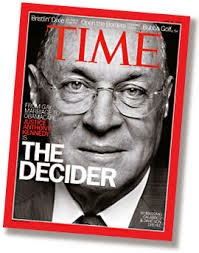
Along with the Supreme Court Ruling, Justice Anthony Kennedy filed a concurring opinion which is a valuable reminder of the constitutional nature and intent of the founding fathers regarding religious expression under the First Amendment of the U.S. Constitution.  Justice Kennedy wrote (emphasis mine):
Justice Anthony Kennedy
In our constitutional tradition, freedom means that all persons have the right to believe or strive to believe in a divine creator and a divine law. For those who choose this course, free exercise is essential in preserving their own dignity and in striving for a self-definition shaped by their religious precepts. Free exercise in this sense implicates more than just freedom of belief. It means, too, the right to express those beliefs and to establish one’s religious (or nonreligious) self-definition in the political, civic, and economic life of our larger community.

Secularists applaud “tolerance” of differing views as a virtue.  However, the rules of tolerance do not apply to folks with “religious views” because they "force their views on others.”  This week the Supreme Court affirmed
the right of all Americans, whether “religious” or “non-religious,” to hold to a world-and-life view, or worldview.  Furthermore, the Court held that regardless of their worldview, free exercise is essential in preserving their own dignity and in striving for a self-definition shaped by their religious precepts as relates to their daily participation in our larger community.

When I read Justice Kennedy’s concurring decision affirming my right to express and practice my Christian faith in public, I said, “YES!”  But then it struck me.  The Constitution also guarantees free expression to those who hold very different beliefs from mine or who are enemies of America.  Then, I realized that “free expression” in this great “land of the free” will only be possible if we are willing to take individual responsibility to be respectful of differing views.  As the Apostle James writes, we must be quick to hear, slow to speak and slow to anger; for the anger of man does not achieve the righteousness of God. (James 1: 19-20).   

In a world that is increasingly divided over issues and resentful of Christians attempting to apply the salt and light of the Gospel to these issues, we will need to exercise gentleness and mercy.  As Os Guinness wrote in A Free People’s Suicide (emphasis mine),

It is possible to be free at the constitutional level in terms of the structures of liberty, but to lose freedom and become servile or anarchic at the citizens’ level in terms of the spirit of liberty.

When asked by Marvin Olasky (WORLD Magazine, June 29, 2013) if this is already happening in America, Guinness responded (emphasis mine):

It is happening.  Freedom is the greatest enemy of freedom.  We’ve got a permissiveness in almost every area, and Americans have lost the capacity to say “no” to things that are wrong.  A general ungluing, unraveling, permissive license leads to chaos.  Freedom requires and assumes you know who you are and who you’re to be.  It’s not just a formlessness; it’s the power to do what you ought, as Lord Acton used to put it.

How should God’s people function in a culture where the moral compass is being abandoned and where self-definition is lacking?  Guinness is critical of the Christian right for, in his words,
trusting politics to do more than politics can do.  He elaborates in the same interview:

To put it in the language of William Wilberforce, they did the Lord’s work, but in the world’s way.  Wilberforce had an incredible love for the people who hated him, mugged him, and attacked him physically twice—but he prevailed through love, and he wasn’t gushy in any sentimental way.  The Christian right often shamelessly demonized and stereotyped, and we’re paying for the bad ways they fought it.  But on the issues, I’m with them.

In response to Justice Kennedy’s decision, Jennifer Raught Brock, a Cedarville University graduate, expressed to me some of the hard challenges of true servants of Christ who exercise the right of free expression of their Christian faith in their public life for the glory of God and for the service to their neighbor.  Jennifer wrote:

For Christians, kingdom work includes redeeming culture. Loving one's neighbor involves promoting justice and freedom. It's not an earthly, political kingdom we seek; God never promised us religious freedom. Nor did God promise freedom from pain. Yet that shouldn't stop us from trying to alleviate suffering.  He never said we should expect financial stability, but that doesn't mean we don't work hard or give to those who are poor.  He informed us that we're all going to die someday, but that doesn't mean that we refuse medicine when we're sick or that we fail to care about the overall quality of medical care in our society.

Supporting free expression of faith in the "larger community."
Our “free expression” comes at a great price through the sacrifice of Christ Who laid the foundation for our spiritual freedom; and later, the sacrifices of American men and women who have fought and died to give birth and then defend this nation during more than two centuries.  Many did so because they believed
that all men are created equal, that they are endowed by their Creator with certain unalienable Rights, that among these are Life, Liberty and the pursuit of Happiness.  May God help us to exercise our freedom in a Christ-like manner with firmness and boldness, yet with gentleness and reverence.

If we are in Christ, the Apostle Paul states, we are new creatures (2 Corinthians 5: 17), no longer conformed to this world, but transformed by the renewing of our minds (Romans 12: 2).  Of all people, being set free from sin and self, now free in Christ and free under the Constitution, we ought to know who we are, who we’re to be, and have the power to do what we ought.  We ought to be “about” self-definition, but more basically, “all about” Christ-definition as we give witness to the fruit of His Spirit—love, joy, peace, patience, kindness, self-control as we participate in the broken and divided political, civic, and economic life of our larger community.

Wednesday, October 16, 2013

Redeeming Halloween for a Higher Purpose

Recently, Inglewood Elementary School in Lansdale, a suburb of Philadelphia, PA decided to cancel a parade and other annual Halloween celebrations.   In a letter to parents, the school administration explained that celebrating Halloween promotes religious beliefs and therefore violates school policy. 

I am saddened at the prohibition of prayer, the Pledge of Allegiance, and other aspects of religious expression in the public classrooms of America.   However, the recognition of Halloween activities as being “religious” in nature is at least consistent with prohibition of Christmas and Easter celebrations in schools.  

New Yorkers celebrate Halloween in Greenwich Village.  
(Photo:  Emmanuel Dunand, AFP/Getty Images)
Halloween is indeed a holiday [“holy day” or “day set aside for religious observance”] with significant religious elements.  Like any other holiday, Halloween can be celebrated in a variety of ways, and it is not the purpose of this article to condemn the holiday in all of its manifestations. However, there are thematic elements in Halloween that are troublesome.  In his article, Christianity and the Dark Side—What About Halloween? Albert Mohler cites Harold L. Myra of Christianity Today who explains the pagan religious origin of Halloween:

More than a thousand years ago Christians confronted pagan rites appeasing the lord of death and evil spirits.  Halloween’s unsavory beginnings preceded Christ’s birth when the druids, in what is now Britain and France, observed the end of summer with sacrifices to the gods. It was the beginning of the Celtic year and they believed Samhain, the lord of death, sent evil spirits abroad to attack humans, who could escape only by assuming disguises and looking like evil spirits themselves.


Halloween not only focuses our attention on the “dark side” of the spirit world, but it also presents a materialistic philosophy dressed in the alluring appeal to all ages through candy, alcohol, exotic costumes, wild parties, and the like.  According to Bruce Horovitz, USA TODAY October 24, 2012, Halloween is second only to Christmas in consumer spending for decorations, and the increased spending is due in large part to the take-over of the holiday by adults.  Horovitz explains:

A decade ago, fewer than three in 10 costumes purchased for Halloween at Halloweenexpress.com were for adults. Now [2012], it's more than six in 10. It should be no surprise that consumers will spend an average of $123 this Halloween, more than twice the average $53 that they spent on it a year ago, reports American Express Saving & Spending Tracker.

Dr. Mohler assesses how Christians respond to the excesses of Halloween as follows:

The issue of Halloween presses itself annually upon the Christian conscience. Acutely aware of dangers new and old, many Christian parents choose to withdraw their children from the holiday altogether. Others choose to follow a strategic battle plan for engagement with the holiday. Still others have gone further, seeking to convert Halloween into an evangelistic opportunity. Is Halloween really that significant?

Della Rose picks out her pumpkin at Trabbic Farm
How should we then live in the October season of witches, goblins, corn mazes, and candy?  After all, many of us have good memories as kids and as parents of making our own “trick-or-treat” costumes, our own candy, our hot cider, and our own brand of fun during the chilly October nights.  I for one believe Halloween can be celebrated in ways that are wholesome (Hum! When have I last heard that word?); and, that create the blend of good fun, activities, and treats we all enjoy.  Allow me to share our story.

For several years, it has been our family tradition to take our grandchildren, Caleb, Kiara, and Della to the Trabbic Pumpkin Farm.  The experience is enjoyable, educational, and inspiring.  It is enjoyable, because there are lots of things for children (and adults) to do--petting animals, climbing on straw, corn maze, and refreshing cider and donuts, etc.  It is educational to learn fun facts about pumpkins, honeybees, chickens, and other farm topics.  And it is inspiring to hear Mr. Trabbic share how the labor of him, Mrs. Trabbic, and their sons is only part of what makes a good harvest possible.  It is God Who must provide the rain and weather conditions necessary for their crops including pumpkins.  They politely point out that God is not only Creator and Sustainer of Earth.  He is also the Author and Protector of human life including the unborn, and humans are stewards of both the land and life in all its forms. 
Creating a memory of fun at the Trabbic Farm

In spite of “comments” by readers of an excellent food blog, the Luna Pier Cook, regarding the Trabbic Farm warning of a possible “offensive religious message,” our annual visits to the Trabbic Farm are anything but offensive.  Indeed, such warnings seem much more appropriate for those who plan to attend Halloween events, which often promote a very dark and even demonic religious agenda.

Thank you, Trabbic family for inviting us to direct our thoughts toward "Whatsoever is true, honorable, right, and pure...lovely, of good repute...excellent and...worthy of praise...(Philippians 4: 8)"  Thank you for pointing our attention heavenward to our gracious Creator and Sustainer from Whose hand comes “every good and perfect gift” (James 1: 17) including the sun, rain, and weather conditions necessary for the food we eat.  Thank you, Trabbic family, for your hard work on the land God has entrusted to you, and for your positive testimony to visiting adults and children even in years when your crops do not turn out so well.  May your tribe increase.