Showing posts with label Supreme Court. Show all posts

Tuesday, June 5, 2018

Religious Liberty in Our Culture of Moral Relativism

Yesterday, the United States Supreme Court, in a 7-2 decision, sided with Jack Phillips, a Colorado baker and evangelical Christian who refused to provide a wedding cake for a same-sex couple because of his religious opposition to same-sex marriage.   The High Court in effect ruled that states must retain the right to protect same-sex couples from discrimination, but that religious liberty must also be considered and protected.

Jack Phillips, "the baker"
Although the 7-2 decision looks like a resounding victory for religious liberty, the Supreme Court decision is regarded as “narrow.”  As Adam Liptak writes in The New York Times:

The court’s decision was narrow, and it left open the larger question of whether a business can discriminate against gay men and lesbians based on rights protected by the First Amendment

My friend and former colleague, Dr. Mark Caleb Smith, Associate Professor of Political Science and the Director of the Center for Political Studies at Cedarville University cautions that while the Court did side with “the baker,” it “did so only in a limited fashion.”  Smith, who teaches courses including “American Politics” and “Constitutional Law” at Cedarville, writes as follows in his blog article, Much Ado About Something? SCOTUS sides with Evangelical Baker:

Kennedy's ruling does NOT deal with the nature of the Colorado law, nor does it touch on similarly situated business owners within the industry. So, you can argue, I think reasonably, that the Court did not address the major issues surrounding the basic conflict between religious liberty and same-sex marriage or LGBTQ rights. The Court did not examine the nature of the religious liberty claim per se, at least outside of the sincerity of Phillips' beliefs. The Court did not establish the extent to which religious liberty is a legitimate foundation for Phillips' decision. And, when the Court did look at some hypotheticals, it did not get too specific. Kennedy notes that surely pastors would have protection against being forced to conduct ceremonies, but beyond that Kennedy does not tread.

This Supreme Court decision is important to all who are concerned with First Amendment rights.  But in today’s culture of moral relativism, it is not easy to strike a balance between protections of religious liberties and same-sex marriage rights without making government the chief moral conscience of America.  After all, submission to righteous moral convictions based God’s standards cannot come from court rulings or congressional legislation any more than one can be made right (i.e. righteous) with God by trying to obey the Ten Commandments. 

What then is the answer to the challenge of protecting religious liberty in a culture in which moral practices like same-sex marriage are perceived as being in violation of Judeo-Christian religious teachings?  I believe the answer is not more government or better Supreme Court decisions.  Instead, the answer is to build stronger families, churches, schools, and communities.

Many people today are searching for their own personal identity without the benefit of a stable home life in the presence of both biological parents.  Even with two loving parents, many children do not receive moral teachings at home or from dedicated teachers, a church family, or a stable community.  For this reason, many pre-adolescents remain confused about who they are or their origin, purpose, and destination.  Not surprising, many also have difficulty finding their own gender identity. 

It is essential and right that adults pay more attention to children, both in our own families and beyond; to find ways to show love to them that they often do not find in their own homes.  There are ways for adults such as myself who are retired to do this in a safe setting.  For example, hundreds of children here in Wayne County are now given exposure to Christian education through so-called “breakaway” programs.  These programs are set up with school administrations to allow students the option of using released-time or after-school time to receive biblical instruction.  Those who work in breakaway programs have many stories of how “hungry” many of the children are for Bible teaching in a setting in which they are appreciated and loved.

There is much hope for our nation in spite of the difficulty we face in protecting First Amendment rights in a moral relativistic culture.  That hope rests in spiritual revival in our individual lives and in our homes and churches which will then influence our schools, communities, and government.  On this day of fasting and prayer in our church, I pray that my life will direct a few others around me to find that personal encounter with the Risen Christ who came as He declared in Luke 4: 18-19, to proclaim release to the captives, and recovery of sight to the blind, to set free those who are oppressed, and to proclaim the favorable year of the lord.”

For More Information:
For those who wish to read in more detail Dr. Smith’s expert analysis of the Supreme Court’s ruling, I recommend that you read his complete analysisIf you would like to know more about how you can find true meaning and purpose through faith in Jesus Christ, you will find a short presentation of the Gospel (“Good News”) summarized in an outline from the Billy Graham Association called “Steps to Peace with God.” The outline explains God’s love, our predicament (sin and separation from God), what Jesus has done to address our predicament, and what you can do by faith to receive God’s righteousness (right standing with God).  If you have additional questions or comments, I’d love to hear from you.  Just post a “Comment” below or e-mail me at silviusj@cedarville.edu     

Wednesday, February 1, 2017

Shaping the Future of America

 
Last night another history-making announcement came to us when President Trump announced his nomination of Neil Gorsuch to fill the vacant position on the U.S. Supreme Court.  Thus begins what may be weeks or months of deliberation and bantering between those who approve and those who oppose his nomination.  

As I have thought about President Trump’s pick, I began to wonder if there are any points on which most supporters and opponents could agree.  Here is what I have come up with so far, and feel free to add or comment:

1.   Americans should agree that President Trump’s pick is really his attempt to keep his promise to voters who elected him to the presidency in November.  NOTE:  Those who still deny Trump’s legitimacy to hold the office of the presidency because he did not garner a majority of the popular vote should remember that he was legitimately elected according to the Constitution.

2.  Americans should not be surprised by the president’s nominee because Justice Gorsuch’s name was on Trump’s list of possible nominees which he provided early in the campaign.  Indeed, President Trump’s promise was to nominate a justice like the late Justice Antonin Scalia  who would interpret the Constitution and not legislate new law from the bench.

3.   Americans who take time to read up on the education and experience of Justice Gorsuch ought to agree that he is imminently qualified to serve on the High Court.  If you agree, you are joining the ranks of U.S. senators including Democratic senators Biden, Clinton, Schumer, Feinstein, and Obama who participated in a unanimous confirmation of Gorsuch to serve on the 10th Circuit Court of Appeals, in 2006.

4.   Americans who have studied the history of our nation’s founding and who understand the importance, even the brilliance, of having a separation of powers among the executive, legislative, and judicial branches of the federal government, ought to agree that in recent years we have witnessed an erosion of the intended authority of the Supreme Court.  Justices of the High Court are supposed to objectively interpret the Constitution and not be swayed by personal preference or the will of the people.  Instead, our Founding Fathers intended that the will of the people be expressed through elected legislators and senators.   But in recent  years, liberal justices on the Supreme Court have viewed the Constitution as an evolving document that ought to be subject to the changing morality of American society.  Result: rulings from the Court have foisted moral and social changes upon American culture against the will of the majority of Americans.  These include rulings that affirmed the right of the mother to dismiss the rights of her unborn child through abortion (Roe v. Wade, 1973) and the ruling in 2015 that redefined marriage to include marriage between two individuals of the same gender (Obergefell v. Hodges).  In both cases, the Court decision left behind the muddy, stormy waters of division and angry protests across our land.

5.   Americans ought to agree that the notion of “legislating from the bench” is not always easy to define or detect.  While conservatives who usually support “legislating from the bench” generally define it as overriding the will of democratically elected representatives in the legislative and executive branches, Mark Bennett, Houston criminal defense lawyer and author of the blog, Defending People claims he has a more objective test when he writes:

The test for real judicial activism is this: absent judicial review, would the result have been different? This definition and this test have the virtue of not being in the eye of the beholder. Whether the courts have allowed the other branches to do what they want is easy to determine.

Bennett goes on to evaluate landmark Supreme Court cases such as Roe v. Wade and Dred Scott v. Sanford using his definition.   Although the tone of his 2009 blog article, “Legislating Policy from the Bench: Five Examples” was a bit harsh to me, I found it instructive, which leads me to my sixth (the number signifying “incomplete;” I know--and so is this analysis) and final point.

6.  Americans ought to agree that the U.S. Senate decision on whether or not to appoint Justice Neil Gorsuch to the U.S. Supreme Court will have major influence on the landscape of American culture.  We ought also to agree that this time of senate deliberation ought to be a time for serious study of both the man and the role he is being appointed to play in our justice system.  We all ought to ask, “What kind of America do we want for the future?”  Furthermore, those of us who believe in the sovereignty of God Who is the Author of all rights and all authority ought to commit to regular and reverent prayer.  

Personally, as I consider our desperate need for integrity in all of our halls of government, I must recognize that my own heart is deceitfully flawed (Jeremiah 17: 9), rebellious by default, and in need of constant reproof, correction, and training in righteousness through the Word of God (2 Timothy 3: 16) and the instruction of godly friends, teachers, and mentors (2 Timothy 2: 2). 

As we pray for wisdom for our leaders and for ourselves, what better place to go than to the Book of Proverbs.  Here is just one relevant sample from Proverbs 14: 33-35:

Wisdom rests in the heart of one who has understanding,
But in the hearts of fools it is made known.
Righteousness exalts a nation,
But sin is a disgrace to any people.
The king's favor is toward a servant who acts wisely,
But his anger is toward him who acts shamefully.


When I consider our need for wisdom as a nation of diverse ethnic groups and socioeconomic backgrounds, I want to try to empathize with those whose life is very different from mine; but who also seek representation in our great nation.  Here are some particular examples of those I want to remember and learn to possess more compassion toward:

1.    I want to remember those who are devastated because their presidential candidate did not win the November election and who are fearful of what their future holds. 

2.   I want to understand how many who feel forgotten in “the American dream” would see the need to change America into a society where they can have another chance at life, but possibly themselves forgetting that with rights come responsibilities to family, neighbor, and to God. 

3.   I want to try to empathize with the woman who has chosen to abort at least one child, or the father of that child, both of whom may bear a weight of guilt. 

4.  I want to love and encourage those who have never known the love of two parents, many of whom may be very confused about their sexuality either because they have not had mom and dad to love them into maturity or because they have been sexually abused.  

5.   I also want to understand more of the hate that weighs upon those who hate people of faith, including Christian leaders in our churches, schools, and government whom they blame for the guilt they bear.

In order to be more compassionate toward others and  “practice what I preach,” I must remember Micah 6: 8 (emphasis mine),

He [God[has told you, O man, what is good; And what does the LORD require of you But to do justice, to love kindness, And to walk humbly with your God?

How about You?  What about this article has helped you think more clearly about this momentous time?   Where do you disagree or wish to add your thoughts?   I’d love to read your responses—just  use the “Comment” box.

Saturday, July 5, 2014

High Court Defines & Defends Free Expression

The Supreme Court ruled this week that Hobby Lobby and Conestoga, two for-profit corporations, do not have to provide certain contraceptives to their employees pursuant to the Affordable Care Act (ACA) if such provision is deemed in violation of the employer’s faith convictions.  Less widely reported by the media was the fact that the two “closely held corporations” had already included sixteen other contraceptives in their employee health coverage.  In addition, the wages provided by these corporations are so generous (Hobby Lobby employees start at $14/hr and $9.50/hr, respectively, for full-time and part-time employees) that even a part-time employee could purchase a month’s supply of contraceptives (estimated, $9.00) on their own for approximately one hour’s work.
Supreme Court case was about more than "women's rights."
Nevertheless, the respective corporate owners, the Green Family and the Hahn family, were taken to court for refusing to include four additional contraceptives as mandated under the ACA.  Why?  These four products are known to destroy the human embryo.  Thus, including them along with the 16 products they had approved would compromise their faith position which holds that each human life begins at conception.

In the 5-4 opinion written by Justice Samuel Alito, the Court held that the ACA contraceptive mandate violates the Religious Freedom Restoration Act (RFRA).  Alito was joined by Chief Justice John Roberts and justices Scalia, Thomas, and Kennedy.   Monday’s close decision is now highly contested in the court of public opinion.  Opponents of the decision argue along the lines of Justice Ginsburg’s opposing decision.  Ginsburg claimed that the Court was wrong in denying free access to contraceptives to thousands of women employed by Hobby Lobby and Conestoga or dependents of persons those corporations employ...who do not share the corporation owners’ religious faith.  Thus, the case is being targeted by opponents as a “women’s rights” violation. 

Defenders of the Court’s decision do not see their victory as imposing unnecessarily on the rights of women. First, the two corporations had already been providing insurance coverage for all approved non-abortificient products.  Second, as noted above, both corporations are very generous with their hourly wage schedule.  Therefore, defenders of the court decision have honest reason for celebration which defends their deeply held conviction about the rights of the unborn.  More broadly, the decision affirms the right of people of faith to act upon their belief system outside church doors and in their workplaces.

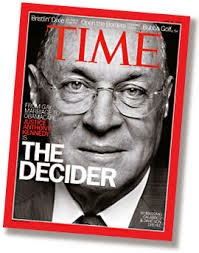
Along with the Supreme Court Ruling, Justice Anthony Kennedy filed a concurring opinion which is a valuable reminder of the constitutional nature and intent of the founding fathers regarding religious expression under the First Amendment of the U.S. Constitution.  Justice Kennedy wrote (emphasis mine):
Justice Anthony Kennedy
In our constitutional tradition, freedom means that all persons have the right to believe or strive to believe in a divine creator and a divine law. For those who choose this course, free exercise is essential in preserving their own dignity and in striving for a self-definition shaped by their religious precepts. Free exercise in this sense implicates more than just freedom of belief. It means, too, the right to express those beliefs and to establish one’s religious (or nonreligious) self-definition in the political, civic, and economic life of our larger community.

Secularists applaud “tolerance” of differing views as a virtue.  However, the rules of tolerance do not apply to folks with “religious views” because they "force their views on others.”  This week the Supreme Court affirmed
the right of all Americans, whether “religious” or “non-religious,” to hold to a world-and-life view, or worldview.  Furthermore, the Court held that regardless of their worldview, free exercise is essential in preserving their own dignity and in striving for a self-definition shaped by their religious precepts as relates to their daily participation in our larger community.

When I read Justice Kennedy’s concurring decision affirming my right to express and practice my Christian faith in public, I said, “YES!”  But then it struck me.  The Constitution also guarantees free expression to those who hold very different beliefs from mine or who are enemies of America.  Then, I realized that “free expression” in this great “land of the free” will only be possible if we are willing to take individual responsibility to be respectful of differing views.  As the Apostle James writes, we must be quick to hear, slow to speak and slow to anger; for the anger of man does not achieve the righteousness of God. (James 1: 19-20).   

In a world that is increasingly divided over issues and resentful of Christians attempting to apply the salt and light of the Gospel to these issues, we will need to exercise gentleness and mercy.  As Os Guinness wrote in A Free People’s Suicide (emphasis mine),

It is possible to be free at the constitutional level in terms of the structures of liberty, but to lose freedom and become servile or anarchic at the citizens’ level in terms of the spirit of liberty.

When asked by Marvin Olasky (WORLD Magazine, June 29, 2013) if this is already happening in America, Guinness responded (emphasis mine):

It is happening.  Freedom is the greatest enemy of freedom.  We’ve got a permissiveness in almost every area, and Americans have lost the capacity to say “no” to things that are wrong.  A general ungluing, unraveling, permissive license leads to chaos.  Freedom requires and assumes you know who you are and who you’re to be.  It’s not just a formlessness; it’s the power to do what you ought, as Lord Acton used to put it.

How should God’s people function in a culture where the moral compass is being abandoned and where self-definition is lacking?  Guinness is critical of the Christian right for, in his words,
trusting politics to do more than politics can do.  He elaborates in the same interview:

To put it in the language of William Wilberforce, they did the Lord’s work, but in the world’s way.  Wilberforce had an incredible love for the people who hated him, mugged him, and attacked him physically twice—but he prevailed through love, and he wasn’t gushy in any sentimental way.  The Christian right often shamelessly demonized and stereotyped, and we’re paying for the bad ways they fought it.  But on the issues, I’m with them.

In response to Justice Kennedy’s decision, Jennifer Raught Brock, a Cedarville University graduate, expressed to me some of the hard challenges of true servants of Christ who exercise the right of free expression of their Christian faith in their public life for the glory of God and for the service to their neighbor.  Jennifer wrote:

For Christians, kingdom work includes redeeming culture. Loving one's neighbor involves promoting justice and freedom. It's not an earthly, political kingdom we seek; God never promised us religious freedom. Nor did God promise freedom from pain. Yet that shouldn't stop us from trying to alleviate suffering.  He never said we should expect financial stability, but that doesn't mean we don't work hard or give to those who are poor.  He informed us that we're all going to die someday, but that doesn't mean that we refuse medicine when we're sick or that we fail to care about the overall quality of medical care in our society.

Supporting free expression of faith in the "larger community."
Our “free expression” comes at a great price through the sacrifice of Christ Who laid the foundation for our spiritual freedom; and later, the sacrifices of American men and women who have fought and died to give birth and then defend this nation during more than two centuries.  Many did so because they believed
that all men are created equal, that they are endowed by their Creator with certain unalienable Rights, that among these are Life, Liberty and the pursuit of Happiness.  May God help us to exercise our freedom in a Christ-like manner with firmness and boldness, yet with gentleness and reverence.

If we are in Christ, the Apostle Paul states, we are new creatures (2 Corinthians 5: 17), no longer conformed to this world, but transformed by the renewing of our minds (Romans 12: 2).  Of all people, being set free from sin and self, now free in Christ and free under the Constitution, we ought to know who we are, who we’re to be, and have the power to do what we ought.  We ought to be “about” self-definition, but more basically, “all about” Christ-definition as we give witness to the fruit of His Spirit—love, joy, peace, patience, kindness, self-control as we participate in the broken and divided political, civic, and economic life of our larger community.