Showing posts with label history. Show all posts

Wednesday, March 5, 2025

Treasures Along Roads Less Traveled

Two roads diverged in a wood, and I--
I took the one less traveled by,
And that has made all the difference
.

In his beloved poem, "The Road Not Taken," Robert Frost uses the imagery of divergent roads where we as travelers in life must choose which road we will follow.  Indeed, our lives continually require us to make choices.  Some may have only minor consequence.  But Frost’s “fork in the road” analogy seems to suggest major choices we must make.  We all make choices that shape our moral and spiritual identity, form our social network, influence how we use material resources, and sensitize us to our vocational calling and purpose in life. Whether our choices are good or bad, we are all given time, talents, and treasures to use as stewards of these as gifts and opportunities.

Book Review
This month’s blog presents a book review of Forests, Wetlands and Flamescapes, subtitled Wildlands of the Dayton, Ohio Region in 1800…and Today, authored by my friend, David Nolin.  From my vantage point, Dave seems to have taken "the one less traveled' -- one that “was grassy and wanted wear.” Whether I am correct in placing Dave on such a path and whether I’m making a correct application of Frost’s intent will remain to be seen.  I will leave it for Dave and other readers to comment and steer me aright if necessary.  But stay with me and we’ll see where this blog leads.

How Things Used to Be
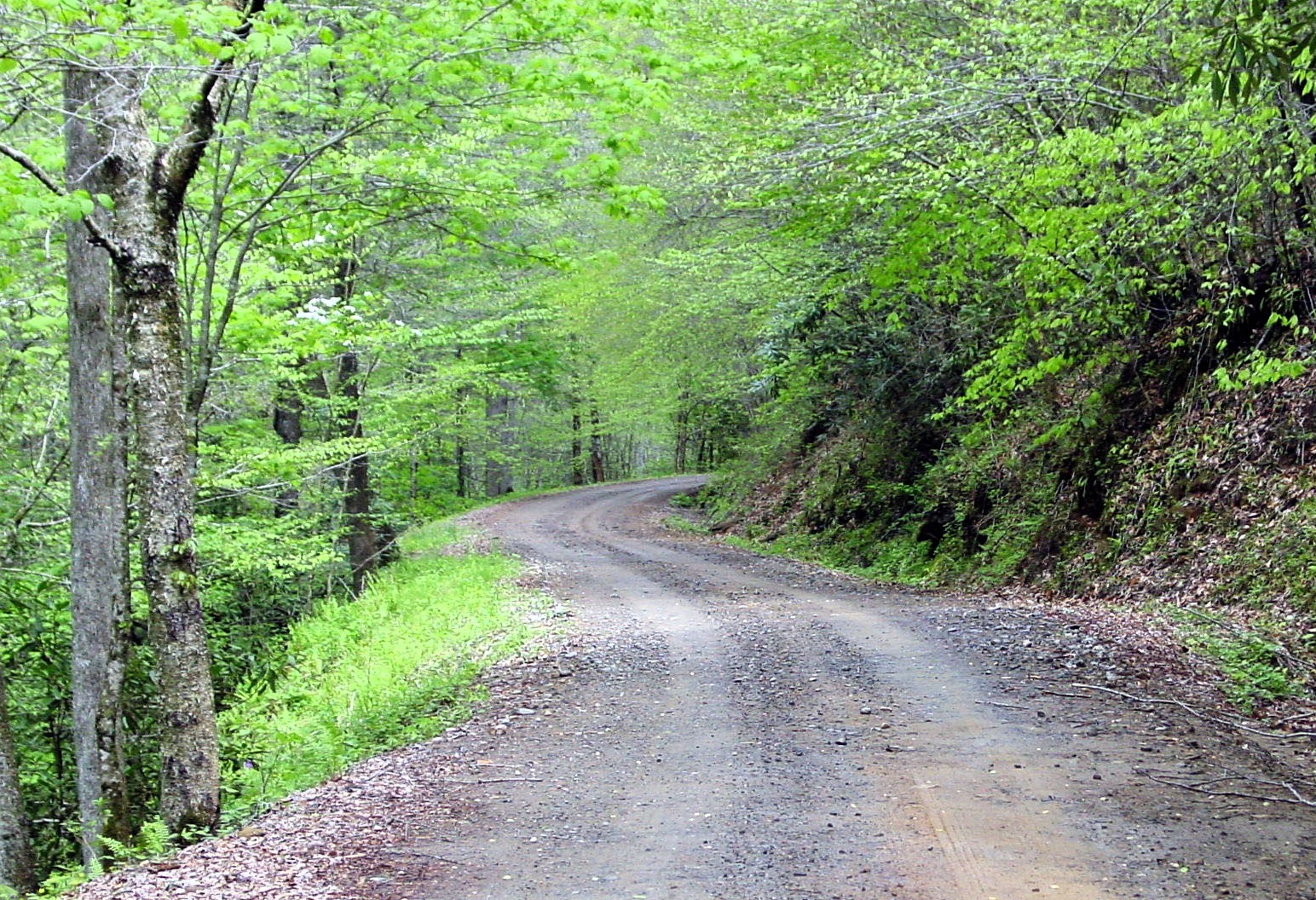
One’s preference for the “road less travelled” can take different forms.  Some of us prefer to apply this preference literally when we leave the highways and interstates behind to view the landscape from rough and winding country roads.  We may even be prone to stop along country roads to hike offroad, where we are permitted, to find trails and paths less traveled, and where landscapes remind us of “how things used to be.”  Such places offer a quietness from the bustle of our busy world, solace to appreciate the beauty of the natural landscape, and time to observe the diversity of its resident flora and fauna.  For some of us, after we have rolled back the distractions of every-day life to reflect on the natural landscape, we encounter new and worthwhile questions.

The Author
Dave Nolin has been among those who have long been fascinated by “how things used to be” in the landscapes of southwestern Ohio.  During his 30-year career with Five Rivers MetroParks of Dayton, Ohio, Dave has been active in the discovery, acquisition, and land stewardship of numerous natural area treasures of the surrounding region.  

Forests, Wetlands and Flamescapes gives us an account of what Nolin has learned from extensive field studies and research into historic accounts and mapped data, all of which he has compiled into an understandable, fascinating, and beautifully illustrated book.  Readers are treated to an account of “how things used to be” in landscapes of southwestern Ohio, the forces that have historically shaped these landscapes, and the land management principles that we ought to follow to maintain these biological and historical treasures.

For History Lovers
Readers of Forests, Wetlands and Flamescapes who love history will be treated to numerous accounts describing the various plant communities of southwestern Ohio complete with color photos and maps.  Prior to the entry of agriculture and industry, Native Americans used fire to hunt game animals and maintain prairie grasslands for good grazing.  Readers who have believed that land stewards can keep landscapes “the way they used to be” by simply leaving them undisturbed will be in for a surprise.  From the historical records, Nolin argues just the opposite—the only way to conserve many of these natural areas such as open prairie grasslands is to disturb them!  In other words, in order to conserve them [Latin, con- (with) + servitium (service)] we must “serve with” them by planning and executing disturbances typical of those which have sustained them for centuries.  To use Robert Frost’s analogy, these natural areas are each like the road that “was grassy and wanted wear.”  

For Map Lovers
Readers who love maps will be interested in how Dave is leading the effort to refine an older map published in 1966.  This map, entitled Natural Vegetation of Ohio at the Time of the Earliest Land Surveys, was compiled from mapped data from the Public Land Survey System (PLSS) obtained prior to 1800.   
In Chapter 2, “Mapping a Lost World,” Dave explains his project to evaluate the PLSS data using GIS (Geographic Information Systems) software in order to provide more accurate mapping of pre-settlement plant communities.  The result is a treat for readers who love both maps and history.   This is true because the aim of the project is to use documents containing pre-settlement data to go beneath the “landscape layer” familiar to us today in order to reconstruct an “historic landscape layer” that maps the plant communities as they existed in Ohio prior to 1800.  

Just in Time for Spring
The coming of Spring is a great time to follow “roads less traveled” to find the botanical treasures of remnant natural areas.  My wife and I are planning to use Forests, Wetlands and Flamescapes to explore some of these natural areas.  Chapter 5, “Some Modern Lifeboats,” serves as a guide to twenty-one protected natural areas within the Dayton, Ohio region that are accessible to the public.  Nolin gives the location of each of these natural areas on a map of the Dayton regional area and describes the landscape and past disturbances.  Each natural area is also highlighted with photos of notable plant species and an aerial map of the designated hiking trails.

In conclusion, if you are among those of us who love the “road less traveled” or know someone who has that love, may I heartily recommend Forests, Wetlands and Flamescapes.  And don’t be surprised this Spring if you are hiking in one of the treasured landscaped described in this book to run upon Dave Nolin and maybe his wife, Catherine, already there enjoying it.

Where to Purchase:
Nolin, David.  2024. Forests, Wetlands and Flamescapes: Wildlands of the Dayton,
    Ohio Region in 1800…and Today
. Generis Publishing.
    For more information and purchase, go HERE.

Recommended Further Reading:
Nolin, David.  2018. Discovery and Renewal on Huffman Prairie: Where Aviation
    Took Wing.  
Kent State University Press 
    For purchase, go HERE.  Book review, go HERE.
More on conservation and land stewardship in this blog, enter keyword
    "conservation" in Search Oikonomia" box in the menu bar (right side -->).


Saturday, February 17, 2024

Washington, Lincoln, and Reagan Still Speak for Our Time

As a boy, my favorite months of the year were February, May, and December.  In May, we celebrated my birthday and the beginning of summer vacation from school.  December brought the much-anticipated celebration of Christmas and the advent of snow.  But February was special because my teachers taught us about two great American heroes born in that short month:  George Washington and Abraham Lincoln.

Interestingly, while I was gaining a boyhood knowledge of Washington and Lincoln, a man who would become the third February president was becoming well known as a movie star and television personality.
  Our family first encountered Ronald Reagan while watching General Electric Theater [Click HERE.] and Death Valley Days.  Reagan often starred in the exciting dramatic episodes of both programs.

Little did we know in those years of the 1950’s that Ronald Reagan was also emerging as the leader of what has come to be known as the conservative movement in governing philosophy.
 Reagan’s famous speech, “A Time for Choosing” [Click HERE.] in support of Barry Goldwater’s bid for the presidency in 1964, soon launched him into his first political office.  Reagan served two terms as governor of the State of California (1967-1975) and two terms as President of the United States during the tumultuous Vietnam War era and post-war era of American History (1980-1988).  He restored American hope and led the world in bringing an end to the cold war with the communistic Soviet Union.  These and other achievements have earned Ronald Reagan the honor along with George Washington and Abraham Lincoln to be ranked in the top 10 of our greatest U.S. presidents.

"February Presidents" 
We dedicate this month’s blog to the three “February Presidents” of the United States.
  We will do so by emphasizing their faith, beliefs, and values as expressed in their own words.  What follows are expressions from these great leaders, each speaking in their own times; Washington in the 18th century, Lincoln in the 19th, and Reagan in the 20th century; and with words clearly relevant to our time.

To begin, let's assess your knowledge of the three "February presidents."  The following quiz will challenge you to match the description in each item with the correct name of the president, Washington (GW), Lincoln (AL), or Reagan (RR).  [Answers are given at the end of this blog.]

Quiz:
1.   Known as “the great communicator.”
2.   He was the tallest of all U.S. presidents.

3.      The man who humbly “refused to be king.”

4.      Famous for his policy of “Peace through Strength.”

5.      He is in the Wrestling Hall of Fame.

6.      This president survived an assassination attempt.

7.      Over 12 billion $1-bills in circulation bear his image.

8.      “Mr. Gorbachev, tear down this wall.”

9.      He was the only U.S. president to have a patent.

10.   As a young man, served as a surveyor in the Ohio Valley.

11.   Read the Bible every day, but never joined a church.
12.  He had no direct association with the state of Illinois.


Quotes from February Presidents

We have chosen several topics that represent timeless American values.  These were important to each of our three “February presidents.” We hope you will sense how clearly each leader expressed a similar strong and steadfast support for the timeless moral and ethical values of our Founding Fathers.  As Scott S. Powell has written in The Federalist [Click HERE.], "To the extent we can internalize and build character around the virtues that each embodied, we to can regain our voice and courage to fight and reestablish our unalienable rights that define who we are as Americans.  Our success in this may well be the key to preventing our nation's downfall.

Parents and Family
My mother was the most beautiful woman I ever saw. All I am I owe to my mother.  I attribute all my success in life to the moral, intellectual and physical education I received from her.   ~ GW

All that I am or hope ever to be, I get from my mother – God bless her.  ~ AL

From my mother I learned the value of prayer, how to have dreams and believe I could make them come true.  … She said all things were part of God's plan, even the most disheartening setbacks, and in the end, everything worked out for the best.  ~ RR


Faith and Morality
Let us with caution indulge the notion that morality can be maintained without religion.   …reason and experience both forbid us to expect that national morality can prevail in exclusion of religious principle.   ~ GW

I am not bound to win, but I am bound to be true. I am not bound to succeed, but I am bound to live by the light that I have.  I must stand with anybody that stands right, and stand with him while he is right, and part with him when he goes wrong.  ~ AL

The struggle now going on for the world will never be decided by bombs or rockets, by armies or military might. The real crisis we face today is a spiritual one; at root, it is a test of moral will and faith.”  ~ RR

War and Peace
To be prepared for war is one of the most effective ways of preserving peace.  ~ GW

Let your military measures be strong enough to repel the invader and keep the peace… ~ AL

“Peace through Strength:”  We know only too well that war comes not when the forces of freedom are strong, but when they are weak.  It is then that tyrants are tempted. ~ RR

Preserving Our Freedom
If the freedom of speech is taken away, then dumb and silent we may be led, like sheep to the slaughter.  …The liberty enjoyed by the people of these states of worshiping Almighty God agreeably to their conscience, is not only among the choicest of their blessings, but also of their rights. ~ GW

At what point then is the approach of danger to be expected?  If it ever reaches us, it must spring up amongst us. It cannot come from abroad. … As a nation of freemen, we must live through all time, or die by suicide.”  ~ AL 

The constitution was never meant to prevent people from praying; its declared purpose was to protect their freedom to pray.  ~ RR

Meaning and Purpose

Fondly do we hope—fervently do we pray—that this mighty scourge of war might speedily pass away.... Yet if God wills that it continue until all the wealth piled by the bond-man’s two hundred years of unrequited toil shall be sunk, and until every drop of blood drawn with the lash, shall be paid with another drawn with the sword, as was said three thousand years ago so still it must be said, “the judgments of the Lord, are true and righteous altogether.  ~ AL

If we ever forget that we are one nation under God, then we will be a nation gone under. ~ RR

Science and the Arts
There is nothing which can better deserve your patronage, than the promotion of science and literature.  Knowledge is in every country the surest basis of public happiness. ~ GW

I know of no pursuit in which more real and important services can be rendered to any country than by improving its agriculture, its breed of useful animals, and other branches of a husbandman’s cares.  ~ GW

Upon the subject of education, not presuming to dictate any plan or system respecting it, I can only say that I view it as the most important subject which we as a people can be engaged in. ~ AL

If America is to offer greater economic opportunity to her citizens, if she’s to defend our freedom, democracy, and keep the peace, then our children will need wisdom, courage, and strength – virtues beyond their reach without education.  In the words of Thomas Jefferson:  If a nation expects to be ignorant and free, it expects what never was and never will be.”  ~ RR

Salvation by Faith

In 1891, a book of prayers by Washington in his own handwriting was sold at auction.  Whether composed by Washington or copied for personal use, in one prayer, Washington asks God to pardon him of his sins, and remove them from thy presence, as far as the east is from the west, and accept me for the merits of thy son, Jesus Christ, that when I come into thy temple and compass thine altar, my prayers may come before thee as incense. – From: George Washington the Christian, by William Johnson   ~ GW

When I left Springfield, I asked the people to pray for me; I was not a Christian. When I buried my son, the severest trial of my life, I was not a Christian. But when I saw the graves of thousands of our soldiers, I then and there consecrated myself to Christ. I do love Jesus.” ~ AL

From Ronald Reagan’s letter to his father-in-law, a professing atheist, near his death [Click HERE.]: 
“Loyal, you and Edith have known a great love — more than many have been permitted to know. That love will not end with the end of this life, …all that is required is that you believe and tell God you put yourself in his hands.”  [According to Nancy Reagan, two days before Loyal’s death on Aug. 19, 1982, her father sought out a hospital chaplain, and prayed with him.]
Reagan’s diary [Click HERE.] records his prayer for the soul of his would-be assassin and pledge to serve God with his life now spared from death.  ~ RR

Favorite Scripture Verse
Judge not, that ye be not judged.  – Matthew 7: 1   ~ AL

For God so loved the world, that he gave his only begotten son, that whosoever believeth in him should not perish, but have everlasting life.  -- John 3:16   ~ RR


Love of Country
I was summoned by my country, whose voice I can never hear but with veneration and love. ~ GW

… we here highly resolve that these dead shall not have died in vain—that this nation, under God, shall have a new birth of freedom—and that government of the people, by the people, for the people, shall not perish from the earth. ~ AL (From: His “Gettysburg Address”)

“…lesson number one about America:   All great change in America begins at the dinner table.  So, tomorrow night in the kitchen I hope the talking begins.  And children, if your parents haven’t been teaching you what it means to be an American, let ’em know and nail ’em on it.  That would be a very American thing to do.”  ~ RR

Limited Government
Government is not reason and it is not eloquence.  It is force!  Like fire it is a dangerous servant and a fearful master.  Never for a moment should it be left to irresponsible action. ~ GW

We who live in free market societies believe that growth prosperity and ultimately human fulfillment, are created from the bottom up, not the government down. Only when the human spirit is allowed to invent and create, only when individuals are given a personal stake in deciding economic policies and benefitting from their success—only then can society remain economically alive, dynamic, progressive, and free. Trust the people.”  ~ RR

Hand of Providence
The Hand of providence has been so conspicuous in all this, that he must be worse than an infidel that lacks faith, and more than wicked, that has not gratitude enough to acknowledge his obligations. ~ GW

I have been driven many times upon my knees by the overwhelming conviction that I had nowhere else to go. My own wisdom and that of all about me seemed insufficient for that day.  ~ AL

Reagan speaking with Pope John Paul II regarding a plan to bring down the Soviet Union:  “I must say, Holiness, that I am not a man who attends church regularly. I don’t even consider myself overtly religious.  But I am spiritual.  I believe in God.  And I draw strength from those deeply held beliefs.”  [Referring to the fact that both had survived assassination attempts, Reagan continued:] “You and I share a common bond.  God saved us both so that we can do what we are about to do. How else can it be explained?”   [Read more, click HERE.]  ~ RR

Compassion toward Suffering

Let your heart feel for the afflictions and distresses of every one, and let your hand give in proportion to your purse; remembering always the estimation of the widow's mite, but, that it is not every one who asketh that deserveth charity; all, however, are worthy of the inquiry, or the deserving may suffer.  ~ GW

Lincoln was deeply familiar with the sting of death, having lost his mother at age 9, and his sister a decade later; and then, the first romantic love of his life, Ann Rutledge, to typhoid fever.  His consoling letter to Fanny McCullough [Click HERE for full detail.], following the death of her father, Lt. Col. William McCullough, in the American Civil War reveals Lincoln’s deep compassion and empathy, born from personal experience:
You cannot now realize that you will ever feel better. Is not this so? And yet it is a mistake. You are sure to be happy again. To know this, which is certainly true, will make you some less miserable now.  I have had experience enough to know what I say; and you need only to believe it, to feel better at once. ~ AL

Address to the Nation after the explosion of the space shuttle Challenger:
They, the members of the Challenger crew, were pioneers.  And I want to say something to the school children of America who were watching the live coverage of the shuttle’s takeoff.   I know it’s hard to understand but sometimes painful things like this happen.   It’s all part of the process of exploration and discovery. It’s all part of taking a chance and expanding man’s horizons. The future doesn’t belong to the fainthearted.  It belongs to the brave.  The Challenger crew was pulling us into the future, and we’ll continue to follow them.  …[They] honored us for the manner in which they lived their lives. We will never forget them nor the last time we saw them, this morning, as they prepared for their journey and waved goodbye and slipped the surly bonds of Earth, to touch the face of God.  Thank you.  ~ RR  [Click HERE for video of full message.]

“Military-Industrial Complex”
Over grown military establishments are under any form of government inauspicious to liberty, and are to be regarded as particularly hostile to republican liberty. ~ GW

...corporations have been enthroned, and an era of corruption in high places will follow, and the money power of the country will endeavor to prolong its reign by working upon the prejudices of the people until all wealth is aggregated in a few hands, and the Republic is destroyed. ~ AL

There’s a clear cause and effect here that is as neat and predictable as a law of physics:  As government expands, liberty contracts.  [as applied to the Pentagon or any branch of government].  ~ RR

Civil Rights and Slavery
I wish from my soul that the legislature of this State could see the policy of a gradual Abolition of Slavery. ~ GW

This is a world of compensations; and he who would be no slave, must consent to have no slave. Those who deny freedom to others, deserve it not for themselves; and, under a just God, cannot long retain it. ~ AL

I leave you, hoping that the lamp of liberty will burn in your bosoms until there shall no longer be a doubt that all men are created free and equal. ~ AL

Devotion to the Cause

The fate of unborn millions will now depend, under God, on the Courage and Conduct of this army—Our cruel and unrelenting Enemy leaves us no choice but a brave resistance, or the most abject submission; this is all we can expect…Our own Country’s Honor, all call upon us for a vigorous and manly exertion, and if we now shamefully fail, we shall become infamous to the whole world
—Let us therefore rely upon the goodness of the Cause, and the aid of the Supreme Being, in whose hands Victory is….  – From Founders Online  [Click HERE.]    ~ GW

With malice toward none, with charity for all, with firmness in the right as God gives us to see the right, let us strive on to finish the work we are in; to bind up the nation’s wounds; to care for him who shall have borne the battle, and for his widow and his orphan – to do all which may achieve and cherish a just and lasting peace, among ourselves, and with all nations. ~AL

We’re blessed with the opportunity to stand for something, for liberty and freedom and fairness, and these are things worth fighting for, worth devoting our lives to.  ~ RR

Additional Reading:
1)  “The Man Who Would Not Be King”  Click HERE, by Matthew Spalding, Heritage Foundati
on.
2)  “Lincoln and Christianity” – dissertation by Kermit White.   Click HERE.
3)  Ronald Reagan’s best debate moments:   Click HERE.
4)  “Character Qualities of a Steward-Leader”  Oikonomia, May 31, 2012   Click HERE.

Answers to Quiz:
1.  RR               5.  AL                9.    AL
2.  AL                6.  RR               10. GW
3.  GW              7.  GW              11.  AL
4.   RR              8.  RR               12.  GW

Now It's Your Turn:
We would like to hear from you?  Who is your favorite U.S. president and why?  Just use the "Comment" link below to respond, or write to us at silviusj@gmail.com

Acknowledgement:
Special thanks to Larry and Donna Moore for their hospitality, conversations, encouragement, and access to their WiFi necessary to publish this blog.

Saturday, August 8, 2020

Decisive Events of History—Did One Just Occur?

History is somewhat like biology and geology.  All three try to explain present conditions based on interplay between two types of causes: (a) uniform processes occurring over long periods of time, and (b) major or cataclysmic events that interrupt the long periods of uniformity.  Uniform processes involving the soil, water, and air include natural selection, erosion, and sedimentation, while cataclysmic processes include pandemics, hurricanes, and volcanic eruptions.  Thus, both uniform and cataclysmic processes are responsible for the current state of both animal and plant populations and of whole landscapes as they exist today.  

Likewise, historians explain the current state of nations and cultures as the effects of uniform events that fill most of the pages of history and major “decisive events” that rise above the usual.  For example, I consider the invention of the printing press by Johannes Gutenberg, and the invention of the microscope by Anton van Leeuwenhoek, as decisive events that have had major impacts on science, health, and technology. 

Do we recognize “decisive events” when they happen today?  I believe one such event has just occurred, but it has received little coverage.  Before we consider this decisive event, let’s consider another event of a similar nature that occurred in a Roman stadium just over 1,600 years ago.


A Decisive Event in a Roman Stadium
A popular pastime in the Roman Empire was for tens of thousands of spectators in a stadium to watch the bloody gladiator duels which usually ended with the slaying of the weaker combatant.  According to an article by Lawrence W. Reed, Senior Fellow at Foundation for Economic Education, “Gladiators entertained the increasingly morbid sentiments of a public thirsty for blood.  Most were free men.  A small number were women.  Professional gladiators were a privileged class in ancient Rome, even endorsing products as idolized athletes.”

But on January 14, 404 AD, with the Roman Empire sliding ever deeper into moral and political decay, a decisive event abruptly ended the tradition of the Roman gladiator duels—forever!  As John Huffman describes the events on this particular January day in Discerning History, “a lone figure interrupted the proceedings.  Without warning, a rough and weather-beaten man jumped over the wall and into the arena.  Shouts of excitement over the combat gave way to a profound silence, as all eyes turned from the gladiators to look at the lone figure.”

“He was covered with a mantle.  He had come all the way from Asia to Rome.  He was a Christian.  He had heard about these barbaric entertainments, and, by the grace of God, he intended to stop them…  He advanced to the two gladiators who were engaged in mortal combat.  Interposing himself between the combatants, he faced the crowd.  Fearlessly, this hero raised his voice.  In the name of the Lord Jesus Christ, King of Kings and Lord of Lords, I command these wicked games to cease.  Do not requite God’s mercy by shedding innocent blood.”

“A shout of defiance met the voice of our hero.  Pieces of fruit, stones, daggers, and other missiles were hurled down from the stands.  One of the gladiators, expecting the applause of the crowd, stepped forward and rammed his battle axe into the skull of the man who had dared interfere with Rome’s favorite entertainment.  As the hero sunk lifeless to the ground, the angry cries of the crowd died away into a profound silence in the arena.  As the life’s blood of this new martyr joined the blood of the thousands who had bled there before him, the crowd suddenly faced a courage that was greater than the strongest gladiator. The work of this Christian was accomplished.  His name was Telemachus (Discerning History).”

According to John Foxe, in Foxe’s Book of Martyrs, “From the day Telemachus fell dead in the Coliseum, no other fight of gladiators was ever held there.” John Huffman adds, “Such was the legacy of a man who dared to jump over a wall and declare that an aspect of popular cultural entertainment was ungodly and unlawful.”

Telemachus’s bold decision to act upon his faith apparently helped him to fulfill his purpose as God’s instrument.  His bold protest and martyrdom in 404 AD became one of the decisive events in the history of Western civilization.  According to Codex Theodosianus 15-12, gladiatorial games were officially banned by Constantine in 325 AD on the grounds that they were inappropriate “in a time of civil and domestic peace.”  Amazingly, a one-man protest conducted by a foreigner who was not even a citizen of Rome caused leaders of an authoritarian government to outlaw a very popular but brutal custom.  But protests in the years since Telemachus have also been considered decisive events in history.

A Decisive Event in Montgomery, AL
On December 1, 1955, Rosa Parks, an African American seamstress, seated herself in the white section of a Montgomery City bus.  When the bus driver asked her to vacate her seat for a white man, Rosa “refused to leave her seat on the grounds of fairness, freedom and equality. As a result, she was arrested and convicted of violating the laws of segregation, known as the "Jim Crow" laws.  She appealed her conviction and formally challenged the legality of segregation (See Rosa Parks Day, Ben Franklin Transit).”  

Non-Violent Demonstrations
In response to the Rosa Parks incident, civil rights activists, including Martin Luther King Jr., led a boycott of the Montgomery bus system.  Rev. Dr. King, leader of the Southern Christian Leadership Conference (SCLC), insisted on the principle of non-violent demonstrations based on his Christian faith.  
The most decisive demonstration led by Dr. King was the August, 1963 March on Washington.  There, King delivered his momentous “I Have a Dream” message, again grounded in biblical Christianity as well as the principles embodied in great documents of American history including the Declaration of Independence, Abraham Lincoln's Gettysburg Address, the Emancipation Proclamation, and the United States Constitution.  Rev. King described a world in which people of every ethnic group could work together, be educated together, and worship together. He repeatedly mentioned "God's children" in his message and expressed his hope and dream that “the glory of the Lord shall be revealed, and all flesh shall see it together (Isaiah 40: 5)."

The non-violent civil rights movement under Dr. King moved a step closer to his “dream” coming true when the Civil Rights Act of 1964 was passed by the U.S. Congress with bipartisan support.  Less than four years later, Dr. Martin Luther King, Jr. was assassinated, and his death further immortalized his leadership in bringing about an end to discrimination on the basis of race, color, religion, sex or national origin.

Freedom of Expression Today
There is no doubt that America has made great progress in securing minority rights in the past 75 years.  However, if Dr. King were alive, I believe he would be opposed to the violent protests currently occurring on American streets.   He would oppose the manner in which tragic events such as the murder of George Floyd have been used by radical groups to stir violent demonstrations, vandalism, and destruction out of hate and greed rather than to promote necessary reforms and the love of our neighbor regardless of ethnicity.  In fact, one need only listen to Dr. King’s niece, Evangelist Alveda King, to hear the same heart of love and reason which she learned from her father and her uncle.  She emphasizes the importance of “pairing social justice with righteousness” when confronting issues plaguing America today (See Black History 1: Correct History Brings Light).

Social justice that is not coupled to God’s righteousness and love for neighbor becomes trapped in pride, covetousness, greed, and resentment others.
  Instead of non-violent demonstrations so effective in bringing social reform under Dr. King, many of today’s protesters shout with loud voices and even violent threats against government authorities.  Aided by major media outlets that are biased in favor of extreme left-wing and socialist philosophies, these voices are becoming intimidating toward mainstream Americans.

Americans are guaranteed certain rights, inalienable rights which are ultimately from God, including the freedom of expression under the U.S. Constitution.  For over two centuries, each citizen of the U.S. has been given the right to cast one vote on each issue and candidate put forth during elections.  At election time, regardless of wealth, popularity, political opinion, physical health, or gender; all citizens have an equal influence when voting their consciences.  However, with the crumbling of law enforcement and the rise of threatening voices of the hateful and the violent, many who want to express their opinion and eventually cast their votes are increasingly afraid to speak up.  A recent Cato Institute Summer 2020 National Survey reveals that Americans with increasingly conservative political views are less and less comfortable in sharing their opinions (See adjacent chart of results.).

A Decisive Event in Milwaukee?
My concern for the protection of our freedom of expression has recently been increased by the news of the brutal murder of a Black American.  I am not referring to George Floyd, as tragic as that is; nor am I referring to the dozens of Black Americans being murdered in our major cities every week due to lawlessness.  Instead, I am referring to the murder of a Milwaukee man, Bernel Trammell in broad daylight outside his business where he publishes eXpressions Journal, a small periodical that focuses on political and spiritual news.  At the time of this writing, the murderer and the motive behind Trammell’s death on July 23 is not known. 
“Everybody has a voice. Everybody’s voice has power,” Trammell was fond of saying, according to a friend.  Tragically, the voice of Trammell and votes this simple man would have cast have been stopped by someone more powerful—possibly someone who hated Bernel Trammell’s bold Christian witness and/or his vocal support for Donald Trump.

With America so deeply divided,  I believe our only hope is that God will respond to the prayers of many of us for a spiritual reawakening (See How Firm Is Our Foundation?)  Returning to our notion of “decisive events,” is it possible that the murder of Bernel Trammell could trigger a major change in the direction of history?  The Christian, non-violent intercessions against injustice by Telemachus and Martin Luther King, Jr. each caused decisive outcomes in their respective cultures.  Is it possible that we Americans might respond like the Roman spectators on that January 14, 404 AD when they became sickened at the brutal murder of Telemachus?  Could the innocent death of Bernel Trammell, a Black American known only as a kind, outspoken man in Milwaukee who loved God and Donald Trump, cause us all to stop and say, “Enough!”

How Do You Respond?
I have described how several tragic events became decisive events in world history.  If the tragic murder of a Bernel Trammell is not enough to cause American’s to say, “Enough!” then what will it take to bring an awakening to our country? 

I welcome your “Comments.”  If you have not subscribed to Oikonomia free of charge, please complete the form in the right sidebar above.  Thank you. 

Tuesday, January 28, 2020

Website Offers a Window into Wooster History

Have you ever wondered what you would see if you could view your neighborhood through a time tunnel?  How would the view from your front door or apartment window change if you time-traveled back beyond the era of the automobile, before forests or grasslands were cleared for farming and cities, and then even before the entry of European colonists, settlers, and fur traders?

Thanks to an article by Dottie Sines in our Wooster Weekly News/The Bargain Hunter-Wayne (01-18-20), I discovered the Wooster Digital History Project (WDHP).  The WDHP was launched by Gregory Shaya, professor of history at The College of Wooster, for the purpose of compiling and sharing a comprehensive history of the City of Wooster.  Sines quotes Prof. Shaya as saying that WDHP is providing “…a great research experience for the students, and it produces a tangible result.  It also connects the students to Wooster in some really neat ways.”  Sines describes resources available at the WDHP website as follows:

“Exhibits are categorized by early settlement, cultural and religious communities, agriculture, economic development, conservation and the environment, society and social movements, civic development, wartime Wooster, and the college itself. Rare photographs and video interviews enhance the material, and links are provided for further exploration.”

Three noteworthy historic glimpses which I found interesting from the WDHP website are as follows:  (1) The importance of historical records in any study of land use changes and associated effects on soil, water, and biodiversity; (2) the role of philanthropy in helping to salvage The College of Wooster following a fire, in 1901; and, (3) the unusual civility of the Wayne County community following the Civil War which had so horribly divided America.

Historical Records, Land Use Changes, and Stewardship

Every modern agricultural or urban community such as those which make up Wayne County and the City of Wooster have a history of prior land ownership, transactions when land is sold, and resultant changes in land use at the behest of subsequent owners.  The history of the changes in ownership and the way in which each owner managed the land determines its current ecological and biological condition.  We can see from this logic that the current state of a given landscape will tell us much about both its history and the extent to which the respective owners practiced good stewardship (conservation) of the soil, water, and biodiversity under their care.  Thus, land “owners” who view themselves as “stewards” (i.e. temporary caretakers with a long-term view) will manage the soil, water, and biological diversity (e.g. wildlife) as if they value not only monetary profit from their farm products but also the long-term sustainability of the soil and water so that it will be fruitful for the future.


Thanks to the Wooster Digital History Project, I have become interested in the history of one particular tract of land, known in 1873 as the Grandview Farm, owned by A.H. and B.C. Byers (see photo above).  Thanks to assistance from the Wayne Co. Historical Society, I was able to locate the farm pictured in a lovely artists rendition (pictured at left).  The farm buildings were located near what is now Parkview Elementary School.  The name “Grandview” will seem logical to any reader who has enjoyed the wonderful view while driving south on Oak Hill Road past the school. 


Site of the Byers (Grandview) Farm buildings, now Parkview Elementary
Grandview Farm eventually became a significant portion of what is now Country Club Golf Course.  Thanks to the historical and legal records, we can now gain insight into the history of past land stewardship and land use changes of a given parcel.  These data could then inform current ecological studies to evaluate the management strategies of the Country Club Golf Course to address storm water runoff, scheduling fertilizer applications to limit stream pollution, etc.  Interestingly, the WDHP provides a images and text accounts of the 1969 Flood.

Wooster Fire and Andrew Carnegie
Today, we often hear of the corruption and injustice of “big business.” According to Naomi Schaefer Riley, resident fellow of the American Enterprise Institute, and author of “The Givers and Their Attackers,” wealthy individuals and families are often the subjects of scorn and suspicion.  After all, they must have acquired their wealth through unfair business practice.  Indeed, there are many people who have amassed great wealth through unjust practices.  Yet free market capitalism is also responsible for raising millions of people from lives of limited opportunity and poverty to enjoy fulfilling lives that impact many others for good. 

The life of
Andrew Carnegie is one of many “rags to riches” stories.  Carnegie amassed great wealth through expansion of the steel industry in America.  Although Carnegie is criticized for building his fortune through unjust treatment of workers, he believed that “those with great wealth must be socially responsible and use their assets to help others.” If they refuse, they practice “the worst species of idolatry.”  Carnegie practiced what he preached, and gave 90% of his fortune, estimated at $301 billion in today’s currency, to worthy causes.


Visitors to the Wooster Digital History Project can learn of Mr. Carnegie’s impact on this midwestern city.  In fact, Carnegie may be largely responsible for the survival of The College of Wooster following the fire of 1901 that destroyed the main academic building.  What could have been disastrous for the young college turned out to be a blessing.  The fire and Andrew Carnegie combined to elicit a generous effort by the Wooster community to raise $100,000 to match a challenge gift from Mr. Carnegie.  According to the WDHP account, “Carnegie originally refused to give to a Christian college, because he was not a member of any church. Yet, even in his first meeting with [President] Holden, Carnegie declared that if he ever gave money to a Christian college, it would go to Wooster.  The great philanthropist made good on his promise, in 1902.

Civility after the Civil War
There was a third snippet from Wooster history that reminded me of the importance of knowing more about our communities in years past.  This one was also of interest to Dottie Sines, the Wooster Weekly News article’s author.  She notes that patriotism ran so strong in Wooster following the Civil War that it became a force for unity between factions that had been at odds during the war.  This demonstration of post-Civil War unity as highlighted in the Sines article and quoted below ought to be a valuable lesson from American history for today’s divided America to consider:


“The Wooster Republican newspaper published letters sent home from Wayne County soldiers. At times even the Wayne County Democrat, which was never shy in displaying its opposition to the war, chose to put patriotism first. When praising the deeds of two returning officers, the paper guessed that they must have felt proud of both parties welcoming them home and doing honor to them as soldiers of the Republic. More unity of this kind would work miracles in the cause of the country, where the prosperity of all the people is contingent upon the unity of the country.

Thank you for “time-traveling” back in history with me to consider a couple of historic chapters out of the history of our town, Wooster, Ohio.  Maybe if you are curious enough to visit the
Wooster Digital History Project, or a similar history resource from your geographic location on this Earth, you will gain a better appreciation for the ways in which your community has been shaped by past cultures, people, land uses, conflicts, and triumphs.  We ought not be ignorant of our history and the lessons we can learn from it, and from evidence of God’s providence through it all.

How About You?
May I invite you to respond using “Comments” to inform readers of  available resources on local and American history you would recommend?