Saturday, July 5, 2014

High Court Defines & Defends Free Expression

The Supreme Court ruled this week that Hobby Lobby and Conestoga, two for-profit corporations, do not have to provide certain contraceptives to their employees pursuant to the Affordable Care Act (ACA) if such provision is deemed in violation of the employer’s faith convictions.  Less widely reported by the media was the fact that the two “closely held corporations” had already included sixteen other contraceptives in their employee health coverage.  In addition, the wages provided by these corporations are so generous (Hobby Lobby employees start at $14/hr and $9.50/hr, respectively, for full-time and part-time employees) that even a part-time employee could purchase a month’s supply of contraceptives (estimated, $9.00) on their own for approximately one hour’s work.
Supreme Court case was about more than "women's rights."
Nevertheless, the respective corporate owners, the Green Family and the Hahn family, were taken to court for refusing to include four additional contraceptives as mandated under the ACA.  Why?  These four products are known to destroy the human embryo.  Thus, including them along with the 16 products they had approved would compromise their faith position which holds that each human life begins at conception.

In the 5-4 opinion written by Justice Samuel Alito, the Court held that the ACA contraceptive mandate violates the Religious Freedom Restoration Act (RFRA).  Alito was joined by Chief Justice John Roberts and justices Scalia, Thomas, and Kennedy.   Monday’s close decision is now highly contested in the court of public opinion.  Opponents of the decision argue along the lines of Justice Ginsburg’s opposing decision.  Ginsburg claimed that the Court was wrong in denying free access to contraceptives to thousands of women employed by Hobby Lobby and Conestoga or dependents of persons those corporations employ...who do not share the corporation owners’ religious faith.  Thus, the case is being targeted by opponents as a “women’s rights” violation. 

Defenders of the Court’s decision do not see their victory as imposing unnecessarily on the rights of women. First, the two corporations had already been providing insurance coverage for all approved non-abortificient products.  Second, as noted above, both corporations are very generous with their hourly wage schedule.  Therefore, defenders of the court decision have honest reason for celebration which defends their deeply held conviction about the rights of the unborn.  More broadly, the decision affirms the right of people of faith to act upon their belief system outside church doors and in their workplaces.

Along with the Supreme Court Ruling, Justice Anthony Kennedy filed a concurring opinion which is a valuable reminder of the constitutional nature and intent of the founding fathers regarding religious expression under the First Amendment of the U.S. Constitution.  Justice Kennedy wrote (emphasis mine):
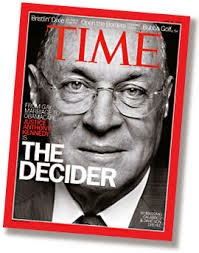
Justice Anthony Kennedy
In our constitutional tradition, freedom means that all persons have the right to believe or strive to believe in a divine creator and a divine law. For those who choose this course, free exercise is essential in preserving their own dignity and in striving for a self-definition shaped by their religious precepts. Free exercise in this sense implicates more than just freedom of belief. It means, too, the right to express those beliefs and to establish one’s religious (or nonreligious) self-definition in the political, civic, and economic life of our larger community.

Secularists applaud “tolerance” of differing views as a virtue.  However, the rules of tolerance do not apply to folks with “religious views” because they "force their views on others.”  This week the Supreme Court affirmed
the right of all Americans, whether “religious” or “non-religious,” to hold to a world-and-life view, or worldview.  Furthermore, the Court held that regardless of their worldview, free exercise is essential in preserving their own dignity and in striving for a self-definition shaped by their religious precepts as relates to their daily participation in our larger community.

When I read Justice Kennedy’s concurring decision affirming my right to express and practice my Christian faith in public, I said, “YES!”  But then it struck me.  The Constitution also guarantees free expression to those who hold very different beliefs from mine or who are enemies of America.  Then, I realized that “free expression” in this great “land of the free” will only be possible if we are willing to take individual responsibility to be respectful of differing views.  As the Apostle James writes, we must be quick to hear, slow to speak and slow to anger; for the anger of man does not achieve the righteousness of God. (James 1: 19-20).   

In a world that is increasingly divided over issues and resentful of Christians attempting to apply the salt and light of the Gospel to these issues, we will need to exercise gentleness and mercy.  As Os Guinness wrote in A Free People’s Suicide (emphasis mine),

It is possible to be free at the constitutional level in terms of the structures of liberty, but to lose freedom and become servile or anarchic at the citizens’ level in terms of the spirit of liberty.

When asked by Marvin Olasky (WORLD Magazine, June 29, 2013) if this is already happening in America, Guinness responded (emphasis mine):

It is happening.  Freedom is the greatest enemy of freedom.  We’ve got a permissiveness in almost every area, and Americans have lost the capacity to say “no” to things that are wrong.  A general ungluing, unraveling, permissive license leads to chaos.  Freedom requires and assumes you know who you are and who you’re to be.  It’s not just a formlessness; it’s the power to do what you ought, as Lord Acton used to put it.

How should God’s people function in a culture where the moral compass is being abandoned and where self-definition is lacking?  Guinness is critical of the Christian right for, in his words,
trusting politics to do more than politics can do.  He elaborates in the same interview:

To put it in the language of William Wilberforce, they did the Lord’s work, but in the world’s way.  Wilberforce had an incredible love for the people who hated him, mugged him, and attacked him physically twice—but he prevailed through love, and he wasn’t gushy in any sentimental way.  The Christian right often shamelessly demonized and stereotyped, and we’re paying for the bad ways they fought it.  But on the issues, I’m with them.

In response to Justice Kennedy’s decision, Jennifer Raught Brock, a Cedarville University graduate, expressed to me some of the hard challenges of true servants of Christ who exercise the right of free expression of their Christian faith in their public life for the glory of God and for the service to their neighbor.  Jennifer wrote:

For Christians, kingdom work includes redeeming culture. Loving one's neighbor involves promoting justice and freedom. It's not an earthly, political kingdom we seek; God never promised us religious freedom. Nor did God promise freedom from pain. Yet that shouldn't stop us from trying to alleviate suffering.  He never said we should expect financial stability, but that doesn't mean we don't work hard or give to those who are poor.  He informed us that we're all going to die someday, but that doesn't mean that we refuse medicine when we're sick or that we fail to care about the overall quality of medical care in our society.

Supporting free expression of faith in the "larger community."
Our “free expression” comes at a great price through the sacrifice of Christ Who laid the foundation for our spiritual freedom; and later, the sacrifices of American men and women who have fought and died to give birth and then defend this nation during more than two centuries.  Many did so because they believed
that all men are created equal, that they are endowed by their Creator with certain unalienable Rights, that among these are Life, Liberty and the pursuit of Happiness.  May God help us to exercise our freedom in a Christ-like manner with firmness and boldness, yet with gentleness and reverence.

If we are in Christ, the Apostle Paul states, we are new creatures (2 Corinthians 5: 17), no longer conformed to this world, but transformed by the renewing of our minds (Romans 12: 2).  Of all people, being set free from sin and self, now free in Christ and free under the Constitution, we ought to know who we are, who we’re to be, and have the power to do what we ought.  We ought to be “about” self-definition, but more basically, “all about” Christ-definition as we give witness to the fruit of His Spirit—love, joy, peace, patience, kindness, self-control as we participate in the broken and divided political, civic, and economic life of our larger community.

Sunday, June 29, 2014

Fundamentals of Conservation, Part 1 "Serving with" Our Creator -- Article #3 Knowing His Heart

Our recent Oikonomia entries on “Fundamentals of Conservation” have emphasized that biblical environmental stewardship, or “biblical conservation” is truly “con-service” or serving with creation. But to serve with creation requires a knowledge of and obedience to what matters to God based upon knowledge of His Holy Scriptures.  In our May Oikonomia, we emphasized that those who would practice biblical conservation must share a child’s eagerness to learn about the world and to submit eagerly to God’s plans for creation as revealed in Scripture.  But, how can we develop and apply child-like faith in God’s Truth in a world that seems increasingly antagonistic, particularly toward Judeo-Christian truth claims?   The answer lies in Christ’s instruction to His disciples and to us.

Before His death and resurrection, Christ prayed for His disciples and all of us who would follow Him later:  They are not of the world, even as I am not of the world.  Sanctify them in the truth; Your word is truth (John 17: 16-17).  Although we are in the world, we can pursue God’s truth through prayer and meditation in His Word.  Without it, our thinking and our actions toward creation are distorted and limited in ultimate value.   Unfortunately, increasing numbers of people deny that the Bible has anything to say about the origin, purpose, and destiny of creation.  Therefore, it is important that we emphasize in this entry that conservers of creation must ultimately be “obedient conservers of Truth.”

Jesus Christ, the Creator, has already come into His creation full of grace and truth (John 1: 14b) to bring us Eternal Life through faith both here on Earth and in our Life to come on the New Earth.  Therefore, would-be steward conservationists should recognize that every act that is intended to do good toward the Earth should be done with the reality that unless the contributor has individually reconciled with God and accepted His atonement for sin, he or she is on a path to eternal Hell.  Such a path is quite divergent from the path of the Earth which has a much brighter future.  Therefore, it stands to reason that God-pleasing stewards of creation must know something of God’s heart for the creation and be able to express His will in words and in acts of conservation.
Smokey Bear poster (1944):  We are beginning to
recover from this false view of land stewardship.

Today as a case in point, many are wondering about the “State of the Earth” and what actions we should take as stewards to conserve the life support system of Earth.  But the more we study the biosphere the more complex we realize it is.  Conservation efforts once thought to be wise—e.g. saving forests by preventing forest fires, saving wildlife populations by restricting hunting in the absence of natural predators, or saving wildlife populations by importing alien species to control them—all have produced some unintended consequences.   One would think such consequences would be cause for humility in our science.

I am concerned that the increasingly politically driven efforts to thwart the alleged human-caused climate change may end up as yet another set of unintended consequences.  Most scientists would agree that “there is no such thing as ‘settled science’.”  Yet today, in spite of scientific evidence on both sides of the question of human-caused climate change, each side of the argument seeks to silence or ignore the other.  Many scientists find it difficult to resist the strong and tempting offers of large research grants which lead to more publications and professional advancement.  A scriptural approach to this temptation is to insist on open dialog among those whose data contradict, perhaps because they have taken different research or because they use different assumptions in their climate models.  A true scientific understanding of creation requires open, honest dialog, rigorous hypothesis testing, skepticism, peer review, and avoidance of overstating conclusions.  We have called this good science.”

The scientist Johannes Kepler described science as "thinking God's thoughts after Him."  It ought to follow that obedient conservers of creation use “good science” as a means to accurately “speak” on behalf of their Creator about His creation.  We might liken this relationship based on truth to a good speechwriter who seeks to capture a sense of the values and passion of the one he or she serves.  For example, Peggy Noonan was a speechwriter for President Ronald Reagan, the “great communicator” in the early 1980’s.  In her 2001 NY Times bestseller, When Character Was King, Noonan attributes Reagan’s commitment to truth and truth-telling as the basis for his effectiveness as the world leader credited with the eventual fall of Soviet communism.   She writes:

Ronald Reagan and Mikhail Gorbachev

Ronald Reagan loved the truth.   We all do or say we do, but for Reagan it was like fresh water, something he needed and wanted.  He loved the truth for a number of reasons, a primary one of which is that he thought it…uniquely constructive.  He thought that by voicing it you were beginning to make things better.  He thought the truth is the only foundation on which can be built something strong and good and lasting—because only truth endures.  Lies die.  (When Character Was King, p. 200)

Peggy Noonan illustrates how the power of spoken truth through President Reagan brought change to people, governments, and the world.   Unlike many American leaders during the era of Soviet domination of much of Asia and Eastern Europe, Reagan spoke the truth about Soviet totalitarianism without apology.  His message reached the Soviet prisons where Russian dissidents began to hear it whispered by their guards, or through radio broadcasts.  Noonan shares the testimony of one Russian dissident, Anatoly Shchransky:

Sometimes he and other men would empty out the toilets and the sinks and whisper to each other through the pipes.  Sometimes they used code, from cell to cell.  And there were other ways he didn’t want to talk about.  But he wanted me to know that there were times when Ronald Reagan spoke that the gulag would explode with a great racket of taps, knocks and whispers as they heard what he said and passed it on.

Some of Reagan’s words of truth that were whispered and tapped through Soviet prisons were probably ones he spoke to the British Parliament, on June 8 1982:   Here is the enduring greatness of the British contribution to mankind, the great civilized ideas:  individual liberty, representative government, and the rule of law under God.

Eventually, the iron curtain was torn open, the wall came down, and cell doors holding political dissidents swung open to provide freedom from the oppression of Soviet communism because of the words and the actions of Ronald Reagan and others who spoke the truth.  Although today the scourge of totalitarian governments under communism and Islamic extremists threaten and destroy individual freedom and plunge civil societies back into darkness, there still exists within the hearts of many who have not been broken and discouraged the desire to be free and to participate in a society of the self-governed. 

And mankind can no more create and maintain responsible government by the people than he can function effectively in the larger sphere of trying to practice conservation of the planet.  At least, not unless he understands the truth that our rights and privileges come from above, from Almighty God, Who has made us stewards, serving at His behest. 

And how can we serve God, and keep (serve with) creation without walking in close obedience to God through His Word?  Just as a speechwriter must know the mainspring of truth that drives her boss in order to help him communicate his or her convictions, so we must know the heart of God through His Scriptures if we are to do anything worthwhile and lasting toward our neighbor and the Earth.  Out of this intimacy of relationship through the Word of Truth, we can both serve God and serve with creation—and do so with the right motives, passion, and purpose whispered and tapped into our souls by our Heavenly Father.

Saturday, May 31, 2014

Fundamentals of Conservation, Part 1 "Serving with" Our Creator -- Article #2 Child-Like Faith

I’m amazed at what I can learn from our grandchildren.  This week, our daughter saw her daughter, Della, walking barefoot in the backyard.  Della had fashioned a broken branch into what she later termed her “hiking stick.” As you can imagine, this was impressive to her grandpa.  Within 24 hours, six-year-old Della, and her twice-as-old sister, Kiara, had joined me to hike in a nearby state nature preserve, Johnson Woods.  Of course, we each had to bring along our trusty hiking sticks just like Della.

Granddaughter, Della, leading our hike at Johnson Woods
I’ve relished the opportunity over the years to point others to the wisdom and workings of God’s creation, but this day was one of two days in May of this year that was exceptional. Earlier this month, Kiara had invited me to help her study for her 6th grade science test.  But instead of sitting down at her desk or kitchen table, she insisted that we drive to a woodland near her school.  Turns out her science teacher had introduced her class to this woodland on a recent science field trip.  Bravo to her teacher!

I must admit to being skeptical of Kiara’s motives in inviting me to help her study in this way.  I have many memories of being invited to assist young scholars with their science projects only to find them playing me for quick and easy answers to avoid the focus necessary for real learning and appreciation of the creation.  But, my granddaughter was serious about this trip because she had already decided during her first experience in the woods with her science class that grandpa would enjoy it, too.  Furthermore, her focus upon learning ecological principles was unwavering as she led me along the forest trails with her review sheet in hand.  This experience was such a blessing, I was inspired to reflect as follows:

Hiking in a Spring Forest--
with My Granddaughter Kiara

Grandpa, you must see it, she said.
My teacher took us
into the woods near our school.
You’d really like it; let’s go.

But for awhile, I was too busy.
“I’m helping your dad
with some important things,” I said.
Maybe tomorrow we can go.

“But Grandpa, my science test,
It’s tomorrow,” she pleaded.
“You can help me—it’s about plants,
and soil and water.  See my notes?”

Later, I consented to go,
And I’m so thankful I did.
We drove to the school.
The woodland welcomed us.

She pointed to an opening
in the forest edge.
“Here’s the trail,” she said.
“This looks wonderful,” I replied.

Surrounded by the beauty
of Mayapple and Violets,
we had science to learn.
We blended the two quite well.

“Plants are producers,” she said.
Using sunlight and carbon dioxide,
they make food for herbivores,
and they, in turn, for carnivores.

“Look, the trail’s flooded,” she points.
“This water will evaporate,
and condense again as rain.
Then, runoff or go to groundwater.”


Granddaughter, Kiara, during our science hike.
I marveled at Granddaughter Kiara’s attentiveness toward the creation around her—wildflowers soaking in rays of sunlight filtering through the Spring tree canopy, fallen logs in the midst of decay which replenishes the soil, and standing water finding its way to points deep within and beneath the root zone.  Each component of this woodland ecosystem became a placeholder for Kiara’s growing understanding of this corner of God’s creation.  We connected clouds and vernal pools to the hydrologic cycle; green leaves, photosynthesis, and fallen logs and leaves to the carbon cycle; and clover and lawn fertilizer to the nitrogen cycle.  I sensed that she was gaining in understanding of the “bigger picture” while at the same time experiencing an awareness of being in the presence of something much bigger than she could fully comprehend.  Indeed, Kiara’s measured words and long pauses to look around her made me realize that, although I may have a more extensive knowledge of the workings of the creation, there is much about it that I also do not understand.

Could it be that many of us who profess to have an adult understanding of ecology and related sciences would do well to reflect on our own scientific and faith journeys since grade school science classes.  Jesus said, Truly I say to you, unless you are converted and become like children, you will not enter the kingdom of heaven. Whoever then humbles himself as this child, he is the greatest in the kingdom of heaven (Matthew 18: 3-4).  Jesus taught the disciples to pray along the lines of, Your kingdom come. Your will be done, On earth as it is in heaven (Matthew 6: 10).   Christ is teaching that spiritual conversion and a humble disposition are essential to citizens of God’s kingdom including all who wish to be God-honoring stewards of creation? 

In Part 1, Article #1 of our “Fundamentals of Conservation” series (See Oikonomia, April 30), we emphasized the importance of first being reconciled with God so that enmity can be exchanged for intimacy.  This is not to say we should ignore our responsibility as stewards of the Earth,  Instead, as we walk closely with God and “abide in the vine” without which we can do nothing (John 15: 5), we begin to acquire God’s great heart for both lost mankind and for His groaning creation (Rom. 8: 19-22). 

What better disposition to walk intimately with God than that of a child full of awe and wonder at creation, motivated to learn more about its workings, and receptive to the notion of conservation-- “serving creation” as stewards by “serving with” God.  For this reminder, I thank my granddaughter to whom I dedicate this blog entry.

Wednesday, April 30, 2014

Fundamentals of Conservation, Part 1 "Serving With" Our Creator -- Article #1 Biblical Foundation

Spring is here and with it, green grass, colorful flowers, and joyful people breaking forth from the confinement and discomfort of a long winter.  Our thoughts turn to breaking out the rakes, mowers, and other implements to spruce up the grounds.  Some of us have only a tiny lawn and perhaps a flower bed along a foundation or sidewalk.  Others have an extensive lawn and maybe a “back forty” that requires hours to manage each week.   Regardless of the acreage, our work takes on a rich meaning when we recognize the biblical responsibility of being stewards of the land entrusted to our care.

This blog entry is the first of three parts on the subject of conservation, or as some call it, land (or Earth) stewardship.  Both conservation and stewardship carry the notion of serving with or for the benefit of another as opposed to serving oneself.  The word conservation is derived from the Latin, con- (with) + servitium (service).  Therefore, as explained by Dr. Calvin DeWitt a highly respected leader in Christian environmental stewardship, a conservationist is one who serves with the household of life.  That is, as humankind acts responsibly in service toward creation, the creation will continue in its service toward humans and all life—hence, a con-service.  DeWitt more completely explains this derivation of conservation in his book, Earthwise (2011, Faith Alive Christian Resources, 3rd ed.).

As humans obey God and "keep" creation, God and His
creation will "keep" mankind--the essence of "con-service"
The Bible teaches in Genesis 2:15 and elsewhere that God appointed Adam and his descendants as stewards of creation. A steward is one who is appointed by his or her superior to manage a household or property to which the superior holds title.  DeWitt asserts that conservation and stewardship are both empowered by a commitment to serve with creation.  Furthermore, the steward of God’s creation recognizes that he or she is not only called to serve with creation but to do so out of a commitment to serve with the Creator God Himself.

Our three-part series in Oikonomia will consider conservation and creation stewardship from the perspective of Judeo-Christian teaching in Scripture.  Specifically, we will consider what it means (a) to serve with God, the Creator and Sustainer of Earth, (b) to serve with creation out of a knowledge of the ecological relationships we understand from science, and (c) to serve with our neighbor, given that our stewardship of God’s creation will always impact not only creation but also our neighbor.   

My thesis for Part 1 is that while many today have a deep sense of caring for the Earth in the face of possible human destruction, God’s plan is moving toward a second judgment, one that will lead eventually to a New Earth as part of His plan to bring reconciliation and resurrection to all who have accepted Christ’s sacrifice for sin.  As Randy Alcorn teaches, Jesus Christ died to secure for us a resurrected life on a resurrected Earth (Heaven, p 131; Tyndall House, 2004).   Those who accept this claim about the future of Earth and mankind should view conservation in a different light.  That is, we should recognize that every act that is intended to do good toward the Earth should be done with the reality that unless the contributor has individually reconciled with God and accepted His atonement for sin, he or she is on a path to eternal Hell.  Meanwhile, the Earth has a much brighter future in spite of its current groaning under the weight of sin (Rom. 8: 19-22).  But how do we balance or reconcile these two legitimate priorities—concern for individuals needing reconciliation with God; and, exercise of our responsibility to be stewards of Earth as part of our dominion mandate from God?

The Bible teaches us that God created the universe (Gen. 1:1) and granted to humans alone the privilege of exercising dominion over creation to serve Him in part through serving and keeping creation (Genesis 1: 28; 2: 15).  The great theme of Scripture is the unfailing love of God for His creation and for all of mankind.  God’s desire for fellowship with mankind is expressed in the creation of Adam and Eve whom He invited into perfect communion with Him in the Garden of Eden.  We understand that Adam and Eve did walk with and serve with God for a period of time (Gen. 2: 28: 3: 8-9).

The metaphor of walking with God is presented throughout Scripture to describe the intimate communion God desires with anyone who will return His love in obedient submission.  Enoch (Gen. 5: 22, 24), Noah (Gen. 6:9), and Abraham as well as other patriarchs (Gen. 48:15) walked with God.  Their faith and obedience faltered at times but was hinged upon God’s revelation of His covenant plan to them—a plan that would ultimately result in descendents as many as “the sand of the sea” (Gen. 32: 12).

When I think of the Enoch, Noah, and the patriarchs, I think of the list of giants of the faith in Hebrews 11.  My reaction:  Who am I to compare with these giants?  Yet, the Apostle James challenges us to walk with God as the giants like Elijah did, saying, Elijah was a man with a nature [just] like ours… (James 5: 17).  Each of the “heroes of faith” is just like us.  And, just like them, when God calls us to a life of obedience, He expects us to respond by understanding and following His leading.  Thus, Noah was warned of coming judgment and he constructed the ark (Heb. 11: 7).  And Abraham was called to go out to a land God would provide for him and his descendants (Heb. 11: 8).  

God has done more than call us to walk with Him.  He even puts within our hearts the capacity to know and believe in Him-- because that which is known about God is evident within them; for God made it evident to them (Rom. 1: 19-20).   While all living cells, microbes, and plants can respond in predictable ways to God’s provision of warmth, water, nutrients, and light, these forms of life are incapable of higher level thinking that shows an ability to take responsibility for their survival through complex behavior that anticipates future challenges.  Only certain animals including humans can build safe shelters to protect them and their young against predators or other danger; or, store food during the favorable seasons so that they have a supply during the unfavorable season.  But mankind is the only creature of God capable of abstract reasoning.  Humans can imagine events thousands of miles away or build mathematical models that enable them to travel or send spacecraft to the moon or other planets.  Above all, God has given humans the capacity through faith to believe in Him, to understand His redemptive plan for mankind and His creation, and to walk in obedience to that plan.

Genesis 3 records how Satan deceived Adam and Eve by successfully tempting them to believe that their  walk with God would be more intimate if they would eat of the forbidden fruit and thus obtain a fuller (or “higher”) knowledge of God (Gen. 3: 5).  But instead, when they ate from the tree, they wanted to hide their nakedness and hide from God because of sin, guilt, and shame.  For the first time, their obedient walk with God was broken and they sensed that something was deeply wrong as they heard the sound of the LORD God walking in the garden in the cool of the day (Gen. 3:8).  And, for the first time, the great God-given capacity of humans to walk with God and serve with God was turned to walk away from God, hide from Him, and to serve human interests. 

In spite of the infinite gulf which sin and the fall of mankind created between a holy God and sinful man, all humans still have the capacity for intellectual reasoning, a universal sense of what is right and wrong, and a tendency to react when moral standards have been violated.  C.S. Lewis has explained in Mere Christianity that there exists a common or universal morality known throughout all of humanity.  This “Universal Morality” or “Law of Nature” is expressed as a standard for behavior to which each person expects others to adhere.

In spite of the effects of sin and its curse on mankind and the whole creation, we have retained our reasoning ability but it is often distorted.  Romans 1: 21-22 states that we have become futile in our speculations and our foolish heart is darkened.    When we profess to be wise but we are actually fools.  Adam and Eve reasoned that they could use green fig leaves to make clothing to cover their nakedness and shame (Gen. 3: 7).   When Abel sought to walk with God and express his obedience through a better sacrifice, his brother Cain turned from God in anger and killed Abel (Gen. 4: 8; Heb. 11: 4).

Individual sin against God had brought grief to Adam’s family and, within several generations. Genesis 6: 5 records that every intent of the thoughts of [the human] heart was only evil continually.  God used the obedience of Noah and his family to spare the human race and the land-dwelling creatures from judgment. 

After the flood, God renewed His charge to humankind to exercise dominion and stewardship over the Earth, and He offered His covenant that He would not again judge the Earth with water (Gen. 9: 11).  The Book of Revelation describes the next worldwide judgment on God’s calendar which will also lead to a New Heaven and a New Earth.  We learn from the account of Noah that that (a) God is serious about judging sin,  (b) has a great love for humankind and His other creatures, and (c) is capable of altering planet Earth in a major way and yet is able to restore in modified form the Earth’s biosphere.  Yet within a few generations, sin had infected the institution of government as we read of the attempt to construct a tower to reach heaven in defiance of God because they sought to make for [themselves] a name (Gen. 11: 4).

And so, reading the Bible from Genesis to Revelation will reveal two opposing themes. God’s faithful love, justice, and mercy in the face of human rebellion versus the human attempt to build a society that glorifies mankind without God.   Although human reason remains intact, it is corrupted by sin.  Therefore, unless we apply a biblical worldview (filter) to our current sin-cursed state and the cursed state of creation, we cannot walk with our Creator.  Amos 3:3 rightly asks, Can two walk together, except they be agreed?  Anyone who wants their lifestyle of stewardship of the Earth to be a part of their walk with their Creator will be missing God’s mark if they do not understand from Scripture that God’s heart is broken over sinful man and the effects of sin on His creation.  There are several reasons why our walk would not be in step with God . 

First, epistemologically, we err and do not walk with God when we refuse to build our basis for knowing and judging truth claims on a biblical foundation.  For example, we err ontologically when we deny God’s special creation of a literal Adam and Eve.  Such denial would undermine belief in the uniqueness of humankind.  Some who view humans as just another evolved creature would solve Earth’s environmental problems by denying mankind dominion over creation and giving nonhuman creatures “equal rights” with humans; or viewing humankind as a blight or plague on the Earth as several Hollywood productions such as the movie Noah recently teach.

Theologically, we do not walk with God if we deny individual accountability for sin which Scripture teaches began with the “first Adam” and is atoned for by the “Second Adam”, Jesus Christ (1 Cor. 15:45; 1 Tim. 2:13).  It is possible to be active in conservation or “creation care” and do some good for the Earth.  But unless we walk with God in agreement, we will not understand that we are individually accountable to Him and responsible for the curse of sin and resultant groaning of creation that He now hears (Rom. 8: 19-22).

Failure to walk with God in agreement with His Word can lead to a failure to distinguish actions we should take as stewards out of an individual accountability to God as opposed to our giving unwise support to national or multinational bodies that claim to have the best interest of the Earth in mind but who are simply playing politics for gain of power and wealth.  For example, the wise steward who walks with God and abides in the Truth of His Word will be a diligent student of the current climate change debate—asking telling questions.  How valid are the scientific data?  What are objective, qualified scientists now concluding about climate change?  What are causes of ambiguity in the debate?  How practical are proposed solutions?  Who stands to gain or lose? 

In conclusion Christians in conservation are called to be stewards of God’s creation by wisely applying the gifts, talents, and opportunities available to them.  Actions must be based on good theology, good science, and a commitment to do what will provide the most good for both creation and the most people.  Above all, we should not forget the urgent need to present the Gospel to our fallen neighbors who are in far more immediate danger than the Earth if they have not heard of the coming judgment for their sin. 

In Article #2 on the theme of "Serving With Our Creator," we will consider the necessity of a child-like humility in which we submit to God through confession of sin as a basis for spiritual regeneration. As spiritually regenerate children of God, we can then "serve with" God and creation in a manner that reflects a humble, teachable spirit with which He is pleased.

Wednesday, March 26, 2014

A Man Who Sweetened and Enlightened the World

Recently, Abby and I traveled with other seniors from West Hill Baptist Church in a group known as “Caleb’s Kin” to visit Root Candles, a family-owned candle-making company in Medina, OH.  Root Candles was founded in 1869 by Amos Ives Root.  Now, after 145 years, Root Candles is under the management of the fifth generation of the Root family.  The company still produces industry-leading candles which testify to the values that marked its founder– a commitment to the virtues of honesty, integrity, and diligent craftsmanship.

Candle display at Root Candles store, Medina, OH
Upon entering the store, we were impressed with the beauty and variety of candles.  According to the company website, many contain the purest beeswax and elegantly designed essential oil fragrances…crafted with passion and perfection…consistently flawless, cleaner burning, [and] longer lasting….  The outstanding quality and consistency has made Root Candles a major supplier of liturgical candles as well as a favorite brand of candle-lovers worldwide.

As a farm boy in northern Ohio, Amos I. Root was an avid reader as well as a lover of God’s creation and the natural sciences.  He was fascinated with electricity and magnetism, and he soon began traveling to give lectures on these subjects.  As a young man, he became an accomplished and wealthy jewelry manufacturer. 

One day when Root was in his twenties, a swarm of bees stole his attention when it darkened his workplace, leading him to take up beekeeping.  Soon, Root’s curiosity and inventive spirit enabled him to develop the world’s first beehive from which honey could be extracted without destroying the hive.  Before long, Root was CEO of a large company in Medina, the A.I.Root Company, which was shipping as much as four railroad freight cars of beekeeping equipment each day.  Although the company eventually transitioned from manufacturing beekeeping equipment to manufacturing beeswax-containing candles, it has continued to publish Gleanings in Bee Culture since 1873.   Gleanings provided a vehicle in which Root shared not only practical suggestions to bee keepers, but also spiritual insights and applications based on his walk with God and his knowledge of the Scriptures.

According to “The Wright Stories” blog,

Religion was important facet of Root’s life. His employees were expected to attend daily prayer meetings on company time. He didn’t believe in drinking alcohol, smoking or working on Sunday. He believed that technological progress was a gift from God and would result in social betterment.

Because of his curious, inventive, and entrepreneurial spirit, A.I. Root, was invited by Wilbur and Orville Wright to observe their progress in development of a flying machine.  Root, at age 64, drove his 1903 Oldsmobile Runabout 200 miles on primitive roads from Medina to Huffman Prairie near Dayton, Ohio.  What would cause an elderly businessman to make such a trip?  The following quote from A.I. Root reveals how the Wright Brothers earned the respect of one they would learn to love and trust:

— These two, perhaps by accident, or maybe as a matter of taste, began studying the flights of birds and insects. From this they turned their attention to what has been done in the way of enabling men to fly. They not only studied nature, but they procured the best books, and I think I may say all the papers, the world contains on this subject.
Amos I. Root rides in the Wright Flyer
A man who had years before observed the working of bees and was inspired by his Creator God to launch both the honey industry and hobby beekeeping to new heights was now fascinated by the two brothers who were developing a flying machine based on their study of God’s amazing flying animals—birds and insects.

On September 20, 1904, Root was thrilled to observe the Wright Brothers’ first complete circle in an airplane.  His enthusiasm is evident in the following description:

When it first turned that circle, and came near the starting-point, I was right in front of it; and I said then, and believe still, it was one of the grandest sights, if not the grandest sight of my life. Imagine a locomotive that has left its track, and is climbing up in the air right toward you – a locomotive without any wheels, we will say, but with white wings instead, we will further say – a locomotive made of aluminum.

A.I. Root transformed his copious Huffman Field notes into a manuscript and the Wright brothers gave him permission to submit it for publication.  Root submitted the article to Scientific American but apparently the editor did not believe it was worthy of publication.  So, in 1905, an enthusiastic Root published what was to be the first account of the Wright brothers’ historic accomplishment in his own periodical, Gleanings in Bee Culture.  

Being a slow learner myself, I didn’t realize until after our trip to Root Candles and my additional reading on the life of A.I. Root just how appropriate it was for a group called “Caleb’s Kin” to become acquainted with this amazing man and his contributions to science, invention, business management, and aesthetic beauty.  Finally, like Caleb of the Old Testament Scriptures (e.g. Deuteronomy 1: 36), Amos I. Root was still ready for a new chapter of contribution when in his 60’s he was able to encourage the scientific efforts of the Wright brothers.

Amos I. Root with an inset photo of his plant in Medina, OH
The testimony of A.I. Root also speaks to what he and many other Christians have learned from Solomon, the great king and natural scientist, who wrote:  It is the glory of God to conceal a matter, But the glory of kings is to discover and invent (Prov. 25:2).   Our great Creator has made us in His image.  As image bearers, we are each given various gifts and the opportunity to develop and exercise them with hard work, discipline, and a perspective of stewardship that helps us use the fruits of our creativity for the good of our neighbor.  It is the role of parents, church, communities, and government to nurture and encourage each person to exercise their particular gifts.  Thus, the light of a lovely Root Candle can be traced back to the loving nurture of young Amos Root by his parents on in a farm family in Ohio; and to a church and community that would further mark this man and his godly values. 

Root became a wealthy man but not at the expense of the prosperity of others.  Instead, his inventive and entrepreneurial spirit multiplied the wealth and prosperity of thousands associated with his science and invention.  Today, the light of Root candles gives testimony to the Light of God’s Truth that burned within Amos Root and kept him from hoarding his gains or abusing others.  Furthermore, his life reminds us that a person unburdened by unwise laws and taxation can prosper his community and world when he or she is disciplined by the law of love for God and neighbor within their heart.  May Root’s example remind us all that God and His Word is the essential source of our freedom and prosperity which in turn depend upon individual integrity, responsibility, and hard work.

But now ask the beasts, and let them teach you;
And the birds of the heavens, and let them tell you.
Or speak to the earth, and let it teach you;
And let the fish of the sea declare to you.
Who among all these does not know
That the hand of the LORD has done this,
In whose hand is the life of every living thing,
And the breath of all mankind?
 -- Job 12: 7-10