Showing posts with label discernment. Show all posts

Wednesday, June 10, 2020

If We Had Only Known: But Why Didn’t We?

After nearly three months of social distancing and economic shutdowns aimed at preventing the spread of COVID-19, what do we have to show for the policies aimed at preventing the spread of the virus?  Answer:  Tens of millions of Americans out of work, thousands of businesses destroyed, our health care system disrupted, schools and colleges across the land shuttered, and over 40,000 at-risk senior citizens who were exposed to virus infection and caused to die.  The actual virulence of the disease and the number of lives saved by all of this remains unknown.

What a staggering price to pay in order to defeat a virus!  But was all of this really necessary?
According to The Blaze, "A U.S. Centers for Disease Control and Prevention report published April 1 cited the ‘potential for presymptomatic transmission’ as a reason for the importance of social distancing, the network said.”  However, there was significant dissension within science and medicine.  Now, heads are wagging and many are regretting not having listened to the dissenters; or, regretting that many dissenting voices of science were marginalized or silenced.

The World Health Organization (WHO), according to CNBC, now claims that asymptomatic carriers of COVID-19 rarely spread the virus!  According to a CNN report yesterday, Dr. Maria Van Kerkhove, head of WHO's emerging diseases and zoonosis unit has stated, "We have a number of reports from countries who are doing very detailed contact tracing. They're following asymptomatic cases. They're following contacts. And they're not finding secondary transmission onward.  It's very rare."

Based on an article this morning in BBC News, the Van Kerkhove statements may be a bit too emphatic given the size of the study she referenced.  The article stated that, “While people without symptoms do seem to be capable of infecting others, current evidence still suggests people with symptoms are the highest risk” of transmitting the disease. The article adds that a positive test doesn’t tell us the “viral load” (how much virus in a person’s system).  However, Dr. Van Kerkove still maintains that secondary transmission requires high viral load which are passed mainly through infectious droplets from coughing and sneezing.  She adds, “If we actually followed all of the symptomatic cases, isolated those cases, followed the contacts and quarantined those cases, we would drastically reduce (Parenthetically, she inserted:  I would love to be able to give a proportion of how much transmission we would actually stop.) but it would be a drastic reduction in transmission."

WHO:  Accountability and Admission of Error
Are you shocked?   Many are not.  If Dr. Van Kerkhove’s assessments are true, then prior suspicions toward the WHO are only being further confirmed.  While some still question how much virus transmission can occur just prior to expression of symptoms, it is looking more and more like the WHO is either incompetent or complicit in an effort to distort the truth.  At very best, it appears that the measures that resulted from WHO and CDC recommendations were much too drastic to be justified by the limited data and associated predictive models.

Although somewhat haltingly, the WHO is basically admitting that the decision to institute social distancing and business shutdowns, supposedly “following the science," was misguided.  If, instead of recommending the widespread social isolation and lock down of all but essential services, health officials had simply recommended tracking, tracing, and isolating symptomatic cases, the COVID-19 pandemic may have had no greater impact than annual influenza viruses that come and go.

If these recent claims of WHO officials are confirmed in the days ahead, history may record the “COVID-19 pandemic” as one of its greatest fiascos.  Of major concern already is not only the disruption of our economy, health care, education, family, social interactions, and worship, but the avoidable deaths of 40,000 of our senior citizens who were left vulnerable and then moved in large numbers into close quarters where COVID-19 infection and death were largely unavoidable.  But I believe we will be adding insult to injury if millions of Americans and billions worldwide do not raise some serious questions that justify a major investigation of exactly who and what led us down this costly and deadly path.  

Important Questions:  Answers Please?
Here are some questions for starters:
1.  What was the origin of the COVID-19 (SARS-CoV-2) virus?
2.  Why did the Chinese Communists silence several of their prominent scientists?
3.  Why did these Chinese leaders claim the virus was not contagious while they were restricting travel from Wuhan and grabbing up related health care equipment?
4.  Did the Chinese Communist regime conspire with the WHO to control information flow?
5.  Why was doctor-prescribed use of Hydroxychloroquine so strongly opposed by many?
6.  Who are those responsible for decisions that led to the deaths of over 40,000 residents of nursing homes and long-term care facilities, representing 40% of the COVID-19 deaths in the US.
7.  Why have the WHO and CDC now begun to admit to recommending measures that were unprecedented and apparently too drastic? 
8.  In what particular ways did the media fail America and other nations by essentially censoring dissenting voices?  See Hydroxychloroquine: “Good Science” Challenges Politicized Science.
9.  Were there instances in which scientists deliberately acted unethically by withholding data and assessments that might have led to an end of the lockdown much earlier.   See Bring a Speedy End to the Pandemic Shutdown
10.  Is it time for a national discussion to heighten our awareness of how important good journalism and honest reporting by the media is to maintaining our democratic republic?
11.  What changes need to be made to assure that our national leaders receive broader-based, expert scientific and epidemiological input and can make good decisions to protect American people?
12.  How can Christians strengthen their faith in God and sharpen their discernment of the issues of our time, and then position themselves to be able to represent Christ to people mired in confusion, anxiety, depression, addiction, and fear?

With Question #12 in mind, I am finding Luke 21, particularly verses 7-19, very relevant to the events of our day.  While careful study is needed to place the future events Jesus is describing into context, He makes two statements that should be very encouraging (New Living Translation): 
Luke 21: 9 -- And when you hear of wars and insurrections, don’t panic.
Luke 21: 13 -- But this will be your opportunity to tell them about me.

I do not want to pretend to have all of the answers to the COVID-19 pandemic, nor even all of the questions.  I realize that there are many dedicated, honest professionals that were and are involved in some aspect of the pandemic; and, I don’t want to impugn well-meaning, honest people, nor deny the fact that hindsight sometimes prompts great criticism of decisionmakers.  Yet, the questions I have raised are among those that we would do well to answer in the days ahead.

How About You?
Are there particular questions you have about how the pandemic was handled, or about factors that influenced policy to move in such an unwise direction?  How have these events influenced your trust in “science,” the media, our leadership in Washington, and health care professionals?  How has the pandemic influenced your faith in God?

Wednesday, May 20, 2020

Bring a Speedy End to the Pandemic Shutdown

Some baby-boomers like me remember a stressful part of our childhood:  having to get a penicillin shot, or waiting in line for “the needle” for vaccinations.  I’m not sure which was worse, the anticipation or the needle prick itself.  But afterwards, my fear and pain were eased by a warm feeling that I was protected from becoming ill.  Today, the results affirm the success of antibiotics and vaccines.  The anxiety and pain were a small price for a good outcome.

But what if, in order to protect us and our nation from a mortal enemy, we were required to surrender freedoms that we hold dear?  Such a request or demand would have a much more pervasive affect on our lives than the requirement to stand in line for a vaccination? 

Our COVID-19 Conundrum – Looking Back
As you know, my “what if” became a reality on March 15 of this year—the day that 65 Coronavirus deaths were reported in the US.  On that date, Dr. Anthony Fauci and the White House Task Force instituted a 14-day “national shutdown” with “social distancing” and limitations on our coming and going.  The purpose was to “flatten the curve” of daily hospitalizations and viral infections so that hospitals would not be driven beyond capacity.  But 14 days of shutdown was gradually extended to 1 month.  By that time, many voices in the medical and epidemiological fields were questioning the wisdom of this policy.

With all due regard for any loss of life due to the Coronavirus, many of us asked whether the national shutdown was actually saving lives.  Or, was it simply flattening the curve of infections and hospitalizations and delaying inevitable exposures and infections with uncertain future consequences?   By mid-April it had caused thousands of small businesses to close, millions of people to be unemployed, delays in scheduling of medical procedures, disruption of church worship and other human social interactions, and resultant mental stresses and suicides due to social isolation. 

Because of my own personal skepticism, I began to research the science and statistics related to the COVID-19 pandemic and shutdown.  At the same time, I wanted to assess my own attitude and faith in response to the pandemic threat on my life and family.  About this time (April 17), after one month of national shutdown, the US was approaching 40,000 deaths almost half of which originated in New York state.  I wrote a blog article entitled “Considerations for Our COVID-19 Conundrum” which outlines how I was personally responding to the pandemic and shutdown.  [I believe this article still contains valuable recommendations for readers who want to maintain their “health” in body, mind, and spirit.]

One week later (April 24), I had posted another article on COVID-19, entitled  “COVID-19 Policies &  Outcomes: Learning Online.”  Here, I cited experts who were concerned that the indirect effects of social distancing and the economic shutdown were having more devastating long-term effects than the COVID-19 virus itself.  The primary goal of “flattening the curve” had been reached in most parts of the US.  So, the rationale for remaining locked down shifted to a seemingly trumped up fear based on questionable predictive models and a philosophy that we ought to remain shut down until a vaccination is developed.  Fortunately, in spite of these dire warnings, several state governors began to aggressively follow the phase-in plan offered by President Trump and the White House task force. 

It’s Time to End the Shutdown
During the next two weeks, it became more and more obvious to those who followed objective media sources that the economic, social, and even medical costs of prolonged partial lockdown were exceeding the benefits in saving of lives.  Everywhere, hospital capacity and equipment to treat COVID-19 patients were all much in excess of demand.  As I wrote in “COVID-19 Policy Ignores ‘Good Science’,” “some experts such as Dr. Dolores Cahill called the lockdown policy “anti-scientific” and “anti-nature” because it has ignored the importance of the human immune system and how we need to beef up our immunity through good nutrition and vitamins.”  [Dr. Cahill’s informed logic is featured in a video interview accessible in my article, “COVID-19 Policy Ignores ‘Good Science’.”]


Today, opposition to the lockdown from professionals is being joined by an increasing chorus of Americans who want to get back to work.  Dr. Scott Atlas, MD. and senior fellow and experienced policymaker of the Hoover Institute, argues that there is no reason not to move more quickly to reopen our society with proper precautions for the elderly and other at-risk individuals.  In his op ed article published May 18, in The Hill, Dr. Atlas wrote,

The total lockdown may have been justified at the start of this pandemic, but it must now end — smartly, without irrational, unnecessary requirements contrary to medical science, common sense and logic. The goal of the strict isolation was accomplished in the overwhelming majority of places. We have direct data on risk and extensive experience, individually and as a nation, with managing it, even as new cases arise. We know that gradually relaxing total isolation will lead to more infections, but that’s acceptable, given that we know whom to protect and this disease is not harmful to the vast majority of infected people.

What Do COVID-19 Data-by-State Suggest?
Yesterday, I devoted many hours to pouring over data from multiple sources.  I chose 15 states that represent 62% of the US population but which are responsible for approximately 85% of the COVID-19 deaths in the US to date (see Table).  The data by state is ranked according to “% Recovery” from lowest (top) to highest—i.e. the percentage of individuals who were “Reported Cases” who recovered and were not tallied in “Deaths.”  Note that Michigan currently has the lowest percent recovery at 90.5%.  All other states range above this percentage and reach as high as 98.3% recovery in Tennessee.

The 7 states that make up the upper-half of the table account for just over half (51%) of the total reported COVID-19 cases in the US to date but account for 67% of the total US deaths.   It is also noteworthy that nearly all of the 7 states in the upper half of the table have governors who have been slower in opening up their state than most of the 8 states in the lower half.  This suggests that governors who have been more aggressive in opening their state have not been unwise.  Both % recovery and mortality rates are lower in these more aggressive states.  More comments on my Data Table will come below as they relate to several claims by Dr. Atlas.

Supportive Data But Poor Communication
Dr. Atlas argues that neither policymakers nor the public have received several key messages that are both critical in alleviating public fear and valuable as a guide to safe reopening of society.  In his article Monday, in The Hill, Dr. Atlas lists four policy failures at the state level, each with scientific data from the CDC and other sources to support his claims.  The four policy failures he lists are as follows (emphasis mine):

1.  There has been a failure to remind everyone that the stated goal of the policy — total lockdown and whole-population isolation — has been accomplished in most of the United States, including the epicenter of New York.

2.  There has been a failure to reassure everyone that we fully anticipate more cases will occur, whether we test or not, with continuing relaxation of today’s isolation.

Many Americans are gripped in fear when they hear that more reported cases of COVID-19 are appearing daily with even more cases reported in some areas.   But remember, we are doing more testing—more testing means more reported cases!  But notice from my Data Table above that 90 to 98% of reported cases recover. 

3.  There has been a failure to educate the public that the overall fatality rate is not only far lower than previously thought but is extremely low in almost everyone other than the elderly.

Allow me to elaborate on failure #3 as it relates to the relatively large percentage of COVID-19 deaths among the elderly.  According a New York Times article, May 11, one-third of all US deaths to Coronavirus (est. 26,000, May 18) are from nursing home residents and workers.  Notice from my Data Table that nursing home deaths vary widely in percentage of total deaths by state.  


It is now believed that the large number of deaths of nursing home residents and workers in several states including NY, MA, and PA was due at least in part to the negligence or incompetence of state government officials and nursing home administrators.  The unfortunate higher number of nursing home deaths in some of these states is reflected in their higher “Mortality” rates (#Deaths/100K) (see Data Table).  The clear implication is that we dropped the ball in protecting our high-risk seniors while focusing instead on social isolation of the rest of us who are at low-risk.

4.  There has been a failure to clarify to parents the truth about the extremely low risk to children, and that has accompanied a gross failure to offer a rational medical perspective regarding schools reopening.

The #4 failure on Dr. Atlas’s list is the unfortunate lack of clear information provided to parents of young children—information which might have relieved much anxiety, and hopefully still can.  According to a Journal of the American Medical Association article cited by Dr. Atlas, “Of the critically ill children with COVID-19, more than 80% had significant long-term underlying medical conditions. Overall survival and outcomes from critical illness in infants and children with COVID-19 in this series was far better than reported for adult patients.  At the present time, our data indicate that children are at far greater risk of critical illness from influenza than from COVID-19.” 

Lack of good information and its dilution with misinformation threatens to drive school and college administrators to consider delaying reopening of classrooms in the fall of this year.  Dr. Robert Hamilton, pediatrician and founder Pacific Ocean Pediatrics, stated in an interview on The Ingraham Angle that only around 1.7% of people infected with Coronavirus are children up to age 18.  The majority of these are asymptomatic and don’t even realize they have a virus.  Meanwhile, we are learning about the negative impacts of school shutdown on adolescents and on their parents as they adjust to online courses while being deprived of spring sports and traditional commencement observances. 

Conclusion
Every human life is of great value to our Creator.  Therefore, policies dealing with the pandemic should be designed to do the greatest amount of good for the greatest number of people.  However, given that we live in a culture where the definition of “good” is so often rigorously debated, policymakers have a difficult time.  This is especially true when we allow our definition of “good” to selfishly dominate our political agendas to the point where we allow biased interpretation of data and media reporting to create an unreal world that is far from the truth.

While I have not escaped the world of pride, selfishness, error in computations, and bias, I have tried to deal accurately and honestly in compiling my Data Table and in presenting the arguments of notable scientists and policymakers.   Based on what I have gleaned from my study, I cast my small vote with those who recommend opening our culture as speedily as possible. 

Returning to my analogy of the anxiety I felt while waiting in line for my vaccination as a boy, I gladly remember that painful experience with no regrets.  However, I believe we will all have great regrets after our current painful pandemic if we don’t soon make it a priority to reopen and restore our economy, health services, family togetherness (especially with our beloved elderly), worship opportunities, education, and recreation.  Death from disease is a reality, but life and health depend on many aspects of our culture that have been restricted or ignored all too long.  As always, I welcome your “Comments.”

Acknowledgement:

This article is a joint effort between my wife, Alvadell ("Abby"), and I.  I thank her for her patience, helpful research, and critical suggestions in the writing.

Friday, April 24, 2020

COVID-19 Policies & Outcomes: Learning Online

As the third month of the war against the COVID-19 pandemic draws to a close, we are learning more and more about our “invisible enemy” and how best to defeat it.  Many will acknowledge that the strategy of “flattening the curve” of infections and hospitalizations has bought us time to manufacture or otherwise acquire and distribute necessary medical supplies and equipment, and time to organize the medical front lines to cope with the number of COVID-19 cases.  It appears that this strategy is preventing hospitals, dedicated doctors, and nurses from being overwhelmed. 

How Fast to Restart the Economy
However, as scientists obtain more and more data, sharp disagreements are emerging about how we should proceed from here. The Coronavirus Task Force Team, and in particular, physicians Dr. Anthony Fauci and Dr. Deborah Birx, recommend a gradual startup of the American economy.  They are concerned that if we are not cautious, our gains in curve flattening could be reversed quickly. However, a significant number of influential people are questioning the wisdom of a prolonged, gradual startup.


Like many Americans, I am concerned that the indirect effects of social distancing and the economic shutdown may have more devastating long-term effects than the COVID-19 virus itself.  So, I have been wondering which strategy for restarting our economy will be wisest.  This decision requires answers to many questions, many of which need more data.  Especially, we need to know the extent of COVID-19 infections already represented in the US (and in other nations) and the rate of spread.  Thankfully, answers appear to be coming almost daily.  

Online Learning in Science, Technology, and Politics
There is no doubt we are living in a high-anxiety period.  As elderly, “at-risk persons,” Abby and I can easily feel anxious.  From a distance, there is anxiety within the homes of our son and daughter.  We have talked about our faith and how we need to draw upon our belief in God and His Word and learn how to apply it daily.  The Judeo-Christian Scriptures teach us that the wise do not “bury their heads in the sand.” 

In 1 Chronicles 12: 32, there is a praiseworthy reference to the sons of Issachar, men who understood the times, with knowledge of what Israel should do.  If we want our children and grandchildren to develop into men and women who “understand the times” and know what to do, we ought to encourage them to learn from the various media available and to help them to mentally and spiritually process the information.  The best medicine against anxiety is good information integrated with a biblical worldview.  In an earlier article, I discussed some factors that we need to take into consideration in an effort to understand COVID conundrums.

One lesson that primary school and college students, and all of us can learn from news broadcasts and online data is the amazing speed of progress in the “war” against the virus.  Within a few weeks, American industrial capacity has been harnessed into the manufacture of masks, ventilators, and other medical supplies.  At the same time, there has been an explosion of testing for infection, antibody and antigen testing, and distribution of equipment and methodology to thousands of locations across the country.  Reports and a great volume of data, updated in real time or daily in many cases, are available with the click of your computer mouse.

A case in point of science and technology in action was the excellent presentation by Bill Bryan who leads the Science and Technology Directorate at the US Department of Homeland Security. Bryan reported on the progress of laboratory studies in which suspended COVID-19 virus particles were subjected in contact with various media and subjected to treatments such as disinfectants, light, and ultraviolet light to determine how long it would take to kill the virus.  By watching this session, viewers can see science and technology in action.  A very interested and engaged President Trump and members of the news media questioned Mr. Bryan  about how their results should be factored into safe human practices and policy for restarting the economy.  If you are interested, go to C-SPAN recording of Mr. Bryan’s presentation (skip forward 20 minutes if you don’t care to watch the introductory presidential report).

Approach to Restart Economy:  Lesson from Sweden?
As part of my personal effort to learn more about how our economy should be restarted, I asked a question, “Which nation has followed the wiser strategy in dealing with the COVID pandemic, the United States or Sweden?”  Here’s some of what I am finding and some links for you to do more of your own research.

First, for some background on Sweden’s approach to combat COVID-19, check out this interview on the Laura Ingraham Angle, on April 23.  She presents virus mortality data from Sweden which has instituted a very loose lock-down policy compared to other European countries and with the United States.  Therefore, Sweden is considered an outlier in its policy but no so much in regard to the outcome.  While Ingraham makes it clear that the overall outcome remains to be seen, she advises against ignoring Sweden as the US decides its path to “normal.”

Then, Ingraham interviews Johan Norberg, senior fellow at the Cato Institute.  He points out that, in spite of a much more rigid tracking and data recording of deaths in Sweden, a larger percentage of adults at age 70 or older, and a large number of deaths in nursing homes, the mortality in Sweden, though slightly higher than that of the US, is much lower than neighboring European countries with more stringent lock-downs.  Norberg claims that the lock-down approach to “flatten the curve” may have the unfortunate effect of prolonging the deaths due to COVID-19.  In other words, in the final analysis, the disease is going to do what it does and the number of deaths will not be affected even if we try to affect the timeline by behavioral modification.  The prediction is that Sweden will reach “herd immunity” in approximately 2-3 weeks and then they will be finished with the virus.

Will Norberg’s prediction bear itself out?  Is “herd immunity” a factor that will also be verified by the passage of time and more antibody testing?   What can we learn from differences in how effective the reopening policies of different states (e.g. Georgia) are in avoiding infections and deaths.  I will leave you with these questions and refer you to excellent source of data to consult.  One source which is updated at least daily is the Our World in Data website for COVID-19.  This site provides abundant charts and tables with explanatory notes and commentary.  Another source is the Johns Hopkins Coronavirus Resource Center.

How About You?
Are you confused, anxious, or just tiring of the constant flow of information and not being sure what to believe.  I recommend that you be sure to maintain a strong faith by daily time in God’s Word and whatever connections that are possible with other people of faith.  In this way, you will not miss important lessons on the power of prayer and faith that God may want to teach you during this time.  Obviously, this pandemic is not the first great challenge Americans have faced.  A great book to gain a wider perspective on the hand of divine providence in American history is Michael Medved’s The American Miracle (Crown Forum). 

Also, try to stay informed by using a variety of news and online data sources.  Develop your own questions and do the research by examining the current data for yourself.  In this way, maybe we can exemplify and help our children and grandchildren to develop into men and women who “understand the times” and know what to do.

Friday, April 17, 2020

Considerations for Our COVID-19 Conundrum

Indications are that the 3-month “war” on our “invisible enemy,” the COVID-19 virus, is beginning to show signs of success in flattening the “curve.”  Many states with minimal COVID-19 cases are working on plans to reinstitute “normal” operations of services and the economy.  However, there is much controversy over how and when to proceed.  Some medical experts still favor delay of opening to avoid more serious spread of the virus.  Others want to use personal tracking of the virus, a potential new invasion of our privacy.

While living under this very different experience, I am realizing that my disposition should be characterized by several attitudes or qualities.  These include thankfulness, repentance, realistic outlook, informed discernment, and intercession.

Thankfulness
In everything [even in a Coronavirus pandemic] give thanks for this is God’s will for you in Christ Jesus (1 Thessalonians 5: 18).  As of this writing, I am thankful for the health of our family and friends, and for the following:
(a) recovery statistics are outpacing deaths by either direct causes (presumably by an overactive-immune system) and indirect causes (through pre-existing health factors in at-risk persons) causes. 
(b) infections and hospitalizations are far fewer than that of the swine flu (H1N1), in 2009-2010, and much smaller than other major causes of death (see table below).
(c) wise leadership of our president and the Coronavirus Task Force led by VP Pence, state governors, doctors and medical health care staffs, our armed forces, law enforcement, and church and para-church organizations (e.g. Samaritan’s Purse) deserves our thanks to God.
(d) alternative means of staying connected with our families and churches abound. Meanwhile,  we should recognize that many Christians in places like the Middle East, in China, and in North Korea cannot freely meet to worship even apart from the COVID-19.

Repentance
Repentance, confession of our sin, and worship should be an ongoing part of the lifestyle of a dedicated Christ-follower.  How blessed are the poor in [their] spirit (Matthew 5: 3).  We can be humbled to our knees when we read again the accounts in Scripture of how people reacted in repentance and worship when they bowed before the Living God.  Repentance and spiritual awakening often occurred when God’s people faced great challenges, opposition from mighty armies, or threat from pandemics.  Could it be that God lovingly desires to draw America back to a greater trust and obedience to Him through the pandemic? 

God’s Spirit and His Word revealed in Scripture cause us to humbly repent of our sin.  Of course the invitation to repentance stated in 2 Chronicles 7: 14 is very appropriate as we seek God’s face on behalf of our nation at this troubled time:  If my people, which are called by my name, shall humble themselves, and pray, and seek my face, and turn from their wicked ways; then will I hear from heaven, and will forgive their sin, and will heal their land.

Realistic Outlook
Repentance leads to cleansing from confessed sin, restored fellowship with God, and the clearer vision needed in difficult times.  Every day, many lives are spared by the herculean efforts of those listed in (c) above, functioning within an amazing social structure and enabled by a sovereign God.  However, in reality, people still die for various causes including what we call “accidents” (est. 169,936 deaths/year).  Nothing like a pandemic to help us realize the limited human ability to produce perfect outcomes, even when battling such a tiny, invisible enemy as a virus.  Death is inevitable for us all.


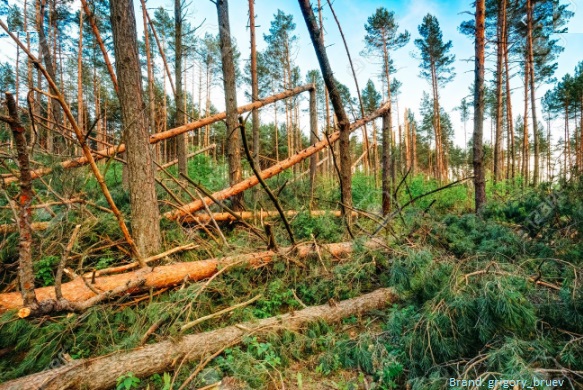
The likelihood of a person dying from a COVID-19 infection depends upon his or her health, particularly the condition of their immune system and respiratory system.  By analogy, violent wind passing through a forest usually does not equally damage and fell all the trees.  The older trees with weakened roots and trunks due to prior storm or lightning damage, internal infection, or decay, are most likely to be toppled or otherwise damaged. 

Like the wind passing through a forest, every pandemic operates by natural selection to cause greater mortality among those predisposed to the disease because of their age, genetic deficiencies, nutritional deficiencies, prior accidental injuries, or history of prior moral choices that had promoted or diminished physical and emotional health.  Some ethnic minorities experience higher mortality due to a history of discrimination and unfortunate moral choices that lead to disrupted family structure, poor education, and lack of spiritual development. 

Considering that death is inevitable and that any human population includes a wide range of susceptibility to, in this case, COVID-19, the question should be as follows: “In an attempt to protect as many people as possible from COVID-19 infection, how strict can a policy of social isolation be without weakening the entire population by causing socioeconomic disruption and physical-emotional effects that lead to increased addiction, crime, and deaths?

The table above reveals the seemingly inevitable high mortality due to influenza during most years, and particularly from the Swine Flu (H1N1) in 2009-2010.  Although Swine Flu caused a much higher case load of infections and hospitalizations than COVID-19 has to date, the response to the threat of Swine Flu did not include imposed social isolation leading over 22 million jobless claims (to date).

As of this writing, it is clear that President Trump and his team, and the nation’s governors need much discernment as they establish policy that limits deaths from COVID-19 infections without increasing deaths indirectly resulting from social isolation and disruption of our economy.

Informed Discernment
Difficult times test our faith.  We need to be informed of both current events and grounded in God’s Word.  These two disciplines can help us to exercise what I will call “informed discernment” to make wise decisions.  When I was employed by the USDA-Agricultural Research Service, my laboratory chief would say, “You will always make the best decisions from the point of maximum information.”  Now, I will add, “having the best quality information.”  Here are some areas needing our discernment as American citizens in regard to policies on COVID-19:


(a)  News sources should report events with objectivity.  They should separate commentary from objective reporting of the news.  With the rapidity of news cycles, good news analysis includes timelines of unfolding events—e.g. the decisions and actions toward COVID-19 from December, 2019 to the present.  Who knew what, and said what, and when?  How have opinions changed?  Who was correct from the beginning, even when receiving opposition.

(b)  Scientific data and statistics:  I have already written of the importance of “
good science.”

(c)  Responsible parties behind the COVID-19 pandemic need to be identified.  Why did the World Health Organization (WHO) and Chinese Communist leadership fail to lead with information that might have avoided the pandemic?  Some are recommending a stiff economic retribution for China.  But we need to consider how any penalty aimed at the tyrannical Chinese Communist leaders will indirectly affect the innocent Chinese people.

(d)  Scriptural ethics and understanding of the need to protect our 1st Amendment right to privacy in any strategy to defeat the virus. For example, should personal smartphone tracking be used to track the spread of COVID-91?

(e)  Worship services been altered by social distancing policies. What are we learning from alternative approaches to “corporate worship” that can positively affect our worship afterwards?  The same is true of how we educate, how we do health care, and how we maintain our personal health. (e.g. preventive medicine).

(f)  Our view of death, pain, and suffering (physical and emotional) needs to be brought under the authority and insights of God’s Word.  For example, Jesus said, In the world, you will have trouble, but be of good cheer.  I have overcome the world (John 16: 33).  In 2 Corinthians 4, the Apostle Paul wonderfully addresses the realities of the present world and the promise of Eternal Life:
  i.    Ruler of this world (Satan) has blinded us (1 Corinthians 4: 3-4).
  ii.   Christ-followers are to be light and salt (v. 5-7).
  iii.  Christ-followers will suffer affliction (v. 8-15; Luke 21: 12-13).
  iv.  But we do not lose heart for very good reason (v. 16-18).
Yet in all these things we are more than conquerors through Him who loved us (Romans 8: 37).

Intercession in Prayer
If the foundations are destroyed,
What can the righteous do?”
The LORD is in His holy temple; the LORD’S throne is in heaven
… - Psalm 11: 3-4a

Historically, during times of trouble, men and women of faith have prayed to God on behalf of their own personal sin and the sin of their nation.  Here are several examples from God’s Word:  Psalm 51, Psalm 130, and Isaiah 6: 1-7 involve individual repentance; Daniel 9: 1-19 which is Daniel’s intercessory prayer for his nation; and the Apostle John’s call to repentance in 1 John 1: 5-10.

How should we pray?  Here are some prayer promptings that Abby and I are using, and that I have been using with a virtual prayer “meeting” with several men of our church:
(a)  Churches and their Pastors as they lead efforts to proclaim Truth and maintain the local body. 
(b)  People – that their hearts will be open to God’s Word, active in ministering to the needy.
(c)  Missionaries—to powerfully present the Gospel during times of opportunity
(d)  Government leaders— for humble submission to God’s wisdom in important decisions
(e)  Medical professionals— for renewed stamina, wisdom, professionalism, and compassion
(f)   Personal opportunities to assist materially, emotionally, and spiritually in this unique period.

What Do You Think?
If you’d like to leave a question or comment, please use the “Comment” link below.  Or, you may contact me at silviusj@cedarville.edu.

Wednesday, October 18, 2017

Hearing the Voice of Jesus: Role of Faith, Facts, and Feelings

I wrote most of this article in September but its completion was interrupted by a traumatic event in my life on October 8.  I did not expect that God would bring about this situation, but I am both thankful for and amazed at how God prepared me for this time of pain and dependence by allowing me to study the subject of spiritual discernment and write about it beforehand in this article.  Maybe at least some of what I have written will be of help to you.  I hope to give an account of my actual experience in a future article.


It is not uncommon to hear Christians share how God has intervened in the challenges and decisions of life.  Here are some expressions that I have heard and even uttered myself:

“God spoke to me and I have decided to...”
“I’m still waiting on God’s leading before I...”
“After I prayed, God gave me a real peace.”

Perhaps you too have heard these expressions or sensed a time when God was speaking to you.  Like me, you may have asked,

Discerning God's voice for the decisions of life.
“What is God saying to me at this particular time and in this particular situation?” or,
“How can I know whether the “voice” I am hearing is really from God?” (or Jesus…or the Holy Spirit?)

The Bible teaches that God’s Spirit guides obedient Christians (disciples, or Christ-followers) in times of decision-making (e.g. Proverbs 3; 5-6; James 1: 2-8).  However, we must be aware that other voices may compete with the voice of God—voices that may simply reflect our current emotional state; or voices that echo from our own self-delusion. 

A person who is living in open rebellion against God’s principles or who is in self-delusion is unwilling and perhaps incapable of discerning the voice of God (James 1: 5-8).  We are all prone to wander and be influenced by sin, selfishness, and Satan.  So, how can we be sure when God is speaking; and, what He saying to us?

In September, I began reading The Voice of Jesus:  Discernment, Prayer, and the Witness of the Spirit (InterVarsity, 2003).  The author, Gordon T. Smith, defines life in Christ as “an intentional response to the voice of Jesus, a voice that comes through the presence of the Spirit.” It follows, according to Smith, that discernment is “the discipline of attending to this presence [of God’s Spirit] and responding to this leading.”  The author adds that “discernment is possible only if we are alert to several dynamic tensions [including] the tension between heart and mind.”

Obviously, we must be cognitively engaged if we are to be discerning.  But Professor Smith also emphasizes that Christ-followers must be in touch with their emotions if they are to discern the voice of Jesus. Really?  Emotions?  I must admit, I cringed when I read Smith’s claim that we do not mature in our Christian experience unless we mature emotionally.  Smith adds, more bluntly, that …people who are out of touch with their emotions are out of touch with God, for God speaks to us through the ebb and flow of our emotional lives.

Perhaps you too are cringing upon reading Smith’s claims.  You may have even concluded that The Voice of Jesus is not worth reading.  After all, doesn’t the Bible teach that we are to be controlled by the Holy Spirit and not by our emotions (Ephesians 5:15–18; 1 Peter 5:6–11)?  Doesn’t Scripture emphasize that maturing Christ-followers are those who are being transformed by the renewal of their minds (Romans 12:2)?  Shouldn’t our faith rest on facts and not feeling?

I remember the “Faith-Fact-Feeling Train” illustration which was popular in the early 1970’s through Bill Bright’s “The Four Spiritual Laws” booklet.  The founder of Campus Crusade for Christ (now Cru) wanted Christ-followers to avoid hitching their faith to feelings.  After all, our feelings can change faster than the weather.  According to the train illustration, facts are the engine, and without an engine the train will not operate.  Feelings, on the other hand, are represented by the caboose which is unnecessary for the train to move.  But are our emotions really of no more importance than an optional caboose?  Because the train illustration gives this impression, Gordon T. Smith rejects it.

Today, I wonder how many Christians are spiritually stunted or even deprived of a fruitful life of faith because they have found no way to integrate their personality and emotional makeup into a healthy relationship with God through His Spirit.  Perhaps they have learned to store their emotions in a useless caboose rusting away on a side spur.  Study the accounts of when Jesus encountered men and women in great spiritual need and tell me He didn’t address their emotions (e.g. Luke 19: 2-6; John 4; John 8: 3-11).

Thankfully, Professor Smith emphasizes that an obedient and fulfilling spiritual walk with Christ involves more than simply mental, or rational, capacity.  Much more than simply being primates with a large brain, humans have personhood and personality which is an important expression of what it means to be image-bearers of a personal God, and Creator.  God’s gift of personality includes an emotional dimension that is a major part of who we are as individuals.  Our emotions enrich and empower our expressions of love, joy, and hope; or, fear, anger, and loneliness?


Our emotional dimension occupies what is called the affective domain and is included in what Scripture refers to as the “heart.”  Therefore, as we read and study God’s Word, our minds become engaged (cognitive domain) and we are moved by the joys and sorrows of Bible personalities with whom we can easily relate, both cognitively and affectively.  God’s Truth in turn influences our will (volitional capacity).  As we submit our wills in obedience to God’s Spirit, He empowers us to “walk in obedience” (action). 


According to Smith, true spiritual discernment employs mind, emotion, and will.  He concludes that discernment requires “listening with both mind and heart.”  Then, when we act upon what we discern we are exercising what Rev. Bob Tuck (1) referred to as a “quartet” made up of mind, emotion, will, and action.

As a result of my reading, I have become more aware of the importance of emotions in the spiritual disciplines of worship, prayer, discernment of God’s purposes, and sharing the Gospel.  I can now relate to the message of God’s Word in a more complete way by being more alert to the biblical account of the emotional dimension of biblical personalities like Abraham, Jacob, Joseph, Moses, Joshua, Gideon, David, Abigail, Daniel, Mary and Joseph (parents of Jesus), Peter, John, and Jesus.  In biblical characters we find expressions of both negative emotional traits like fear, anger, and despair; and positive emotions associated with the fruit of God’s Spirit such as love, joy, and peace. 


It seems clear that, central to our spiritual awareness and discernment, is a healthy understanding of our emotions and how God’s Spirit ministers in and through us by our emotional response to daily life.  The challenges and the blessings of our lives produce an “ebb and flow” of our emotions.  If we do not have the habit of entrusting our hearts, representing our cognitive, affective, and volitional facilities, to God’s guidance and comfort, we can become spiritually sluggish or “double-minded and unstable in all our ways (James 1:  5-8).”


Instead of being double-minded, God commands us to be filled with the Spirit (Ephesians 5: 18-21) by which we become attentive to the ministry of God’s Spirit with a “whole heart” (Psalm 119: 10). —i.e. fully engaged in mind, emotion, and will. The Apostle Paul teaches that when we are alive to the Holy Spirit, He becomes a channel through which God’s love is poured into our hearts…(Romans 5: 5 ESV).  This blessed pouring of God’s love occurs in the context of trials and suffering.  Paul writes that it is precisely when we encounter trials and suffering that we are best prepared spiritually to receive this outpouring of God’s love through His Spirit.  Because of this love, Paul explains, we can …rejoice in our sufferings, knowing that suffering produces endurance, and endurance produces character, and character produces hope… (Romans 5: 3-4).

According to Gordon T. Smith: The suffering that is spoken of here represents all difficulty—the pain we experience physically, emotionally, and spiritually—explicitly because of our identification with Christ, but then also implicitly in all suffering that comes as a consequence of evil in our world.  The apostle indicated that we should actually boast in our suffering…--accept it, walk into it and choose that through suffering we will grow in grace and hope.  Later, while cautioning against doubting God’s love, Smith encourages those who remain faithful: This surely is what it means to live by faith—believing that God loves us, despite the contrary evidence.

In conclusion, how can we be sure when God is speaking and what He saying to us?  We have seen the importance of developing a proper understanding of the role of both our minds and our emotions in discerning and following the will of God.  Yet, many days we experience what can be an unsettling ebb and flow of our emotions similar to those recorded about heroes of the faith in Scripture.  Therefore, if our walk IN CHRIST is to be robust, steady, and alive, we need to learn more of how to discern the inner voice of Jesus. 

I have been motivated through my recent reading of both the Scriptures and The Voice of Jesus to learn more of what it means to discern the voice of Jesus through disciplines noted by Gordon T. Smith.  Discernment is learned through the practices of private worship and prayer, reading and study of Scripture, reading what our church fathers wrote about discernment (Smith recommends Ignatius Loyola, Jonathan Edwards, and John Wesley), and ministry to those in spiritual and physical need. 

Sequal to this Article:   Hearing the Voice of Jesus--2:  When Suffering Comes

_____________________
[1] Rev. Robert S. Tuck served as pastor of Central Christian Church, Wooster, Ohio from 1923 until 1967.  I “met” this man of God through a collection of his sermons he published in 1939 entitled “A Sermon Bouquet (Picked Along the Way)” which I purchased from Walnut Street Antiques.

Saturday, April 14, 2012

George Whitman (1925 -2012): A Life Well Lived

In our last entry, “Stewardship of “God’s Economy”, we emphasized that good stewardship requires a disposition of reverent discernment necessary to learn and exercise our individual responsibility toward God, our neighbor, and God’s creation.   An event that occurred this week allows us to “put some skin on” this stewardship quality.  On April 9, a gentleman who demonstrated reverence, discernment, and responsibility; and, who actually bore the title “Reverend” as a pastor and friend of our family, went home to heaven. 

Whitman's celebrating George's 80th Birthday, in 2005.
The Rev. George P. Whitman (1925-2012) devoted 53 years of his life to the pastoral ministry in New York State.   George and his wife Jean, his faithful partner of 64 years, have shepherded five different churches during the past five decades.  During this time Pastor Whitman and Jean nurtured four sons and three daughters who have extended the Whitman family and their heritage of Christian faith through 23 grandchildren and 44 great-grandchildren and nieces and nephews.

This week, we are remembering the life of George Whitman and keeping Jean and the family in our prayers.   We honor this man as one who exercised stewardship through his God-given responsibilities as a loving husband, father, and pastor.  Pastor Whitman understood the importance of God’s truth as applied to the heart and mind of each child in a godly home through loving parents, reinforced in the classroom, and supported by the fabric of the local church and community which are the life blood of our nation.

George’s own testimony in a Christmas letter, in 2008, echoes the values that he held dear:

I attended eight grades in a One Room Public Country School (Honeywell's Corners) R. D. 1, Broadalbin, NY. (Fulton County) beginning in 1930 when the Pledge of Allegiance was a daily requirement, listening to the reading of a Psalm, and would you believe it, with the One teacher having all 24 of us quote “The Lord's Prayer” which he taught to his disciples.  The Bible and Websters Dictionary had their place on a shelf available for our use, and believe us‑-Noah Webster was "no dumb bunny".  Many of us are still hanging around (by God's Grace) after, at least, a productive life of serving the Lord and seeking to be a blessing to others, raising our families to be honorable citizens in their communities, in our country, and out as well.
Pastor Whitman was also an American patriot and cherished the opportunities he was given on several occasions to deliver the opening session prayer for the New York State Legislature in Albany.  He wrote:

While praying for America, we still say "God Bless America" and are very thankful for the great heritage handed down to us by our founders and leaders. May we never forget it, or them.  
George’s ministry at LBBC was extended through his weekly radio broadcasts called "Echoes of Faith" on radio station WLFH in Little Falls, N.Y. and "Moments With Your Bible" on WHAZ in Troy, N.Y.  Fittingly, one of his son’s, Fred,  with his wife Rachel, have ministered faithfully with Baptist Mid Missions using a radio ministry in Italy.

Pastor Whitman’s fifth church was Latham Bible Baptist Church (LBBC), in Latham, NY, where he established the Latham Christian Academy in 1979.   It was during this pastorate, in 1992, that our family was privileged to make the acquaintance of George and Jean.   That Spring, our son Brad, had been accepted by Rensselear Polytechnic Institute (RPI) in nearby Troy, NY for graduate studies and we were assisting him to in locating off-campus housing.  We called several churches including LBBC to enlist their prayers and any leads they might have concerning apartments for rent.

We received no leads.  But God’s people did pray and the answer came through the willingness of George and Jean Whitman to open their home to Brad.  They treated him as one of their own sons during the months to follow.  They also involved Brad in the ministry of LBBC and Latham Christian Academy where he was able to teach a course in computers and assist Pastor Whitman in clearing the parking lots after each upstate New York snow.  Brad wrote home many times to share accounts of the special informal times he had spent with Pastor Whitman whose vibrant, unassuming love of Jesus Christ and His creation was contagious.


George & Jean Whitman, with friends, at LBBC & LCA, 199

In 1999, the Whitman’s retired and spent winters at Sleepy Hollow Mobile Estates,  Zephyrhills, Florida.   There, George served as Chaplain and he and Jean continued to bring a sweet aroma of Christ to the local residents for over another decade.  Of course they still migrated north to beloved upstate New York during the warm seasons.

As his obituary in the Oneonta Daily Star states:  

A life dedicated in service to his Lord and Savior, he counseled many people to know Christ as their Savior.  He will be lovingly remembered and missed by his beloved family, cherished friends and those whom he pastored. 
Perhaps our son Brad’s recent tribute to Pastor Whitman is a fitting affirmation of what it means to be a faithful steward of providential opportunities to love and serve God, neighbor, community, and creation: 
 
I went to New York as a young man and was taken in (and fed well) by two of the most wonderful human beings I have ever had the privilege of knowing. I am forever changed by their influence in my life...and forever challenged by their example. Thank you, Pastor and Mrs. Whitman.

This week Heaven decided it was time to bring Pastor George P Whitman home (personally, I feel like things were getting a bit boring up there....).  Truly, truly....our loss is heaven's gain. Thank you, Pastor, for being a true man of faith.  Thank you.

Saturday, March 31, 2012

Stewardship of “God’s Economy” – Reverent Discernment of His Word and World

The Greatest Teacher often pointed to His creation to illustrate important principles or to reveal God’s nature and purposes.  To his anxious followers, Jesus said, “look at the birds” and “consider the beautifully arrayed flowers” (Matthew 6: 26, 28).  He pointed to the vine (John 15: 5) and the fig tree to teach fruitfulness (Matthew 21: 19-20).

Today, there are plenty of reasons to be anxious and pout about our circumstances, or point fingers at Washington or our parents or spouses or pastors rather than take individual responsibility.  But we often face a second challenge – stewarding the Earth at a time when we seem to have limitless power and ability to alter creation from the ocean depths to the atmosphere above.  We use technology’s tools to mine the treasures of God’s creation in search of a satisfaction that material pursuits alone cannot deliver.  Instead, God is calling His stewards to “mine” His creation and His special revelation in the Scriptures with a disposition of reverent discernment that we might learn and exercise our individual responsibility toward Him, toward our neighbor, and toward His creation.

Won’t you join me in an exercise of “mining” creation-- thoughtfully considering it as Christ, the Creator, commanded?    Respectful contemplation of creation is warranted because creation belongs to God and is meant to reveal His wisdom and glory. 
 
Let’s get acquainted with three creatures and consider what lessons they might teach us about real stewardship, or oikonomia (hence, our word, “economy.”)  Stewardship in this context is management of a human economy within God’s created order, or Economy (Berry, 1987) with due respect for the laws that govern this Economy for the good of all and the glory of God.  Our panel of three creatures includes Spring Draba, Skunk Cabbage, and Black Bear.  Later, we will meet “Mr. Hourly Wage Earner” who resides in many different cultures.   

Spring Draba is an early-blooming spring wildflower which the 18th century botanist, Linnaeus, named Draba verna.  In March in SW Ohio, the alert observer can usually find Draba growing in the hard soil of paths or trails, or in the bear spots that interrupt an otherwise smooth, green lawn.  Best if we get on our knees to look carefully-- a good posture for reverent discernment of God’s Economy.  There, you may see Draba, barely the height of the toe of your shoe.  Even then, she reaches this height only when her delicate, white flowers are hoisted on slender, leafless stalks to attract pollinators.   Until flowering time, Draba is only a lowly rosette of tiny leaves covering the otherwise bare soil. 

Spring Draba, Draba verna, with fruits (Fr) developing from the flowers.
Usually by mid-April, tiny Draba has already completed her annual life cycle.  Seeds from the previous year have sprouted and the ground-hugging, leafy rosettes have captured sunlight necessary for growth, flowering, fruiting, and production of new seeds that will be shed to lie dormant until the next Spring.  How does such a tiny flowering plant survive, being relegated to the hard-packed soil and expected to bloom on cold, windswept, March days?

Pretending to understand more than we actually do, botanists claim that Draba is “adapted to its niche,” or “occupation,” through natural selection.  However, some of us would credit a Divine Designer for originating the genetic blueprint which then has passed down through succeeding generations with minor changes through natural selection to become what we call Draba verna. 

Although Draba’s origin is debated, there is no debating the “do or die” situation that Draba faces each year.  Survival depends upon germination of tiny seeds in bare soil each Spring.   The tiny leaves unfold at ground level, the warmest place on blustery March days, to soak up the sunshine necessary for photosynthesis of food to support growth, flowering,  and seed production for the following year.  While still on our knees, we can consider how Draba teaches us individual responsibility to live in harsh places.  But Draba is not the earliest-blooming plant in the Midwest.

In February, long before Draba blooms, I make my annual pilgrimage to a nearby fen (alkaline wetland), often while it is still blanketed with snow.  Careful examination will reveal the pointy, purplish mottled spathes of Skunk Cabbage, Symplocarpus foetidus, poking through the snow.   Each spathe is like a sheltering shroud that protects a fleshy, thumb-sized spike of tiny flowers within what amounts to a “warm room” in which pollination can occur. 

Skunk Cabbage:  Spikes of tiny flowers are surrounded by a hood-like "spathe"
What you won’t see on a cold, February day is the massive Skunk Cabbage taproot anchored deep within the wetland soil beneath each pointy spathe.  Here, soil temperatures average 55o F year-around.  Within the taproot are rich stores of “heating fuel” in the form of carbohydrates stored there during the year before.  When Skunk Cabbage flowers are ready to display mature pollen to insects for pollination, the flower hikes up its “thermostat” and burns stored “carbs” that flow up to the spike from the taproot.  Environmental physiology students and I have measured temperatures as much as 15o F warmer within the flower spikes than temperatures in the surrounding winter air!   Result?   Apparently, insect pollinators are attracted by the warmth and by the odor that is dispersed by the heat into the surrounding air.  By April, new cabbage-like leaves have emerged and their photosynthesis enables the production of many large seeds and the replenishment of taproot “fuel” for the following year.

Whereas, the Draba’s economy depends upon year-to-year production and germination of tiny seeds, the Skunk Cabbage economy is based on long-term savings and investment in underground energy reserves.   From these reserves it generates heat to accomplish pollination in the winter when there is little competition from other plant species for insect pollinators.   No matter to Skunk Cabbage if a bad year occurs; its taproot will have sufficient energy assets to “hold its ground” until a better year comes.

The Skunk Cabbage reminds me of another creaturely example, the Black Bear, Ursus americanus, common in western North America.  Like Skunk Cabbage, the economy of the Black Bear is based on large energy reserves formed during the summer by a diet that includes storage roots and tubers of plants, nuts, plant shoots and buds, large and small mammals, insects, honey, and salmon.  [Humm!  Would a Black Bear feed on a Skunk Cabbage taproot?] 

Like Skunk Cabbage which overwinters underground with its stored energy in a huge taproot, Black Bears also “go underground” in a den for the winter.   As days become shorter, bears prepare for winter’s food scarcity and cold by extensive foraging which leads to the addition of hundreds of pounds in body fat.  Pregnant female black bears have the additional challenge to their economy.   They must nurture two or more baby bears within their uteri which are then birthed in late winter.  To conserve energy, the Black Bear enters a suitable den to reduce body heat loss; and then, sharply reduces its metabolism to lower body temperature.   Denning and lowering metabolism conserve energy reserves for the bear just like a human family in a well insulated home that lowers its thermostat to save on their energy bill.

Black Bear, Ursus americanus
We have seen how one species, Draba, with relatively small energy reserves, and two larger species, Skunk Cabbage and Black Bear which depend upon huge energy reserves, each take responsibility to prepare for and survive harsh winters and rugged environments.  The energy economy of humans is not all that different from other creatures.  Each must have suitable nutrition, shelter, and social relationships necessary for procreation and nurture of offspring.  However, biblically speaking, humans have been created with vastly superior intellect and ability to enter into more complex social and political relationships that revolve around a monetary economy.

Let’s consider the laborer who earns an income based on an hourly wage or who is paid by contract when a particular task or job is completed.  The survival of many of the world’s workers and their families depends upon hourly or otherwise regular wage-for-work.  The plight of many laborers may be illustrated by the story once told by Ralph and Lucy, our family friends who once served as missionaries in Bangladesh.   Ralph had come upon a heated argument between several laborers, or coolies, along a riverbank.  It seems that at least one coolie was objecting to a request from his superior to unload bags of rice from a truck and onto a boat docked at the riverbank.  Why would a healthy, adult Bengali male refuse this opportunity for employment?

Upon inquiry, Ralph learned that the payment being offered to the coolie in rice grain for food in return for his labor was unacceptable to the man because it offered insufficient caloric value for his service rendered.  Amazingly, this man’s economy had taken into account the calories required to unload the rice from the truck, a task he was willing to do.  But, he refused to move the rice onto the boat in what would have been a smoother, more efficient operation.  Reason?   His payment in calories and nutrition would not have provided sufficient compensation for his bodily work plus extra calories and nutrition needed to feed his family.

This account illustrates the large cultural and economic gap that exists between Asian coolies and most people who read this blog.  The Bengali breadwinner’s economy required literally a day-by-day “balancing of the books” for him and his family to survive.  Few of us can even comprehend such an economy.  Like Draba with her “do-or-die economy” in the harsh soil and cold days of early Spring, many wage-earners must take day-to-day responsibility to support themselves and their loved ones.

We now return to our opening question:  If we agree that God calls us as His stewards to consider  His creation with a disposition of reverent discernment of our individual responsibility toward Him, toward our neighbor, and toward His creation; then, what can we learn from creatures so diverse as Draba, Skunk Cabbage, Black Bear, and a human laborer?   First, we learn the principle of God’s provision.  God provides for His creatures through the Economy of His creation.  All creatures must have a continual supply of energy and nutrition for sustenance.  Draba and Skunk Cabbage rely on sunlight to power their growth and reproduction from inorganic building blocks in the soil and atmosphere.  On the other hand, Black Bear and the human worker consume plants and sometimes meat as food.

Though they are diverse, the Creator has equipped each creature to obtain necessary sustenance according to their niche in the Economy of creation.  No creature can create and sustain life out of inorganic constituents.  Test tube experiments to produce even one living cell have failed, let alone efforts to create and sustain the economy of a whole ecosystem as attempted in the Biosphere 2 project in the Arizona desert in the 1980’s.

God’s special revelation in the book of Job underscores the necessity of His provision for His creation:
            But now ask the beasts, and let them teach you;
              And the birds of the heavens, and let them tell you.
              Or speak to the earth, and let it teach you;
              And let the fish of the sea declare to you.
             Who among all these does not know
             That the hand of the LORD has done this,
             In whose hand is the life of every living thing,
            
And the breath of all mankind?  -- Job 12: 7-10 (NASB)

The second principle we learn from the natural revelation through these four kinds of creatures is the principle of individual responsibility for survival and reproduction.   Within the larger Economy of creation, in order to survive, each creature must operate within physical and biological limits that govern its own economy.  Thus, we see Draba being and doing what Draba is designed to be and do; namely, facing the rigors of cold, March days on hard soil to grow and produce seeds for the next year.  

Likewise, the Bengali worker must complete his task for a payment of food that is sufficient for his bodily sustenance with enough extra to feed his family.  On the other hand, the economy of Skunk Cabbage, Black Bear, and many of us includes a means of storing energy or monetary assets that provide a “cushion” against immediate life or death.  However, the principle of individual responsibility still applies in that all creatures must acquire energy and nutrients during the season of opportunity and save extra for an unfavorable season lest they die.

A third principle revealed in Scripture and in creation is the principle of reverent discernment in conservation and restoration.   Successful conservation of the diverse forms of life on Earth must respect the unique requirements and context upon which each species depends for its existence.   Our panel of four creatures can each testify that even well meaning attempts to promote their welfare often represent a violation of natural laws that govern their well being.  For example, let’s help Draba by tilling the soil in those hard-packed, bare-soil spots and then add some nitrogen fertilizer.  Result?   Many of her tiny seeds will be buried too deeply to germinate; and, the increased soil fertility will enable other plant species including lawn grass to invade and occupy the bare spots and make it inhospitable for Draba.  The harsh environment that Draba is designed and adapted to face is the very key to her survival.

Like Draba, both Skunk Cabbage and Black Bear naturally benefit from simply being left alone by well meaning caretakers.  There is a reason that the two plant species have been called “wildflowers” and that Black Bear is considered a “wild animal.”   Attempts to “domesticate” or otherwise alter their natural context have violated the very nature of what they were created to be.

Well meaning attempts in the late 1800’s to conserve the Black Bear in Yellowstone National Park while providing closer access for tourists to observe and feed them led to a conversion of this grand , wild creature from bear to beggar.  As Angela Reese reported in her masters thesis (2007) 

Yellowstone condoned the regulated feeding of bears at these “lunch counters,” and tacitly gave patrons permission to feed bears themselves. Later she adds: Roadside feeding transformed passive spectators into active participants and allowed the park visitor an opportunity for interaction with park wildlife. These visitors became shapers of bears’ lives and behavior (Biel, 2006).

The same well meaning efforts, sometimes in the name of “social justice”, without reverent discernment can be as demeaning and degrading to humankind as it is with wild creatures. Before developing this notion further we must remember both the uniqueness of humankind and the great cultural diversity within Homo sapiens.

The average American has more economic security than many lower-income workers around the world.  Like the Skunk Cabbage and Black Bear, many of us have reserves in our household economies.  Nevertheless, all humans have an individual stewardship responsibility to utilize time, abilities, and opportunities to care for themselves, family, and neighbor.  Responsibility to work is grounded in the Judeo-Christian Scriptures which reveal a Creator Who works and rests.  It follows that God has given mankind a weekly cycle of work (six days) and rest (a Sabbath day) (e.g. Exodus 20: 9-11).   The Apostle Paul wrote in 2 Thessalonians, Chapter 3, that Christians should not lead “an undisciplined life” (verse 6).  Paul’s own economy as a tentmaker underscored his teaching (verses 7-9) as well as his command that “if anyone will not work, neither let him eat” (verses 10-12). 

There is no contradiction in God’s Word between “love your neighbor as yourself” (Matthew 19:19) and “if anyone will not work, neither let him eat.”  We are called to help the helpless; but with a correct definition of helping, one that respects human dignity.  Marvin Olasky (WORLD, 2009) quotes Josephine Lowell, a 19th century New York City charity leader, who wrote: 

the problem before those who would be charitable, is not how to deal with a given number of poor; it is how to help those who are poor, without adding to their numbers and constantly increasing the evils they seek to cure.  

Olasky further quotes an article in Charities Review, in 1900, in which Edward T. Devine called for charities whose goal was 

not "that poor families should suffer, but that charity should accomplish its purpose." Thoughtless generosity was akin to selfishness if it made charity misfire. Generosity plus discernment was key. 

Throughout history, there have always been people in need of help.  Good stewards are to use reverent discernment to rightly identify God-given abilities and opportunities both for meaningful work and to rightly discern the right ways to help our neighbor when he or she is in need (see Ephesians 4: 28).  Nowhere does the Bible teach that it is the responsibility of government to help of the poor and needy.  The 19th century charity leader, Amos G. Warner, understood this principle and saw governmental welfare as necessarily more impersonal and mechanical than private charity or individual action (Olasky, 2009).

Today’s news is filled with reports of well meaning efforts by Washington to help the needy while challenging the more fortunate to “pay their fair share.”  Yet Washington’s distance from the diversity of American families, businesses, and local economies, and its “one-size-fits-all approach is like fertilizing Draba or providing food “dumps” for Black Bears.  Result?  A violation of the natural order in which human dignity is often lost and an ever larger percentage of Americans become dependent upon government.

In summary, we can discern from God’s created order that all creatures are dependent upon His Economy.  Second, God has equipped each species to respond by using its genetic and behavioral equipment to “be fruitful and multiply.” Fruitfulness depends upon both individual responsibility and the state of the environment and biotic community within which a given species lives.

Third, any human effort to “help” another species or a neighbor must be guided by reverent discernment of God’s natural and special revelations.  Our father Adam’s first lesson in stewardship was to become acquainted with the other creatures with such detail that he came to understand that his niche was totally different from any other creature (Genesis 2: 15-25).  Likewise, humble discernment is necessary for effective conservation and restoration human communities and local economies.   Conservation of wildlife such as the Black Bear requires more than provision of feeding “dumps” that convert them to beggars.  Likewise, restoration of human dignity and purpose among the needy depends upon short-term assistance that includes assistance and incentives to find meaningful work.  

Conservation and restoration of both mankind and fellow creatures requires knowledge of and attentiveness to the uniqueness of each biotic community and neighborhood; gaining a “sense of place” as described in Oikonomia, Sept. 31, 2011 .   These are the tasks best taken up by responsible members of family and church spheres of authority in cooperation with appropriate local community groups.  

Your comments are always welcome.  My sources and some additional references are listed below.

References:
Berry, Wendell.  1987.  Home Economics.   North Point Press, San Francisco.
Biel, Alice Wondrak. 2006. Do (not) feed the bears: The fitful history of wildlife and tourists in Yellowstone. University Press of Kansas. 186 pgs.
Olasky, Marvin.  2009.   Giving That Worked.   WORLD Magazine, March 14, 2009).
Reese, Angela.   2007.   Addressing Food Conditioning of Cascade Red Foxes in Mount Rainier National Park, Washington.   Masters Thesis, Evergreen State College, Olympia, WA.