Showing posts with label mind. Show all posts

Sunday, April 30, 2023

Minding the Children – 2. Path to Restoration

For many of us, especially adults, a favorite pastime is to looking through old photo albums.  While older adults enjoy “leafing through” prints in old photo albums, younger adults and adolescents "flip through” their digital albums on their hand-held devices. 

Regardless of our method, our photo collections bring many memories—some good, some not so good!  In fact, some children and adults try to blank out bad memories of experiences that have left deep emotional or even physical scars on their lives.  Experts in child health and education consider the prevalence of adverse childhood experiences (ACE’s) and the resulting emotional dysfunction as a major health crisis in America and worldwide. 

In 
Part 1 of  "Minding Our Children" (Click HERE), we discussed the necessities that each child should receive in order to grow and mature physically, mentally, and emotionally.  As the child’s body, mind, will, and emotions mature in a healthy way, they work together to shape the heart of the child as a person preparing to navigate life’s challenges.  The child’s physical, emotional, and spiritual health continue to mature under good parenting in a stable home life, and by formal education that complements what the child learns at home.  While young children cannot decide their heredity or environment, both of these are important determinants of health and character.  Many children inherit unfavorable genetic traits which may be compounded by adverse childhood experiences (ACE’s) which, in turn, impact physical and emotional health, ability to think, make good choices, and learn.  Although God’s Spirit can override our flesh and its limitations, humanly speaking ACE’s can rob anyone of the mental and emotional health necessary to surrender and walk within the power of the Spirit of God. 

Having pointed out the serious and widespread problem of adverse childhood experiences and the associated theory and selected terminology in
Part 1, we now turn from theory to practical application and solutions to the problem.  Here we offer personal experience and insights through an interview with a man who has personal and professional experience with the effects of ACE’s on the quality and longevity of life.
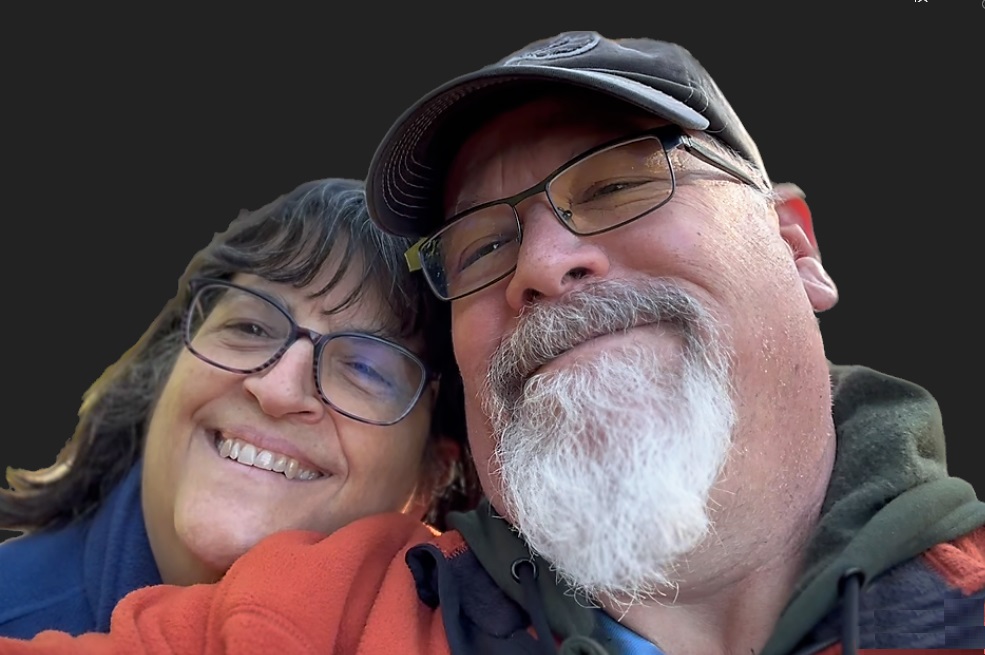
Interview with Robb Fogg

My friend and brother in Christ, Robb Fogg, is a veteran biology teacher in southwest Ohio.  Our interview format below is a composite of numerous conversations with Robb about how he and his wife, MaryEllen have addressed his personal challenges that have resulted from many adverse childhood experiences.  We will also discuss how God has been using his experience with HPA-D to launch a multifaceted program to address this widespread problem among children and adults.

[JOHN ●]  Robb, thank you for co-authoring with me on Part 1, and taking time for this interview.  We want to hear from you as a teacher whose love and compassion for his students and their families has moved you and your wife MaryEllen toward a full-scale effort to provide a way out of the mental, emotional, and spiritual confusion and anxiety so common among students and families.
[ROBB ●]  Thank you for the opportunity to share what God has been showing me through my own life experience and through my teaching and research. 

[●]  First, give us a brief sketch of personal experience God has provided for you which has led up to the Community Health Initiative that you, MaryEllen, and colleagues now lead? 
[●]  When I entered the learning community at Cedarville University and you, Doc, became my academic advisor, I came from a very challenging childhood.  Looking back with what I have learned since then, I was the owner of the incredibly high ACE Score of 13!  In retrospect, I now believe I am a perfect example of the truth that “with God, all things are possible (Matthew 19: 26).”  By God’s grace and love extended through the campus community and my church, I graduated with a degree in biological science education.   

For the past 28 years, I’ve been teaching biology.  Most of those years I tried to engage my students from a social-practical perspective--Biology is life!  Living it, exploring it, enjoying the wonder right under our noses.  But, right under my nose, and within my skin, was a load of biological dysfunction and hypervigilance that was dominating me and keeping me from realizing how much it was affecting me and my family.  Like many polarized-thinking people, I could see my problem but I couldn’t solve it by myself.

[●]  How did you begin to make sense of your dysfunction?
[●]  Six years ago, MaryEllen and I were talking about a difficult experience I had as a child.  She said to me, "If you could go back in time what would you tell yourself?" I began to do the research and for the next 6 years, MaryEllen helped me process the research at a personal level.  When I began to understand the extensive problems that my dysfunction can cause, I realized how much it had affected me and my family across our lifetimes.  I also found evidence that HPA-Dysfunction is passed on genetically to seceding generations.  This is termed epigenetic inheritance.  Epigenetic inheritance occurs through environmental influence upon cytoplasmic components that regulate how our inherited genes (DNA) are expressed during development of our offspring.  Once I saw that I could reset my own HPA-Axis initially through drinking enough water (hydration) and Navy Seal breathing techniques, things just started falling into place and I began trying to present my findings to my students, family, and friends.

[
●]  Were there any other influences on your thinking?
[●]  Yes, besides the loving encouragement of MaryEllen, I was also influenced by a TED Talk by pediatrician Nadine Burke Harris, in 2014 (How Childhood Trauma Affects Health across a Lifetime).  I would highly recommend that your readers take time to watch this excellent 15-minute talk.  It could revolutionize to your thinking as it did mine.

[●]  As a biology teacher you began to understand how ACE’s were hindering your students’ learning and flourishing.  How prevalent are these negative effects among students?
[●]  According to my research, inner city students had ACE Scores of 8 or above.  One researcher reported that an ACE score of 6 correlates with PTSD.  Events like the COVID pandemic, inflation, hurricanes, and urban unrest are known to increase students’ ACE Scores.   Occurrence of HPA-Dysfunction increases as you go from upper (5%) to middle (15-20%) to lower socioeconomic class (50-80%).
[
●]  In simple terms, can you explain how chronic stress leads to HPA-Dysfunction and the resultant behavioral outcomes you have observed? 
[●]  Thank you.  Our neurohormonal system is incredibly complex and when a person’s stress becomes repeated and excessive, the system becomes dysregulated.  In his book, The Body Keeps the Score: Brain, Mind, and Body in the Healing of Trauma, Bessel van der Kolk M.D clearly explains our brain’s response to chronic stress; namely, the left side of the brain largely goes offline or becomes dysregulated.  It loses the ability to solve problems.  At the same time, the right side can identify the problems but has no solutions except to stir the emotions and feed messages to the adrenal gland which churns out adrenaline.  For obvious reasons, this condition is called “making your own coffee.”  The responses to the excess adrenaline are anger, anxiety, and energy expenditure.  Another byproduct of HPA-D is cortisol which interferes with sleep, creates insulin resistance, and can cause body wide inflammation that often leads to leaky gut.  I believe we have listed numerous other physiological and behavioral consequences of HPA-dysregulation.

[
●]  Your thesis is that HPA Dysfunction is tied to poor physical health and lifestyle.  What particular nutritional and lifestyle factors are you targeting?
[●]  Each person who enrolls in our “Acorns to Oaks” program to address HPA-D and hypervigilance must first register by completing our “Intake Form.”  Then, when they complete our “Daily Health Survey,” they will be introduced to five biological baselines and given a score for each baseline based on the health status data they provided in the Survey.  Each enrollee is then given access to our unique interactive tracker according to their current scores for each of the baselines.  The five baselines are as follows: Hydration, Nutrition, Sleep, Breath, and Play.   As enrollees make progress in improving their baselines, they will be able to see their scores with color coding on their own personal “Life Fuel Dashboard” accessed through their acornoasis.com phone app.  

Because God created us for relationships, with Him and with our fellow human beings, we have designed our habit tracker so that individuals can progress through the program in the context of families, teams, and communities.   For example, each parent can have his or her own dashboard and can see his son or daughter’s dashboard.  This unique perspective allows a parent to support the underlying biological stress rather than react negatively to the son or daughter’s dysfunctional behavior.

[
●]  Do you think children’s medical centers are making progress in research and clinical treatment of HPA-dysfunction in children?
[●]  Reports of mental health crisis in our children are dominating the news.  Addressing mental health is in the top three health concerns in all medical centers nationally.  Professionals across the health industry are reporting a desperate need for something to stem the tide of poor mental health outcomes and suicides.  A nurse who works in a children’s hospital told me that their staff is so overwhelmed with this problem among children that they are trying to treat the secondary effects of stress instead of addressing the cause.  The HPA-D has the children totally filled with anxiety and they don't know why.  This nurse stated that our approach will help dysfunctional individuals regain their sensory bearings.

[●]  As men of faith, you and I would agree that God’s Spirit and Word can overcome mental and emotional hindrances to a person’s repentance and acceptance of God’s gift of salvation through Christ’s death and resurrection.  But do you ever think that you are inviting hurting people to bypass repentance and spiritual courses of action?
[
●]  Doc this is a great question! I would take it back one step and consider that the total dysregulations caused by HPA-D hinder people from getting a good look at the loving offer God makes through his Son.  The dysregulations of HPA-D dampen the senses and interfere with a person's ability to make sense of abstract ideas.  As Christians, we understand that saving faith in Christ comes by hearing, and hearing by the Word of God (Romans 10: 17).  But, consider how abstract the following statement of the Christian Gospel might sound to someone unfamiliar with ideas of Christianity:  An all-powerful being entered our timeline, took on the biology of His own creation, arranged to be the ransom payment, was killed and came back to life in order that all mankind might have life, for all time, for anyone who would call on his name.  Abstract, right? 

What’s more, Jesus challenges His would-be followers to do more than “know the Scriptures” or “know about Him.”  He wants us to know Him deeply and personally!  To do this requires more than just to “know the Scriptures” or to “know about Him.”  Jesus said, If you continue in (remain in, think deeply about) My word, then you are truly My disciples; and you will know the truth, and the truth will set you free (John 8: 31-32).”  Isaiah 26: 3 promises that God will keep him in perfect peace, whose mind is stayed on Him. 

But HPA-D prevents the “quiet mind,” one necessary to contemplate abstract spiritual things.  It is like the static of radio entering your thoughts.  The higher your ACE Score, the louder the static interference.  Depression is showing up as people are having a harder time quieting their thoughts.  Hypervigilant people constantly process threats making abstract constructs challenging.  The Apostle Paul wrote that Satan, the god of this world has blinded the minds of the unbelieving so that they might not see the light of the gospel of the glory of Christ, who is the image of God (2 Corinthians 4: 4).  In contrast, “God is not the author of confusion” (1 Corinthians 14: 33).”  God arranges the details in our life path so that we might reach out to Him.  He did this so that they might seek God, and perhaps they might reach out and find him, though he is not far from each one of us (Acts 17: 27).” 

As a small boy under so much stress I reached out for God as if reaching for a light switch in a dark room.  I found Him and he found me.  Now, God is giving MaryEllen and I the motivation and enough understanding of biology and faith to be ambassadors to those He is calling into His Kingdom.

[
●]  So, I’m thinking that when a person is burdened with shame and other negative emotions, they may be less likely to seek spiritual help.  Am I right?
[●]  You are right!  Let's assume that you are experiencing dysregulations to some degree, and that you are trying to stop drinking or trying to live a pure life.   You go to the spiritual leaders for help and you bear your soul to receive spiritual counseling.  But you gain no insight on how to turn off the biochemical effects of the HPA-D.  You may decide, along with many others, that you will stop bringing your missteps into public view.  The idea of accountability and self-discipline within a spiritual context doesn't seem to work.  People walk away from the faith community because of the incongruence of the situation.  If someone chides you in the process, can you understand the added discouragement you would experience.  People leave the church.

Since using our method, I have found that my mind is more at peace because it doesn’t race as much.  I can turn off my racing thoughts and enjoy what is happening in the present.  I don’t worry about the past or the future because God provides what we need each day.  When I turn on the left side of my brain, I am able to process Life in the Spirit the way God intends.  In other words, by following our disciplined program to improve the five baselines, we can restore peace of mind, order to our thinking, and Joy in our hearts.  Philippians 4: 4-7 instructs the Christ-follower to
Rejoice in the Lord always; again, I will say, rejoice…Be anxious for nothing, but in everything by prayer and supplication with thanksgiving let your requests be made known to God. And the peace of God, which surpasses all comprehension, will guard your hearts and your minds in Christ Jesus.

The fruit of the Holy Spirit is among other things Joy!  But HPA-D chemically dampens the feeling of Joy.  In place of Joy, hormonal dysregulation causes anger, anxiety, selfishness (hypervigilance), self-doubt, loneliness, road rage and even the feeling of shame.  Learning to reset my HPA-D allows me to have a greater biochemical and spiritual capacity for Love, Joy, and Peace.

[
●]  What advice would you give to pastors and lay leaders?
[●]  Having been a pastor, I know the overwhelming feeling of trying to help people overwhelmed with family malfunctions.  Families, especially if a parent or parents suffered as children, are in a very difficult situation.  Spiritual Leaders in our community need to empower our families to establish strong mental health habits by establishing our biological baseline.  

When a family enrolls in our “Acorns to Oaks” program and takes our “Daily Health Survey” they can identify the baseline issues and take positive steps themselves.  The parent can view a summary of their children’s biological baselines so the parent can help the child work toward a more homeostatic life-style. You can see that our approach gives a community a tool to quickly identify the underpinnings of extensive malfunctions and provide practical solutions.  [CLICK on the graphic to enlarge.]

As I noted above, the church must adopt a more Christ-like compassion toward those who have given up on themselves and the church, and are suffering in emotional paralysis, addiction, and shame.  You and I have discussed the compassionate way in which Almighty God extended comfort to the Prophet Elijah when he was on empty physically, emotionally, and spiritually. God addressed each of these needs beginning with Elijah’s need for bread and water (1 Kings 19).

[
●]  Yes, and the same God came in the flesh as Christ, the Messiah. He gave us a model of comfort when he began a conversation with a hypervigilant, rejected, Samaritan woman who had had five husbands and was at the time in a live-in situation (John 4).  Jesus didn't come to her with a prescription from the Holy Scriptures even though they do have the answers.  Instead, He asked her for something that she had come to the well to get-- something which He knew she needed in both the physical and spiritual sense--water! By starting the conversation around His own basic physical need as a man, God in human flesh, Jesus was able to lead Her to "living water." When she believed and drank of this "living water" spiritually, her life began to be spiritually transformed.  This hypervigilant, rejected, Samaritan woman then cried out, "Come see the Man who told me all about myself!"

[
●
]  Jesus spoke to the Samaritan woman with compassion and empathy.  Beyond these, He COM+FORTED her, meaning "to COME with ‘FORT-ification’ of faith for a path forward.” 
 You and I have referenced a passage from 2 Corinthians 1: 3-4 which means so much to both of us.  Here, God invites the anxious and distressed to receive His abundant comfort through our Comforter (John 16:7).  Notice the highlighted phrases:
Blessed be the God and Father of our Lord Jesus Christ,
the Father of mercies and God of all comfort,
who comforts us in all our affliction
so that we will be able to comfort those who are in any affliction
with the comfort with which we ourselves are comforted by God.
Our Community Health Initiative depends upon our knowledge and technology, but we will fail if we don't reach out to distressed people with the comfort of Christ.

[
●]  Amen! And I believe the story you and MaryEllen are writing is clearly Spirit-led.  You thank God for calling you out of spiritual and emotional dysfunction, and yet we can see that God also used the compassion and comfort of MaryEllen.  I can see how this same spirit is being multiplied through your Community Health Initiative--an integration of faith and science, powered by God’s Spirit who guides with the Light from God’s Word and wise application of the biological and behavioral sciences.
[●]   Thank you.  That sums it up very well.

[
●]  In spite of your offering of a positive, proactive, faith-science based program of community health, why is there still institutional and social reluctance and resistance to your program?
[●]  “Adverse childhood experiences are the single greatest unaddressed public health threat facing our nation today” according to Dr. Robert Block, American Association of Pediatrics (2017).  The implications clearly extend beyond health to education, public safety, and our economy.  So why is it unaddressed?  I believe there are at least five resistances to progress:
1) Social resistance--Facing the notion of childhood stress is not very popular; yet this is the cause of HPA-D.
2) Hypervigilance often makes a person extremely defensive against efforts to help them.
3) Allostatic load drains energy and hampers the problem-solving part of the brain.
4) The church has “spiritual answers” but needs to follow Christ’s example of ministry to the “whole person.”
5) The medical health establishment is too focused on high tech and pharmaceutical approaches to simply prescribe personal discipline of attaining quantifiable baselines: water, good nutrition, breathing, sleep, and play.

[
●]  Would you elaborate on the apparent resistance from the medical community? 
[●]  Sure. Nadine Burke uses the contaminated well example: “You can write prescriptions for 100 cases of diarrhea or you can go find out what's in the well.’’ Instead of treating the symptoms, our approach addresses the base biological malfunctions.  Thus, by turning off the negative effects of HPA-D it reduces the hormonal dysfunctions and the subsequent physiological miscues.  For example, simply helping a person reach quantifiable hydration baseline relieves headache, brain fog, and constipation.  Or consider our breathing baseline--on three separate occasions we lowered blood pressure from 220/180 to 140/80 within two minutes in response to Navy Seal Breathing Techniques.focused on high tech and pharmaceutical approaches to simply prescribe personal discipline of attaining basic baselines: water, good nutrition, breathing, sleep, and play.

[
●]  Thank you, Robb; and please thank MaryEllen for sharing you with me for this interview.  I understand that your goal is to put an upgraded system into every school in a 5-state area.  Students could come and take the “Daily Health Survey” and begin to work with their biological baselines using the “Life Fuel Dashboard” to help them identify some of the root causes of their out-of-control feelings.
[●]  That is our goal.  We estimate the price tag on this data machine is $100,000.  We are currently seeking funds and expertise to help us put this community resource into play.  

But, as we said earlier, our leading edge must be in the power and wisdom of God, delivered with His comforting Spirit. I want to comfort others in their affliction with the comfort with which I was comforted.  Our invitation is open!  Visit us at “Acorns to Oaks” (Click HERE.)

NOW, READERS' TURN:

We have discussed the alarming prevalence and consequences of adverse childhood experiences among adolescents, young adults, and parents.  Robb Fogg has launched a multi-faceted program to address HPA Dysfunction and to bring freedom and restoration to those locked in a cycle of cognitive, emotional, and spiritual turmoil.

If you or someone you know appears to be struggling under the effects of dysfunction and wants to find help, we urge you to avail yourself of Robb’s Beta Test using the following links: 

Click
HERE to Enroll in the Beta Testing
Click
HERE for “Negative Effects of HPA Dysfunction,” by Robb Fogg
Click
HERE for a video explaining Hormonal Malfunctions

Finally, we hope you sense that we have a personal interest in helping those who are struggling.  We urge you to share your experiences, questions, and ideas using the “Comment” link below.  Your insights and experiences that will further add to the value of this discussion.  You may also e-mail us at
silviusj@gmail.com . To contact or offer financial support or expertise to Robb Fogg, please contact him at robb@10000atoms.com

Wednesday, October 18, 2017

Hearing the Voice of Jesus: Role of Faith, Facts, and Feelings

I wrote most of this article in September but its completion was interrupted by a traumatic event in my life on October 8.  I did not expect that God would bring about this situation, but I am both thankful for and amazed at how God prepared me for this time of pain and dependence by allowing me to study the subject of spiritual discernment and write about it beforehand in this article.  Maybe at least some of what I have written will be of help to you.  I hope to give an account of my actual experience in a future article.


It is not uncommon to hear Christians share how God has intervened in the challenges and decisions of life.  Here are some expressions that I have heard and even uttered myself:

“God spoke to me and I have decided to...”
“I’m still waiting on God’s leading before I...”
“After I prayed, God gave me a real peace.”

Perhaps you too have heard these expressions or sensed a time when God was speaking to you.  Like me, you may have asked,

Discerning God's voice for the decisions of life.
“What is God saying to me at this particular time and in this particular situation?” or,
“How can I know whether the “voice” I am hearing is really from God?” (or Jesus…or the Holy Spirit?)

The Bible teaches that God’s Spirit guides obedient Christians (disciples, or Christ-followers) in times of decision-making (e.g. Proverbs 3; 5-6; James 1: 2-8).  However, we must be aware that other voices may compete with the voice of God—voices that may simply reflect our current emotional state; or voices that echo from our own self-delusion. 

A person who is living in open rebellion against God’s principles or who is in self-delusion is unwilling and perhaps incapable of discerning the voice of God (James 1: 5-8).  We are all prone to wander and be influenced by sin, selfishness, and Satan.  So, how can we be sure when God is speaking; and, what He saying to us?

In September, I began reading The Voice of Jesus:  Discernment, Prayer, and the Witness of the Spirit (InterVarsity, 2003).  The author, Gordon T. Smith, defines life in Christ as “an intentional response to the voice of Jesus, a voice that comes through the presence of the Spirit.” It follows, according to Smith, that discernment is “the discipline of attending to this presence [of God’s Spirit] and responding to this leading.”  The author adds that “discernment is possible only if we are alert to several dynamic tensions [including] the tension between heart and mind.”

Obviously, we must be cognitively engaged if we are to be discerning.  But Professor Smith also emphasizes that Christ-followers must be in touch with their emotions if they are to discern the voice of Jesus. Really?  Emotions?  I must admit, I cringed when I read Smith’s claim that we do not mature in our Christian experience unless we mature emotionally.  Smith adds, more bluntly, that …people who are out of touch with their emotions are out of touch with God, for God speaks to us through the ebb and flow of our emotional lives.

Perhaps you too are cringing upon reading Smith’s claims.  You may have even concluded that The Voice of Jesus is not worth reading.  After all, doesn’t the Bible teach that we are to be controlled by the Holy Spirit and not by our emotions (Ephesians 5:15–18; 1 Peter 5:6–11)?  Doesn’t Scripture emphasize that maturing Christ-followers are those who are being transformed by the renewal of their minds (Romans 12:2)?  Shouldn’t our faith rest on facts and not feeling?

I remember the “Faith-Fact-Feeling Train” illustration which was popular in the early 1970’s through Bill Bright’s “The Four Spiritual Laws” booklet.  The founder of Campus Crusade for Christ (now Cru) wanted Christ-followers to avoid hitching their faith to feelings.  After all, our feelings can change faster than the weather.  According to the train illustration, facts are the engine, and without an engine the train will not operate.  Feelings, on the other hand, are represented by the caboose which is unnecessary for the train to move.  But are our emotions really of no more importance than an optional caboose?  Because the train illustration gives this impression, Gordon T. Smith rejects it.

Today, I wonder how many Christians are spiritually stunted or even deprived of a fruitful life of faith because they have found no way to integrate their personality and emotional makeup into a healthy relationship with God through His Spirit.  Perhaps they have learned to store their emotions in a useless caboose rusting away on a side spur.  Study the accounts of when Jesus encountered men and women in great spiritual need and tell me He didn’t address their emotions (e.g. Luke 19: 2-6; John 4; John 8: 3-11).

Thankfully, Professor Smith emphasizes that an obedient and fulfilling spiritual walk with Christ involves more than simply mental, or rational, capacity.  Much more than simply being primates with a large brain, humans have personhood and personality which is an important expression of what it means to be image-bearers of a personal God, and Creator.  God’s gift of personality includes an emotional dimension that is a major part of who we are as individuals.  Our emotions enrich and empower our expressions of love, joy, and hope; or, fear, anger, and loneliness?


Our emotional dimension occupies what is called the affective domain and is included in what Scripture refers to as the “heart.”  Therefore, as we read and study God’s Word, our minds become engaged (cognitive domain) and we are moved by the joys and sorrows of Bible personalities with whom we can easily relate, both cognitively and affectively.  God’s Truth in turn influences our will (volitional capacity).  As we submit our wills in obedience to God’s Spirit, He empowers us to “walk in obedience” (action). 


According to Smith, true spiritual discernment employs mind, emotion, and will.  He concludes that discernment requires “listening with both mind and heart.”  Then, when we act upon what we discern we are exercising what Rev. Bob Tuck (1) referred to as a “quartet” made up of mind, emotion, will, and action.

As a result of my reading, I have become more aware of the importance of emotions in the spiritual disciplines of worship, prayer, discernment of God’s purposes, and sharing the Gospel.  I can now relate to the message of God’s Word in a more complete way by being more alert to the biblical account of the emotional dimension of biblical personalities like Abraham, Jacob, Joseph, Moses, Joshua, Gideon, David, Abigail, Daniel, Mary and Joseph (parents of Jesus), Peter, John, and Jesus.  In biblical characters we find expressions of both negative emotional traits like fear, anger, and despair; and positive emotions associated with the fruit of God’s Spirit such as love, joy, and peace. 


It seems clear that, central to our spiritual awareness and discernment, is a healthy understanding of our emotions and how God’s Spirit ministers in and through us by our emotional response to daily life.  The challenges and the blessings of our lives produce an “ebb and flow” of our emotions.  If we do not have the habit of entrusting our hearts, representing our cognitive, affective, and volitional facilities, to God’s guidance and comfort, we can become spiritually sluggish or “double-minded and unstable in all our ways (James 1:  5-8).”


Instead of being double-minded, God commands us to be filled with the Spirit (Ephesians 5: 18-21) by which we become attentive to the ministry of God’s Spirit with a “whole heart” (Psalm 119: 10). —i.e. fully engaged in mind, emotion, and will. The Apostle Paul teaches that when we are alive to the Holy Spirit, He becomes a channel through which God’s love is poured into our hearts…(Romans 5: 5 ESV).  This blessed pouring of God’s love occurs in the context of trials and suffering.  Paul writes that it is precisely when we encounter trials and suffering that we are best prepared spiritually to receive this outpouring of God’s love through His Spirit.  Because of this love, Paul explains, we can …rejoice in our sufferings, knowing that suffering produces endurance, and endurance produces character, and character produces hope… (Romans 5: 3-4).

According to Gordon T. Smith: The suffering that is spoken of here represents all difficulty—the pain we experience physically, emotionally, and spiritually—explicitly because of our identification with Christ, but then also implicitly in all suffering that comes as a consequence of evil in our world.  The apostle indicated that we should actually boast in our suffering…--accept it, walk into it and choose that through suffering we will grow in grace and hope.  Later, while cautioning against doubting God’s love, Smith encourages those who remain faithful: This surely is what it means to live by faith—believing that God loves us, despite the contrary evidence.

In conclusion, how can we be sure when God is speaking and what He saying to us?  We have seen the importance of developing a proper understanding of the role of both our minds and our emotions in discerning and following the will of God.  Yet, many days we experience what can be an unsettling ebb and flow of our emotions similar to those recorded about heroes of the faith in Scripture.  Therefore, if our walk IN CHRIST is to be robust, steady, and alive, we need to learn more of how to discern the inner voice of Jesus. 

I have been motivated through my recent reading of both the Scriptures and The Voice of Jesus to learn more of what it means to discern the voice of Jesus through disciplines noted by Gordon T. Smith.  Discernment is learned through the practices of private worship and prayer, reading and study of Scripture, reading what our church fathers wrote about discernment (Smith recommends Ignatius Loyola, Jonathan Edwards, and John Wesley), and ministry to those in spiritual and physical need. 

Sequal to this Article:   Hearing the Voice of Jesus--2:  When Suffering Comes

_____________________
[1] Rev. Robert S. Tuck served as pastor of Central Christian Church, Wooster, Ohio from 1923 until 1967.  I “met” this man of God through a collection of his sermons he published in 1939 entitled “A Sermon Bouquet (Picked Along the Way)” which I purchased from Walnut Street Antiques.