Showing posts with label botany. Show all posts

Wednesday, March 5, 2025

Treasures Along Roads Less Traveled

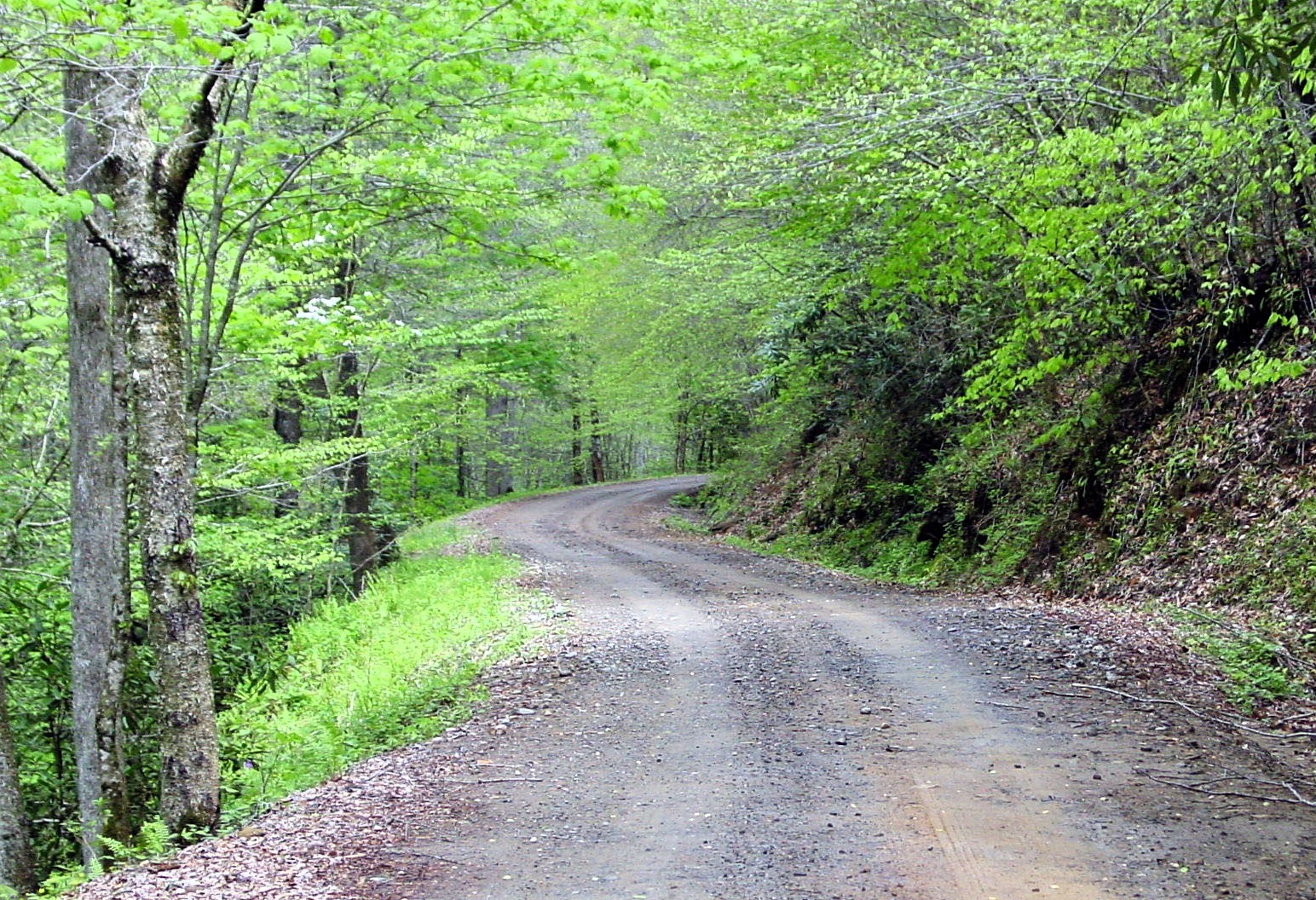
Two roads diverged in a wood, and I--
I took the one less traveled by,
And that has made all the difference
.

In his beloved poem, "The Road Not Taken," Robert Frost uses the imagery of divergent roads where we as travelers in life must choose which road we will follow.  Indeed, our lives continually require us to make choices.  Some may have only minor consequence.  But Frost’s “fork in the road” analogy seems to suggest major choices we must make.  We all make choices that shape our moral and spiritual identity, form our social network, influence how we use material resources, and sensitize us to our vocational calling and purpose in life. Whether our choices are good or bad, we are all given time, talents, and treasures to use as stewards of these as gifts and opportunities.

Book Review
This month’s blog presents a book review of Forests, Wetlands and Flamescapes, subtitled Wildlands of the Dayton, Ohio Region in 1800…and Today, authored by my friend, David Nolin.  From my vantage point, Dave seems to have taken "the one less traveled' -- one that “was grassy and wanted wear.” Whether I am correct in placing Dave on such a path and whether I’m making a correct application of Frost’s intent will remain to be seen.  I will leave it for Dave and other readers to comment and steer me aright if necessary.  But stay with me and we’ll see where this blog leads.

How Things Used to Be
One’s preference for the “road less travelled” can take different forms.  Some of us prefer to apply this preference literally when we leave the highways and interstates behind to view the landscape from rough and winding country roads.  We may even be prone to stop along country roads to hike offroad, where we are permitted, to find trails and paths less traveled, and where landscapes remind us of “how things used to be.”  Such places offer a quietness from the bustle of our busy world, solace to appreciate the beauty of the natural landscape, and time to observe the diversity of its resident flora and fauna.  For some of us, after we have rolled back the distractions of every-day life to reflect on the natural landscape, we encounter new and worthwhile questions.

The Author
Dave Nolin has been among those who have long been fascinated by “how things used to be” in the landscapes of southwestern Ohio.  During his 30-year career with Five Rivers MetroParks of Dayton, Ohio, Dave has been active in the discovery, acquisition, and land stewardship of numerous natural area treasures of the surrounding region.  

Forests, Wetlands and Flamescapes gives us an account of what Nolin has learned from extensive field studies and research into historic accounts and mapped data, all of which he has compiled into an understandable, fascinating, and beautifully illustrated book.  Readers are treated to an account of “how things used to be” in landscapes of southwestern Ohio, the forces that have historically shaped these landscapes, and the land management principles that we ought to follow to maintain these biological and historical treasures.

For History Lovers
Readers of Forests, Wetlands and Flamescapes who love history will be treated to numerous accounts describing the various plant communities of southwestern Ohio complete with color photos and maps.  Prior to the entry of agriculture and industry, Native Americans used fire to hunt game animals and maintain prairie grasslands for good grazing.  Readers who have believed that land stewards can keep landscapes “the way they used to be” by simply leaving them undisturbed will be in for a surprise.  From the historical records, Nolin argues just the opposite—the only way to conserve many of these natural areas such as open prairie grasslands is to disturb them!  In other words, in order to conserve them [Latin, con- (with) + servitium (service)] we must “serve with” them by planning and executing disturbances typical of those which have sustained them for centuries.  To use Robert Frost’s analogy, these natural areas are each like the road that “was grassy and wanted wear.”  

For Map Lovers
Readers who love maps will be interested in how Dave is leading the effort to refine an older map published in 1966.  This map, entitled Natural Vegetation of Ohio at the Time of the Earliest Land Surveys, was compiled from mapped data from the Public Land Survey System (PLSS) obtained prior to 1800.   
In Chapter 2, “Mapping a Lost World,” Dave explains his project to evaluate the PLSS data using GIS (Geographic Information Systems) software in order to provide more accurate mapping of pre-settlement plant communities.  The result is a treat for readers who love both maps and history.   This is true because the aim of the project is to use documents containing pre-settlement data to go beneath the “landscape layer” familiar to us today in order to reconstruct an “historic landscape layer” that maps the plant communities as they existed in Ohio prior to 1800.  

Just in Time for Spring
The coming of Spring is a great time to follow “roads less traveled” to find the botanical treasures of remnant natural areas.  My wife and I are planning to use Forests, Wetlands and Flamescapes to explore some of these natural areas.  Chapter 5, “Some Modern Lifeboats,” serves as a guide to twenty-one protected natural areas within the Dayton, Ohio region that are accessible to the public.  Nolin gives the location of each of these natural areas on a map of the Dayton regional area and describes the landscape and past disturbances.  Each natural area is also highlighted with photos of notable plant species and an aerial map of the designated hiking trails.

In conclusion, if you are among those of us who love the “road less traveled” or know someone who has that love, may I heartily recommend Forests, Wetlands and Flamescapes.  And don’t be surprised this Spring if you are hiking in one of the treasured landscaped described in this book to run upon Dave Nolin and maybe his wife, Catherine, already there enjoying it.

Where to Purchase:
Nolin, David.  2024. Forests, Wetlands and Flamescapes: Wildlands of the Dayton,
    Ohio Region in 1800…and Today
. Generis Publishing.
    For more information and purchase, go HERE.

Recommended Further Reading:
Nolin, David.  2018. Discovery and Renewal on Huffman Prairie: Where Aviation
    Took Wing.  
Kent State University Press 
    For purchase, go HERE.  Book review, go HERE.
More on conservation and land stewardship in this blog, enter keyword
    "conservation" in Search Oikonomia" box in the menu bar (right side -->).


Tuesday, October 17, 2023

Cedarville Alum Finds Treasures in Prison

Recently, we were blessed to have a long-distance, online conversation with Charles “Chuck” Lawrence, a Cedarville University graduate.  Chuck’s story illustrates so well how God leads His sons and daughters in the faith into fulfilling vocations which He has prepared for them.

[JOHN ] Thank you, Chuck, for being willing to share your story.  Would you mind tracing your steps professionally since graduation from Cedarville University?
[CHUCK ] Sure!  I graduated from Cedarville University in 2004 with a Bachelor Degree in cell and molecular biology.  My first job was in a biomimicry lab at Wright Patterson Air Force Base in nearby Fairborn, Ohio.  After about two years, I was granted a graduate teaching assistantship at the University of Notre Dame where I earned my master’s degree. 

[] How did your graduate school experience at Notre Dame affect your career path? 
[] My research involved infectious disease and tuberculosis.  However, it was my teaching assistantship at Notre Dame that helped me realize that I loved teaching more than research. I should also add that if I had it to do over again, I would probably have done my grad work in ecology.

[] That’s interesting.  But you came away with your master’s and a clearer sense of what your career fit might be.  Then what did you do?
[] I worked in public health for a few years.  Then, in 2013, we went to Tunisia where we started a cheese-making business.  We made cheese from goat, cow and eventually camel milk. Eventually, we added a maple syrup-type product from the sap of date palm trees. 

[] Fascinating, Chuck!  How long did you stay in Tunisia?
[] We returned to the states in 2021.  The export side of business was running into too many challenges.  Also, two of our kids were ready to start college.  So, we moved back in South Bend Indiana where I currently work for the Indiana Department of Environmental Management (IDEM) and am enjoying it.

[] Speaking of your family, can you tell us more about your wife and children?
[
] My wife, Kristin and I met at Cedarville University while we performed in The Pirates of Penzance.  She performed on stage and I was in the orchestra pit.  Kristin finished her degree from Michigan State and we were married after our graduation.  Josephine was our first child (now 18) followed by Charley (16) and Madeline (14).  Then we adopted Bujuga from Ethiopia who was already age 5, the same age as Josephine.  Our youngest is Olivia (9).

[
] I suppose you and Kristin are beginning to see them make career choices.
[] Yes, Josie has an Olympic Weightlifting scholarship and is probably on a track to go to graduate school for Art Therapy.  Bujuga is playing soccer at his school and majoring in Nursing although he might think about adding or switching to PA or NP school after graduation.  Charley is in high school, loving his Welding program, and considering going into Welding or Industrial Diving.  Madeline and Olivia both have more time to seek clarity about their future.
 

[
] Understand there was also a time when you ended up in prison.  Tell us about that.
[] My full-time job is with IDEM, but in the summers, I’ve been teaching as one of the faculty of the Moreau College Initiative (Click HERE.).  MCI is an academic collaboration between the University of Notre Dame and Holy Cross College in partnership with the Indiana Department of Correction. College student inmates at Westville Correctional Facility (WCF) can earn credits toward an Associate Arts (AA) degree.  Those who complete their AA can seek admission to a Holy Cross Bachelor of Arts (BA)degree program.  They can enroll either as inmates or as on-campus students at Holy Cross College upon their release from WCF.

[
] Tell us about your teaching experience at the correctional facility.
[] I teach a botany class as an adjunct during the summers in addition to my full-time job with IDEM.  I have taught at the community college level and at Notre Dame as a graduate student but I have never had the kind of students that I have at the prison.  These men have significant strikes against them to be allowed back into society even after they have served their time.  But earning a degree in prison gives them something to lose when they are released (that was their words regarding why this program lowers recidivism so significantly).

[] I assume your main teaching setting is in a classroom.  Do you include a hands-on lab component?
[] Yes, the inmates already have access to small gardens we can use for some lab work and small experiments.  There is an enormous amount of open mowed grass available to us and I would LOVE to create a native prairie space but I am thinking the controlled burns might not be looked upon with favor [Chuckle].

[] I understand.  Maybe you could establish some small, say 5 x 5-meter plots surrounded by mown grass as a firebreak. 
[] How has your teaching at the correctional facility affected you personally?
[] My experience at WCF has changed (and is still changing) the way I think about my own identity; and also, how I create identities for those around me.  Before I began teaching at the correctional facility, I was pretty comfortable placing an identity on the inmates as criminals, convicts, offenders, etc.  And, although my students had committed crimes, I soon became convicted that I was assigning to these men identities that Jesus had not.  He saw them as His children; those for whom He had given everything. 

[
] That’s inspiring, Chuck.  Your relationship to Christ was helping you to see your students through His eyes.
[] Yes indeed.  I began to think, "what right do I have to place on someone an identity that Jesus has not."  I began to realize that I had given myself a better identity than I was giving these men-- one that was clearly not from Jesus.  I had neglected to believe 1 Tim 1:15 - This saying is trustworthy and deserves full acceptance: Christ Jesus came into the world to save sinners - and I am the worst of them.  How arrogant I was to give these men the identity of an offender, but not myself.  All of these men are deeply loved by Jesus, and even more, many were already my brothers in Christ.  I began to realize that Christ had given me the opportunity to be an extension of His loving heart to these men (Matthew 25:36, Hebrews 13:3).   Anyway, those are some of the things I have been mulling over since I finished teaching my Botany Class. 

[] Thank you for sharing how God called you into this ministry.  Your response is a great example of how to integrate faith with vocation (“calling”).
[] Thank you.  I love my “day job” at IDEM.  My boss and colleagues are great to work with and it provides the income and essential benefits my family and I need.  But, if I could be full time at the prison, I would certainly welcome the opportunity.

[] Thank you again, Chuck.  It’s been great to reconnect and to hear how God has been working in your life, family, and vocation.
[] Thank you for the privilege of sharing.