Thursday, April 9, 2020

Pandemic—or Policy without “Good Science?”

The past two months have demonstrated an amazing response by many sectors of our nation joining in a coordinated effort to defeat the Coronavirus pandemic.  But the more Americans listen to the health experts and policy advisors, the more reason there is to question whether the policies of our government leaders are consistent with “good science.”  If they are not, we may find that the “medicine” they have prescribed in the form of very costly social and economic upheavals was much worse than the COVID-19 disease itself.

Most agree that any successful policy to defeat the COVID-19 pandemic must “follow the science.”  Or better, “must follow good science as I have defined the term elsewhere.  I will briefly list a few aspects where good answers are needed from “good science:” 
1.   Therapeutic Options:  What drugs or other therapeutics are safe and efficacious?
2.   Predictive models:  Are the data and assumptions that drive the models accurate?
3.   Death rates:  Do we have an accurate number of deaths actually caused by COVID-19?
4.   Epidemiology:  What proportion of specific populations already have COVID-19 immunity?
5.   Justification for Current Policy:  Does the science justify the policy actions taken so far?

Therapeutic Options
As of April 7, there were “no drugs or other therapeutics approved by the US Food and Drug Administration to prevent or treat COVID-19.  According to the Center for Disease Control and Prevention (CDC), “Interim guidelines for the medical management of COVID-19 will be provided soon by the Department of Health and Human Services COVID-19 Treatment Guidelines Panel.”  Hydroxychloroquine and chloroquine both have been shown to be efficacious and may have saved lives according to preliminary trials and antidotal reports.  A particularly newsworthy report from the Detroit Free Press and USA Today featured a State Representative Karen Whitsett (Democrat) of Michigan who credits President Trump’s support of doctors prescribing hydroxychloroquine to treat COVID-19 for saving her life.  It would seem of utmost urgency to establish whether hydroxychloroquine is a viable therapeutic option for treating the virus.

Predictive Models
The predictive accuracy of epidemiological models is only as good as the data and assumptions that are used to produce the model.  The Trump Administration Coronavirus task team has relied on the model created by the Institute for Health Metrics and Evaluation (IHME) at the University of Washington, and funded by the Bill Gates Foundation.  However, this model conflicts with many other models in prediction of mortality and projected peaks.  The IHME had estimated that the epidemic would kill 93,000 people nationwide.  However, the projections have since been revised downward, presently predicting only 60,400 U.S. deaths by August.  The model forecasts the peak of those deaths to arrive in just four days, April 12 instead of April 16 as previously projected.   Considering the magnitude of the downward adjustment was up to a 75% reduction does not lend a great deal of confidence to model precision.  Nor is it clear that social distancing alone accounts for the unexpected lower mortality.  Most needed is a denominator of total community infections.  Bamba Gaye, et al writing in European Heart Journal explains how important the denominator is in estimating COVID-19 mortality rates.

Death Rates
To date, deaths associated with positive tests for COVID-19 are not distinguished between people who have died with COVID-19 from those who have died because of COVID-19.  Dr. Annie Bukacek, a 30-year practicing Montana physician has had the routine role of signing death certificates.  Dr. Bukacek is concerned that “the decision for unprecedented government-mandated lockdown has been based on the alleged death rate of COVID-19.”  But she asks, “Is this death rate based on truth?  Are the reported deaths from COVID-19 truly deaths from COVID-19?” Dr. Bukacek adds that being tested positive for COVID-19 does not mean you have the disease. 
She explains how the CDC and the National Vital Statistics System (NVSS) are instructing physicians as follows: “COVID-19 should be reported on the death certificate for all decedents where the disease caused or is assumed to have caused or contributed to death.”

Dr. Bukacek asked her Facebook audience the following question:  Do you know anybody personally with baseline good health who has been hospitalized for COVID-19 alone, or who has allegedly died from COVID-19?  She found, out of 350 comments, only 3 or 4 answered with a definitive “yes.”  Certainly not a scientific study, but who knows what the actual mortality due to COVID-19 is?  Why isn’t the CDC and NVSS pressing for more accuracy on death certificates?  Which leads us to the epidemiology factor.

Epidemiology
Epidemiology deals with the incidence, distribution, and strategies to control of diseases and other factors affecting health.  Maybe the most important still missing piece in the COVID-19 pandemic is the proportion of any given population that already has developed COVID-19 immunity through production of antibodies as a result of prior exposure.  Not only would widespread antibody testing which has begun in some countries already give us the denominator of total community infections, but it would identify donors of antibody-containing blood serum that could be used to treat patients infected with COVID-19.

“Good science,” if it is truly valued and used, ought to be aimed at answering other questions.  For example, Dr. David Hanson, a senior fellow at the Hoover Institution, questions the projected timeline of the outbreak of COVID-19, and believes it occurred before late December. He cites the CNN report that New York, the epicenter of the outbreak, has reported 32 times as many deaths per 100,000 residents as California.  His explaination:  “Californians developed some degree of herd immunity through earlier exposure to the virus than the rest of the country.”  Fascinating hypothesis and worthy of testing—and soon it will be tested.

Speaking of antibody testing, in Germany where “good science” seems to be progressing much faster than in the US, the so-called Heinsberg Protocol study has been launched in the town of Gangelt where the first fatalities occurred.  Health officials had estimated that approximately 5% of the population had been infected, but antibody testing revealed a surprising 15% had already had COVID-19!  These results suggest that the virus had spread three times faster than predicted and was only one-third as virulent.

Justification for Current Policy
We have briefly cites four areas in which “good science” is either lacking or is seemingly being ignored or rendered ineffective in guiding public policy toward the COVID-19 pandemic.  The results are unsettled debates about therapeutic treatment, models that disagree widely in their predictions, uncertainty of death rates with little interest in making death certificates more accurate, and an epidemiological gold mine of data still waiting to be collected—and so necessary to forming good public policy.


Given the areas of uncertainty that I have outlined above, many wonder what justifies the current policy of social distancing and isolation, and the resultant economic and social upheaval we are now experiencing with 10 million people filing for unemployment and $2 trillion being spent through the Coronavirus Relief Bill.  Most disconcerting is an analysis by the Mises Institute which compares total death statistics for all causes in March, 2018 with March, 2019 with the result that the deaths attributed to COVID-19 in March, 2020 (likely inflated as explained above).  The COVID-19 deaths this March was only 1.6% of the total deaths in March of last year; and, this 1.6% was smaller than the difference between March, 2018 and March, 2019.

In a March 30 article for The Spectator, former UK National Health Service pathologist John Lee writes what may be the question of 2020 if not this decade or century:

Total COVID-19 deaths could still increase significantly this season, but even then we must ask what percentage of total deaths warrants an international panic. Is it 5 percent? Ten percent? The question has never been addressed, and so far, a figure of 1 percent of total deaths in some places is being treated as a reason to forcibly shut down the global economy.

How About You?  
I welcome “Comments,” and meanwhile stay safe, be encouraged by this season of Hope in the Resurrection of Christ, keep investing time to be informed.

Tuesday, April 7, 2020

Prayer, Pandemic, and Passion Week

A Guide to Prayer
This is a prayer guide based on the Scripture-fed, Spirit-led prayer approach of Daniel Henderson.  God has been using this approach to prayer in my life and in the lives of men with whom I am privileged to pray.  I hope you will find it helpful both in your ongoing prayer life, and as a way to bring your apprehensions and anxieties over the COVID-19 pandemic into perspective with God’s plan for you and for the world.

Theme: “God’s Plan and Our Plan”
Scripture:  John 11: 17-44

A couple of weeks before His triumphal entry which we celebrated on Palm Sunday, Jesus raised His friend Lazarus from the dead.  In John’s account in John 11, after Jesus purposely delayed His arrival, we see that Lazarus’s sisters were overtaken with grief, failing to see that Jesus’ plan was much greater, and much better, than theirs.  Coincidentally, our senior pastor, Zach Swift, preached online from the account of Christ’s triumphal entry (Matthew 21), teaching us that we should not focus on “our plan” to the exclusion of God’s greater Plan—i.e. preach the Gospel and make disciples.

Praying according to this guide helps us submit “our plan” and ourselves to God in reverence toward Him and His Plan for us.  We will follow the pattern of Christ’s “model prayer” which we call The Lord’s Prayer:

REVERENCE -- toward God in the spirit of Our Father who art in Heaven, hallowed be Thy Name

Read John 11: 17-37, and meditate on this powerful scene representing God, as a humble servant, clothed in human flesh, meeting two women representing us all, broken because their plan has died with their brother.  Can you relate to Martha and Mary:  Lord, if you had been here…  Open your prayer with reverent praise to our sovereign God who can seem late, uncaring, insufficient--yet is eternally “on time” and is eternally sufficient for our individual lives…and for international happenings like COVID-19. 

RESPONSE:  Thy kingdom come, Thy will be done on earth as it is in heaven.
In their sadness, Martha and Mary struggled with doubt-- “God’s will be done on earth?”  They had seen Jesus’ power and love, but where is He now?  If you are questioning “Where is God?”, ask Him through His Spirit to search your heart to locate any doubt or other encumbrances to your faith.  Then, respond in confession and surrender. Note that doubt and encumbrances are not necessarily sins (Hebrews 12: 1), but unchecked, they can lead to sin.

REQUEST:  Give us this day….forgive us as we forgive…lead us not into temptation…deliver us from evil..
Spirit-led meditation on God’s Word may have brought you to conviction and grieving over certain areas of your life that require repentance and confession (John 11: 33-38).  If so, ask God to “remove the stone” and cleanse your heart from the “stench” of sin and death (v. 39) and to bring you forth into the light of His righteousness (v.43).  Then, devote time to intercession for our…
a.     Our pastors:  
        That they will focus on the Cross: lead their wives and families
b.     Churches and their shepherds in America & the World:
        preach the Gospel; that God will open hearts to the Gospel
c.     Missionaries:
        Powerfully present the Gospel; personal safety against the virus
d.     Government leaders:
        Seek God's wisdom for the pandemic; their hearts transformed
e.     Medical professionals:
        Christ followers to testify of their faith; for their personal safety
f.      Personal opportunities to evangelize in this unique situation
g.     Other personal requests

READINESS:  For Thine is the kingdom, the power, and the glory forever.  Amen!
Focus your readiness and preparation to go forth in spiritual victory by affirming that God has heard your prayers (v. 41-42) and will make you useful as His clean vessel to reflect His power and glory during this important week in the Christian calendar.  Praise God as we celebrate JESUS death and resurrection, God’s greatest act of love and compassion—“that they (family, friends, etc.) may believe that Thou didst send Me (v. 42).”

Thank you for using this prayer guide.  May God bless you and yours!

Acknowledgement:   I want to thank Kirk Fairhurst who is Chaplain at West View Healthy Living here in Wooster, and serves on the pastoral staff at NorthWinds Church, in West Salem, OH.  In 2016, Kirk introduced praying over Scripture with hearts submitted to the inspiration of God's Spirit.

Sunday, March 29, 2020

Viruses Everywhere: Biblical & Biological Insights

Part of human nature is to fear things that are large, powerful, potentially deadly, and unpredictable.  Hurricanes, tornadoes, global tyrants, and wars come to mind.  But our most recent threat comes from none of the above---except that it is unpredictable and potentially deadly.  The Coronavirus (COVID-19) is smaller than microscopic--it is sub-microscopic!  We call it the “invisible enemy.” 

It is easy to be anxious and even fearful now even though history records that America has withstood great threats before.  World conquerors, including Napoleon, Hitler, Stalin, Khrushchev have loomed large on the world horizon.  Our nation has also endured a Civil War, the Great Depression, nuclear annihilation, the turmoil of the Vietnam War, and the 9-11 attacks.  Given the recent revitalization of the economy, some of us wondered if there was anything large and powerful enough to bring our nation to its knees?  Now we know the answer is “Yes:” -- a tiny virus—our “invisible enemy.”

Americans who have known the fear of “large enemies” are now especially unnerved by a tiny “army from the unseen world.”  Our lives are threatened by infection and death, and by radical changes we must now make in our lifestyle.  Our fast-paced lives are slowed to a snail’s pace and many have become increasingly isolated.  Any one or all of these happenings are bringing us face-to-face with the reality of an “unseen world,” and we are now looking beyond our “invisible enemy” and toward the spiritual world to seek much-needed comfort, meaning, and purpose.

Does God Have a Purpose for Viruses?
My previous article, Coronavirus Resistance: Biological and Spiritual, addressed how we can respond to the virus pandemic in terms of “resistances” to two kinds—biological and spiritual.  However, I did not address one important consideration that underlies these two “resistances.” When tragedy strikes on a grand scale, God is often placed on trial.  Sudden events like hurricanes, earthquakes, and pandemics can make us question the nature and character of God in two ways. 

First, if He is a God of purpose, what possible good is served by widespread suffering and death?   Specifically, if we are to believe the account in Genesis 1: 31 that “God saw all that He had made, and behold, it was very good,” then what good is there in viruses that inflict suffering and death upon humans and many forms of life?  And second, does God even see the sufferings and deaths of people supposedly created in His very image?  And even if God does see, does He really care?

The answer to the first question, “What good is there in viruses?” is coming through recent discoveries in the science of biology.  Biologists who base their logic on biblical revelation, may reason as follows: 
1) God created the world for His purposes and pronounced it good.
2) God created viruses for a good purpose within His creation.
3) The fall of humans into sin corrupted creation (Genesis 3).
4) The nature and purpose of viruses was altered from what was originally “good.”  
This line of thinking, that there is design and purpose in creation, may lead the scientist in his or her approach to research.  The research of my friend and former colleague, Dr. Joe Francis, illustrates this point.

Answers from Biology?
As a biology professor at
The Master’s University, in Santa Clarita, California, Dr. Francis approaches his research in microscopy, cellular immunology, invertebrate biology, and microbiology from an intelligent design (ID) perspective.  Regarding even pathogenic microbes like viruses, he deduces that if the biological realm is the product of ID, and if the Designer is the benevolent Jehovah God (a claim not held by all ID proponents), then there ought to be at least some beneficial purpose for at least some viruses.  Dr. Francis applies his biblical worldview to scientific logic as follows:


We serve an amazing Creator who has established a life-supporting microbial-based biomatrix that supports life on earth.  So, it should not be surprising that our Creator uses the smallest but most abundant creature on earth, the lowly bacteriophage virus, to support life.

His ID-based hypothesis has prompted Dr. Francis to ask if and how viruses contribute good in creation.  A summary of his findings is contained in his recent article, “
COVID-19, Coronavirus, and Creation Virology.”  Of particular interest are a group of viruses, called bacteriophages, that reproduce on or within bacteria and cyanobacteria (photosynthetic microbes, formerly called “blue-green algae”).  To understand how important bacteriophages are to cyanobacteria, and to life on Earth, we need to review what you may have learned in your school days about geochemical cycling of carbon, particularly the carbon cycle.

The carbon cycle may be portrayed as a picture or model tracing the flow of carbon from reservoirs or “sinks” (in atmosphere, on land and in the oceans) into organic molecules that are the “building blocks” of living organisms.   This conversion of carbon to organic molecules is accomplished by photosynthesis in green plants and other autotrophs.  Through release of wastes and through death of living organisms, carbon eventually “cycles” back to the sinks again. 

Scientific modeling of carbon dioxide (CO2) fixation into organic compounds reveals that oceanic phytoplankton, including various groups of algae and seaweeds, and cyanobacteria, convert as much CO2 into organic form by photosynthesis as the total carbon fixed by all terrestrial green plants combined.  The CO2 fixation by oceanic phytoplankton is a major reason why oceans are able to absorb a significant part of human-generated (anthropogenic) CO2 and thus, to lessen the increase in atmospheric CO2 that contributes to climate warming. Researchers estimate that cyanobacteria alone may account for 25% of the total uptake of CO2 by oceanic phytoplankton.  Thus, cyanobacteria are very important players in helping to counterbalance against rising CO2 levels associated with climate warming. 

Having established the significant role of cyanobacteria in global geochemical cycling of carbon, it becomes significant that some bacteriophage viruses perform a very important service for cyanobacteria.  Amazingly, bacteriophages can insert genes (segments of the DNA code) into the cyanobacterial genome.  The benefit is life-saving for cyanobacteria that have been “sunburned” by excessive rays of the sun.  Instead of a destructive effect on living cells, here we have viruses being “lifesavers.”  

But there is another role that viruses play, this one directly affecting the path of carbon in the oceanic part of the carbon cycle.  According to Suttle, on average, a liter of ocean water contains 3 billion viruses.  Oceanic bacteriophage viruses facilitate the release of organic carbon from phytoplankton, including cyanobacteria.  When bacteriophages infect the cells of phytoplankton, considered a form of particulate organic matter (POC), these viruses cause cells to split open (lysis) and release C-containing molecules as dissolved organic carbon (DOC).  Ocean studies reveal that viral lysing of cells (POC) to release DOC keeps more carbon in the shallow ocean layer where it is more likely to be oxidized and returned to the atmosphere than if it were to remain part of POC that can sink to greater depths.  This “viral shunting” of carbon away from POC which might otherwise have been eaten by zooplankton herbivores is being much researched by scientists.  Their aim is to predict the influence of phytoplankton photosynthesis and viral shunting on atmospheric CO2 levels and climate change.

We can see that, based on the hypothesis that God’s creation is good but groaning under sin’s domination, creationist scientists are not surprised that viruses have beneficial functions, even in a groaning creation. Dr. Francis predicts that further studies of viruses may reveal more about their originally intended functions in creation.

Does God Know Me?  Does He Care?
The fact that viruses contribute at least some “good” in this world may not be very heartening to readers who are infected or wonder if they will be infected with COVID-19.  God may still be “on trial” in your thinking.  You may allow that God created “good viruses,” but where is God when the whole world and my life is in such turmoil?  At times like this, we easily tend to view the whole of humanity as tiny specs in the midst of an expansive universe.  Even some who would give intellectual assent to the existence of God might say with one writer, Put yourself in the planetary space, a mere dot, and do you think that the Almighty Maker can have discernment of THEE?  I’m afraid this expression of doubt, aloneness, and hopelessness is increasingly common in our culture today?

F.B. Meyer contrasts the skeptic with the glorious praise of David who as a shepherd had often marveled at the starry heavens: “How absolutely different is the outlook of the Psalmist! He stands under the Eastern heavens, blazing at midnight with myriads of resplendent constellations, and cries:  O Jehovah, my Lord, how excellent is Thy Name in all the earth, who has set Thy glory above the heavens! They are Thy heavens, the work of Thy fingers; as for moon and stars, Thou has ordained them.  How great Thou art!  Then he turns to think of man, and says: ‘There must be something more in man than a superficial gaze is competent to discover.  He must surely possess an unrealized dignity and worth, since the great God, the Maker of these worlds, stoops to call him friend.”  That David and God loved each other as passionate friends is evident by reading the Psalms (Psalm 8 and 139 are good examples.).

But the faint-hearted might say, “Friendship with God may be for a David, or a Moses, or an Elijah, but God is not mindful of me, nor would He visit me.”  Please hear F.B. Meyer’s response to that notion, based on Psalm 8: 4 and other Scripture:
What about “Zacchaeus, that the Son of Man should visit his house—is he not a publican?  Yes, but of late he has been restoring his ill-gotten gains… (Luke 19).  What of Simon Peter, that Christ should visit him (a betrayer)?  Ah, but he will one day become the rock-man, the foremost leader of the Church (Matthew 16: 18)!  So [also] does Christ our Lord see what we may become, and he stands at the door of our life, seeking admission.  Let us heed His knock and bid Him come in.”

How About You?
In the midst of this time of uncertainty because of the COVID-19 virus, are you more inclined to look into the world of the unseen, not to find viruses, but to pursue God’s rightful place in the center of your life.  Maybe these days offer a perfect incentive to evaluate your source of meaning and purpose.  If you’ve been ignoring, avoiding, doubting, or critically trying God in your “court of law,” why are you really doing this?  I pray that this article has given you spiritual insight into the greatness and wisdom of God, the grandeur of His creation, and the goodness of His character as reflected in both the biology of viruses and the richness of Scripture which speaks of the God who gave His very best through Christ in order to reconcile us from sin and, if we will respond in faith.  He did this to make us into His friends.  
Before you can be a friend of God you need to take Steps to Peace with God.  I pray that you will take these steps.  You may contact me at silviusj@cedarville.edu or enter your questions or responses using "Post a Comment" below.

Acknowledgement:
Thanks to my brother in Christ and former colleague, Joe Francis, for his research on bacteriophages and cyanobacteria; and, thanks to my brother, Mike Naylor, for referring me to Joe's recent work.


Sunday, March 22, 2020

Coronavirus Resistance: Biological and Spiritual

Someone has said, “When FEAR knocks on our door, and FAITH answers, there is no one there.”  Admittedly, the current Coronavirus pandemic sometimes causes me to “hear fear knocking on our door.”  But then, I realize that my fear won’t solve anything.  When I make a conscious choice to anchor my emotions in solid faith, I am able to rationally respond in two major ways.

Responding to the Pandemic
First, I must take advantage of day-to-day news reports concerning the Coronavirus pandemic.  Then, as an informed American, I must willingly choose to follow instructions from federal, state, and local authorities to reduce the spread of the virus (e.g. wash my hands frequently, cover my sneezes, keep safe distances from others, and stay away from large gatherings).  Beyond these basic responsibilities, I must resign to the fact that what happens is beyond my control.  I must continually choose to cast my concerns and anxieties into God’s hands.

The second discipline I must choose is to maintain my personal nutrition and hygiene, both physically and spiritually.  Physically, I try to maintain my discipline of getting proper nutrition and rest.  My regular food intake favors fresh fruit and vegetables, eggs, meat (fish, poultry, or grass-fed beef), cereal, wheat bread, nuts, milk, and hot teas.  Since 2014, I have supplemented my food intake with a nutritional formulation called Reliv NOW wiith LunaRichX capsules which containing a naturally occurring soy peptide, the first ingredient identified to promote optimal health at the epigenetic level.  Thankfully, I have avoided colds and flu during these years.

Spiritually and emotionally, I follow the advice of those who recommend maintaining a consistent schedule and routine each day.  I am blessed to greet my Heavenly Father in the early mornings through prayer; and, try to hear from Him through reading and study of His Word recorded in the Scriptures of the Bible.  I maintain a daily journal of major events, and on some days, I record insights and helpful applications to my life from this time in the Word.  When trials come, and frequently they do, my physical and spiritual disciplines often but not always help me to respond in ways that I hope are pleasing to God and to those involved.  Finally, I try to regularly encourage and assist Abby, and we maintain contact with family and friends, and provide assistance to those who need help.

Entry of the Coronavirus (COVID19) pandemic this winter has seen me striving to maintain my physical and spiritual disciplines and to gain proper perspective toward this global threat.  To date, I have been attempting to understand the virus pandemic from a biological and spiritual perspective. 

A Biological Perspective
Biologically speaking, I’ve been comparing the threat of a virus to that of a lion or a wolf.  Lions and wolves are predators who gain their nutrition by attacking and devouring other animal species who become their prey.  Predators must often expend considerable energy in hunting, pursuing, and overpowering their prey.  Predators like wolves and lions must also contend with protective behavior of their prey such as almost equally fast running speed and traveling in herds for protection.  Sheep and other grazing animals often find protection in herds.  Worldwide, most humans no longer fear lions, wolves, and other large predators as they once did.

Smaller animals like wasps and spiders are no less predatory than large carnivores.  And these smaller predatory invertebrates must contend with even smaller animals like mites.  British mathematician and logician, Augustus de Morgan (1806-1871) highlighted the amazing size range the exists among predator-prey relationships of the Animal Kingdom in a humorous poem:

Great fleas have little fleas upon their backs to bite 'em,
And little fleas have lesser fleas, and so ad infinitum.
And the great fleas themselves, in turn, have greater fleas to go on;
While these again have greater still, and greater still, and so on
.

But when we consider “little fleas” and “lesser fleas,” the biological terms change from predator to parasite.   Both predators and parasites depend upon another animal of a different species for their nutrition, except that p
arasites are generally smaller than their prey; and their prey is referred to as their host.  Some parasites, called ectoparasties, gain their nutrition by attaching to the host animal and extracting nutrition with special mouthparts or other adaptations.  On the other hand, parasitic bacteria have adaptations that enable them to enter the bloodstream and body fluids of their hosts, reproduce, and eventually escape in great numbers to infect other hosts.


Animal and bacterial predators and parasites spend considerable resources to obtain their food, grow, and reproduce.  Viruses are a very different sort of parasite.  They attack the cells of a host organism while investing almost nothing of their own making.  A viral attack, unlike a predator overpowering its prey, is more like a thief coming to your home with the right “key” to fit the “lock” on your front door.

COVID19 or SARS-CoV-2 (SARS = Severe Acute Respiratory Syndrome) is the parasite now causing the current global pandemic.  It is classified as a coronavirus because each virus particle has numerous spike proteins (S-proteins) that project from the surface to create the appearance of a crown.  It is believed that these viruses have hopped from animal hosts like bats to intermediate animals and then to humans.  The COVID19 virus originated in Wuhan, China where it apparently started infecting people who visited a wet market where both live and dead animals were being sold.


In order for a SARS-CoV-2 infection to occur, this viral “thief’s” S-protein (the “key”) must exactly “fit” into a receptor protein (“door lock”) of the host cell.  The host cells are human respiratory cells.  When a S-protein binds to a respiratory cell receptor protein, the respiratory cell membrane “opens” by a process called endocytosis which engulfs the viral particle and ushers it into the host cell cytoplasm.  Here, each coronavirus particle takes control of the host cell genetic and protein synthesis machinery and directs the manufacture (replication) of new S-proteins, other membrane components, and the genetic code for making more S-proteins and other viral parts. These parts are then reassembled into new coronavirus particles which eventually escape by exocytosis to infect other respiratory cells.

Viruses are perhaps the most efficient parasites known.  They have nothing to give the host and come only to take control of the host cells and force the host to replicate all viral components needed to multiply themselves.  If a vaccine or other medication now being sought or developed is to successfully combat COVID19, it must either interrupt viral replication in the host cytoplasm or stop the binding of S-protein “keys” to the receptor “door locks.”

A Spiritual Perspective
So far we have compared predators like the lion and wolf with highly specialized “predators” (i.e. parasites) like the COVID19 Coronavirus.  Regardless of size, from the lion down to the submicroscopic virus, all of them can incite fear in us.  In fact, the tiny virus can incite fear by the very fact of its submicroscopic size, making it an “invisible enemy.”  So, what spiritual lessons can we learn from the biology of these organisms by analogy? 

In 1 Samuel 17:34-36, young David, who later became King of Israel, defended his ability to defeat the Philistine giant, Goliath, by explaining the fearless actions he had taken as a shepherd to protect his flock by killing vicious lions and bears.  With God’s help, David had won his victory over fear long before he had chosen to face the giant Goliath. 

Centuries later, Jesus, the long-promised Son of David, presented himself as the Good Shepherd of all who will come to Him with their fears and failures. In fact, the reason God, the Creator of mankind, sent His Son Jesus down to Earth was because all mankind like sheep had gone astray (Isaiah 53:6) and were in need of a Shepherd to rescue them.  In John 10: 11-13, Jesus reveals His role as the Good Shepherd who gives His life for the sheep to protect us against wolves in contrast to the selfish and careless shepherding of the “hired servant.”  Here, the predatory wolf symbolizes a spiritual threat to our spiritual lives.

One of the safest disciplines of a grazing animal like a sheep is to avoid wandering away from the protection of the flock.  God’s Word compares us to sheep who are safest when we actively seek to belong within a human community.  In His Great Commission, Jesus Christ declared His plan that believers in His death and resurrection should repent, be baptized, and become members of a local church where they can be discipled in the Word of God (Matthew 28: 18-20; Acts 2: 41-42). 


Christians are also commanded not to forsake our own assembling together, as is the habit of some, but encouraging one another; and all the more as you see the day drawing near (Hebrews 10: 25).  Throughout the history of Christianity, the basic discipline of gathering on the first day of the week to worship God has been a stabilizing force in the life of the individual, the family, and the nation.  Today, we face the threat of the “invisible enemy” that has led to a cessation of church gatherings.  We must find creative ways to maintain connections within our churches and to give special help to those who are at risk physically and emotionally.

Jesus was also concerned about the “infection” of churches with false teaching and worldliness.  He said, Beware of false prophets, who come to you in sheep's clothing, but inwardly they are ravenous wolves (Matthew 7: 15).  Later, the Apostle Paul warned the leaders of the Ephesian church that savage wolves will come in among you, not sparing the flock…speaking perverse things, to draw away the disciples after them (Acts 20: 29-30; 1 Timothy 1: 3-7).  The Apostle Peter urges church leaders to shepherd their flocks without giving in to greed or sensuality (1 Peter 5: 2; 2 Peter 2: 1-3).  Today’s news frequently details the apostasy among Protestant church denominations whose leadership now questions the authority of Scripture.  Consequently, many churches deny the importance of repentance for salvation by faith, the sanctity of each human life, and marriage only between a man and a woman.

What Should We Fear Most?
Living in the midst of a global pandemic can be a fearful time for us as individuals.  Like me, you may be learning about the biology of viral transmission and following suggestions to minimize your chances of Coronavirus infection.  But our enemy is not simply physical and biological.  There is a spiritual element that involves our emotional well-being.  So, we must also prepare spiritually and emotionally.


Some have likened a Coronavirus infection to the attack of spiritual forces.  Not a bad analogy.  The Apostle Paul taught us that our struggle is not against flesh and blood, but against the rulers, against the powers, against the world forces of this darkness, against the spiritual forces of wickedness in the heavenly places (Ephesians 6: 12).  Just as the virus comes with a “key” to unlock the “doors” of host cells, so spiritual forces of wickedness are continually testing the “locks” of our doors seeking entry where they seek to control our lives.  The appeal may be to our pride and desire for pleasure, power, or prestige (1 John 2: 16).  When we succumb to spiritual attack and temptation, instead of the benefits we sought, we face havoc, fear, hopelessness, and despair.  This is not a very encouraging message during a viral pandemic, is it?

The Apostle Peter was no stranger to fear.  Remember how he cursed and denied three times that he even knew Jesus whom he had grown to love for three years (Luke 22: 54-62).  But when Peter was restored by a loving encounter with Jesus and then filled with the Holy Spirit, he became a fearless defender of his faith.  Later in his life, Peter warned us against underestimating the power of Satan and spiritual forces: Stay alert! Watch out for your great enemy, the devil. He prowls around like a roaring lion, looking for someone to devour (1 Peter 5: 8). 

The Apostle Paul expands upon Peter’s warning with the Scripture quoted above that our struggle is…against…spiritual forces (Ephesians 6: 12).  Based on his experience watching Roman soldiers putting on their armor, Paul urge Christ-followers to “armor up” for spiritual battle (Ephesians 6: 10-18) because we are more than conquerors through Him who loved us (Romans 8: 37).

Spiritual Health Affects Physical Health
You may be saying, “I understand what you are saying about avoiding viral infection.  But I’m a down-to-earth person and I’m just not into so-called “spiritual warfare.”  Certainly, it is your choice to dismiss the spiritual dimension.  But you should know that your choices affect both your physical and your spiritual health—the two are inseparable.  According to God’s Word in Deuteronomy 30: 19, we have been created to make choices and God urges us to “choose life:”

I call heaven and earth to witness against you today, that I have set before you life and death, the blessing and the curse.  So, choose life in order that you may live, you and your descendants…

Dr. Caroline Leaf, a communications neuroscientist, explains that how we think causes “physical effects” on our brain.  Each thought has impact on our genes (DNA code) which in turn, initiate protein synthesis.  Dr. Leaf’s book, Switch on Your Brain (Baker Books, 2013), explains how repeated thought patterns, whether positive or negative, will establish patterns rooted in physical changes in our brain resulting in effects on our biological, emotional, and spiritual health.  Let’s consider some research results that link our thinking with how effective our immune system is in combatting viral infection.


Dr. Leaf cites research by Dr. Gail Ironson, professor of psychology and psychiatry at University of Miami, which suggested that the single most significant factor affecting the healing in patients infected “with HIV (Human Immunodeficiency Virus) was their choice to believe in a benevolent and loving God.”  Her conclusions were based on a significant 4-year decrease in HIV levels in the patients’ bloodstreams which was accompanied by a steady increase in levels of Helper-T cells.  Dr. Ironson concluded that patients who had a strong faith in God also had a more effective immune system as evidenced by greater T-cell destruction of the HIV (virus).

What About You?
If your desire is to live a healthy biological life but have little concern about a healthy spiritual life even though we have made a strong case for the interwovenness of the two, there is a reason to believe you are what the Apostle John described as one “walking in darkness” (1 John 1: 6), and what the Apostle Paul called spiritually “dead in your trespasses and sin”(Ephesians 2: 1)…  You may even be ”hostile toward God [and do] not subject [your mind] to the law of God, for [you] are not even able to do so” (Romans 8: 7).   That’s right, you may be “spiritually dead.” 

If the above description fits your life; then, according to the Bible, physical death may be your greatest fear but it is not your greatest enemy.  Jesus said, Do not fear those who kill the body but are unable to kill the soul; but rather fear Him who is able to destroy both soul and body in hell (Matthew 10: 28).   God is actually our “Enemy” until we are reconciled with him through the blood of Christ.  Hebrews 9: 27 states that it is appointed unto men once to die, but after this the judgment…  If you sense God’s Spirit prodding you to consider your eternal future, I would be glad to correspond with you and to open the Scripture further with you about how you can know and respond to the Gospel, God’s good news of salvation through Christ.   You may contact me at silviusj@cedarville.edu or enter your questions or responses using "Post a Comment" below.  You may also find a resource called Steps to Peace with God to be helpful. 


Reference:
Gail Ironson, G., R. Stuetzle, and M.A. Fletcher. 2006. An increase in religiousness/spirituality occurs after HIV diagnosis and predicts slower disease progression over 4 years in people with HIV.  Journal of General Internal Medicine 21: 62-68

Friday, March 13, 2020

Creation’s Complexity Can Be Convicting

When we consider the amazing diversity of plants, animals, and microbes, we are bound by our very nature to ask the question:  Where did they all come from?  Our answer will likely fall under one of two claims.  Either they came into being “by time, chance, and natural causes;” or, “by the plan of an Intelligent Designer.”  If your answer is “intelligent design,” then you are in the company of most of humankind throughout recorded history.

Mechanical Cogs and Gears of the Planthopper Insect
On the other hand, those who attribute the “natural world” to “time, chance, and natural causes” are facing a higher and higher mountain of challenges to their logic.  When atheistic, naturalistic thinkers of the 18th and 19th centuries proposed “natural causes,” little was known of genetics, cell biology, and biochemistry.  Since then, science has been revealing an amazing intricacy and complexity within living cells.  When we view imaging and animations of living cells such as that shown in the video series, “
The Secrets of the Cell—The X Factor in Life,” featuring biochemist Dr. Michael Behe, many of us have too little faith to believe such wonder could have assembled itself by “undirected natural causes.” 

The complexity of the world around us is not only amazing, it can speak conviction into our lives.  When I was a much younger man, I remember struggling with a particular pattern in my life.  I knew in my conscience and from reading my Bible that this pattern was something that I must not allow to continue.  I also knew enough about the Gospel message of God’s saving grace to know there was something more at work in my struggle than simply scoring high with God on a “checklist” of do’s and don’t’s.  For by grace are you saved, through faith, and [even] that is not of yourselves; it is the gift of God, not of works lest anyone should boast (Ephesians 2: 8-9).  I was convinced that, left unchecked, such a pattern of behavior and other similar allowances could eventually point my life in a direction away from that of a purpose-driven, God-pleasing life.

During this time of inner struggle, I remember hiking in an open meadow with scattered, large trees.  On this particularly hot day, I found it refreshing to sit beneath a large oak tree.  There I sat enjoying the cool air.  Then, I remembered that this coolness was made possible by the evaporation of water which carries heat away from the thousands of leaves on this oak tree.  This escape of heat-laden water vapor through tiny leaf pores (stomata) cools both leaves and the atmosphere around and under the tree.

While enjoying my cool comfort, I also enjoyed watching several squirrels scampering among the large branches of the giant oak.  Closer observation revealed that they were gathering acorns, perhaps to store them as a food reserve for winter.  Some of the acorns dropped to the ground near meadow wildflowers where honeybees and other insects were busily gathering nectar.

As I watched these animals and a nearby woodchuck poking his head out of his burrow, I realized that, in my state of moral conflict, I was the only living organism in this meadow that was not in tune with the purpose of God.  The oak tree had produced a fruitful crop of acorns and was functioning all the while to cool the microclimate around it.  The squirrels, insects, and woodchuck were all busily being and doing that for which they were created.  But me?  I was kicking against God’s moral guidelines—principles which He had lovingly provided to help me realize His purposes.  Yet I believed the evidence of God’s love for me, that Christ died for all, so that they who live might no longer live for themselves, but for Him who died and rose again on their behalf (2 Corinthians 5: 15).


The choice was mine –to either continue to go my own way, or to yield to God.  I paused and remembered Hebrews 4: 12 which states that the word of God is alive and active.  Sharper than any double-edged sword, it penetrates even to dividing soul and spirit, joints and marrow; it judges the thoughts and attitudes of the heart. (Hebrews 4: 12).  Like using a mirror to shave and comb my hair, I needed to use God’s Word as a mirror and as a scalpel to reprove, correct, and train me in the path of God’s righteousness (2 Timothy 3: 16).

The choice is mine and yours to make. Thankfully, God led me to repent and turn from my sin, and to pursue His gracious forgiveness (1 John 1: 9).  Some people, instead of recognizing and repenting of their inner struggles and turning to God’s moral guidelines and purposes for them, choose to reject God’s plan and provisions.  By denying the reality of God and His design and purpose in creation, they may forge what seems to be a satisfactory worldview.  After all, if there is no God, then there is no accountability for our actions.  Yet, many remain unsettled every time they encounter the amazing intricacy and wonder of creation.

Molecular Motor of  a Bacterial Flagellum
An acquaintance of mine confided that his friend had confessed to him that he really didn’t believe in Darwinian evolution.  In fact, he had to admit that evolution was a means of avoiding being morally accountable to a purposeful God who will one day judge all of mankind (Hebrews 9: 27).   But God speaks through His creation and through His Scriptures like Romans 8: 20-22:

For since the creation of the world His invisible attributes, His eternal power and divine nature, have been clearly seen, being understood through what has been made, so that they are without excuse. For even though they knew God, they did not honor Him as God or give thanks, but they became futile in their speculations, and their foolish heart was darkened.  Professing to be wise, they became fools…

Please consider again my reflections in the meadow with the oak tree, squirrels, and insects.  Then, consider that our lives and the lives of trees, squirrels, and insects are all propelled by the intricate workings within microscopic living cells as shown in visual media like “
The Secrets of the Cell—The X Factor in Life.”  Yet, above and beyond all of these intricacies, God speaks through His Word to convict us of our rebellion (sin) and to draw us into loving fellowship with Him.

To those such as this writer who have struggled with patterns of life that have competed with God’s moral purposes and plans, I pray with the Apostle Paul, to the God of purpose and design that the eyes of your heart may be enlightened, so that you will know what is the hope of His calling, what are the riches of the glory of His inheritance in the saints, and what is the surpassing greatness of His power toward us who believe. These are in accordance with the working of the strength of His might which He brought about in Christ, when He raised Him from the dead and seated Him at His right hand in the heavenly places (Ephesians 1: 18-20).

How About You?
Jesus taught His disciples, saying I am the vine, ye are the branches: He that abideth in me, and I in him, the same bringeth forth much fruit: for without me ye can do nothing (John 15: 5).  I realized that God was pointing out where I was missing the mark and that He was inviting me to repent, turn away from my rebellious direction, and yield to His path for me.  Abiding in Him and He in me!  What an amazing provision!  When we abide in Him, we can be fruit-bearers by the provision and power of God’s Holy Spirit within us.  The fruit of the Spirit is love, joy, peace, longsuffering, gentleness, goodness, faith, meekness, temperance: against such there is no law (Galatians 5: 22-23).

Helpful Reading:
Lee Strobel. 2005. The Case for a Creator: A Journalist Investigates Scientific Evidence the Points toward God.  Zondervan.  Grand Rapids, MI.

A.W. Tozer.  1950.  God’s Pursuit of Man.  Moody Press.  Chicago.

God Speaks through Nature and through His Word.  Oikonomia.  May 3, 2016.

Tuesday, March 3, 2020

The Wonder of Witch-Hazel Blooming in Winter

If you are a careful observer of the living world around you, I suspect you will agree that this world is an open invitation to be amazed.  Whether we look through our own eyes, or through a magnifying lens, a microscope, or a telescope, the closer we look the more intricacy and complexity we see.  

Scientific theory proposes that life originated by chance”—i.e. by “undirected, natural causes.”  But some of us are unconvinced that chance events could have created the order and complexity of life.  A logical alternative is to believe that the complexity of creation is the handywork of an intelligent Designer.

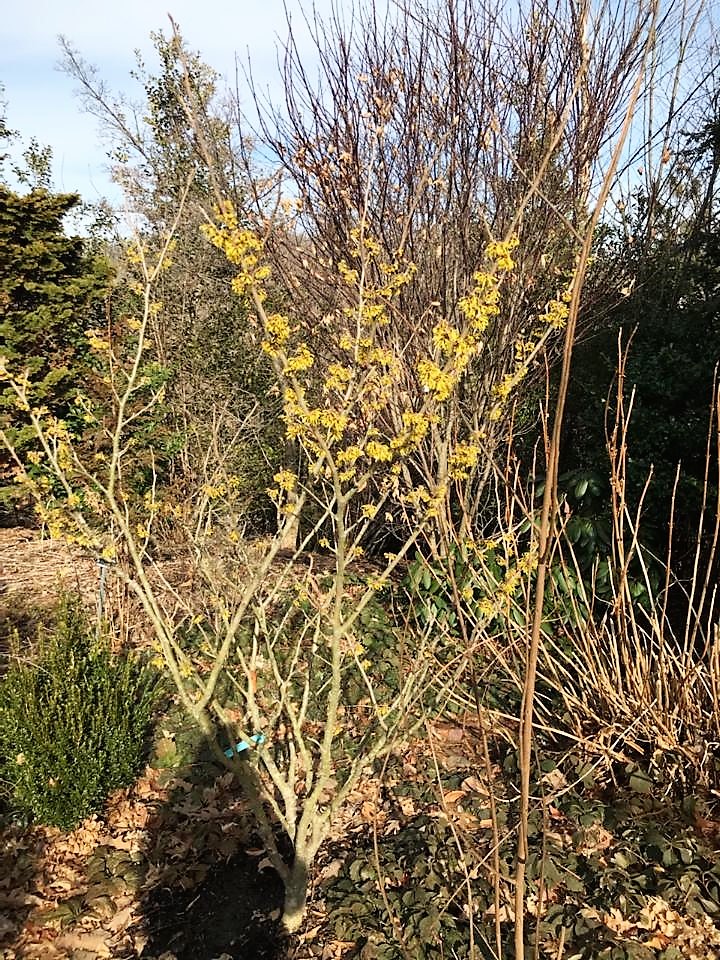
Witch-hazel at Secrest Arboretum
(Photo:  Brad Will)
But let’s not be too distracted by the “origins debate.”  Instead, let’s consider just one example of the wonderful complexity found in the world of plants.  The plant in question is a tall, winter-blooming shrub or small tree known as witch-hazel (Hamamelis virginiana).  Did I say “winter-blooming?”  Yes!  Native witch-hazels generally bloom in late fall; whereas, hybrids may bloom in winter and as late as March.  In his
Nature Notebook column, Herb Broda cites Paul Snyder, program coordinator at Secrest Arboretum (The Ohio State University, OARDC-Wooster, Ohio), who confirms that the arboretum is home to at least 50 witch-hazel plants.


Witch-hazel flowers are closely attached to its woody branches.  Each flower has four slender, bright yellow petals that can curl inward for protection during freezing temperatures.  The showy, fragrant, and nectar-filled flowers hint that one or more animal species are being attracted to accomplish pollination.  But what animal pollinator would be sipping nectar from witch-hazel flowers during winter?

For many years, scientists had been observing witch-hazel plants in bloom to determine what animal species were attracted to the flowers.  No success.  Then, two physiological ecologists, Bernd Heinrich and his mentor and colleague, George Bartholomew, took up the task.  Their approach illustrates a presupposition of “good science” and a principle of “good scientific inquiry.” 


First, “good science” presupposes that knowledge of the natural world, or creation, is discoverable.   That is, the world around us reveals itself in objective terms and invites us to come to it in order to discover its secrets.  The resulting principle of “good scientific inquiry” follows logically.   Dr. Bartholomew expressed this principle of inquiry as follows:  Become a careful observer of the plant or animal under investigation and let it “tell [you] what questions to ask.”  Because Bartholomew viewed organisms as “inseparable from their environment,” a corollary to the above principle is, “to know the organism it is necessary to know its environment.”

Bernd Heinrich applied his mentor’s principle to the question:  How are witch-hazel flowers pollinated in the dead of winter?  Finding no pollinators in daylight hours, Heinrich hypothesized that the elusive pollinator is active in the nighttime environment.  Sure enough, he discovered a number of nocturnally active insect visitors to witch-hazel flowers.  These are members of the Noctuidae, a large family of moths with dull forewings and pale or colorful hind wings (
Heinrich, B. 1987. J Experimental Biol. 127, 313-332.

Next, Heinrich asked how small, “cold blooded” animals like the noctuid moths can be active in cold temperatures.  Again, by observing and letting the moths “tell [him] what questions to ask,” he discovered that noctuid moths are capable of shivering.  Because intense muscular contractions in animals generate heat, here Heinrich measured tremendous heat production by moth thoracic muscles, a process called thermogenesis.  In order for animals to be metabolically active in winter temperatures, they must either obtain heat from their environment as most invertebrates do by locating themselves in warm and/or sunny spots (ectotherms); or, they must use their own metabolic activity to generate heat within their bodies (endotherms).  The noctuid moths are considered endothermic because they generate heat by shivering. 


By initiating rapid thoracic muscle contractions at freezing temperatures, noctuid moths are able to warm the wing flight muscles of their thorax to temperatures as high 90 to 95o F.   Heinrich discovered that “maintenance of high thoracic temperatures at low air temperatures depends on (1) the ability to begin shivering at very low muscle temperatures, (2) a thick insulating pile, and (3) counter-current heat exchangers that retard heat flow to the head and to the abdomen, respectively.”  The heat exchangers allow heat to be concentrated in the thorax where it is most needed to promote rapid beating of wings for flight in cold temperatures. 

Flight enables the moths to obtain energy-rich nectar from witch-hazel flowers or from sap issuing from tree wounds.  Food, in turn, serves as fuel for heat generation and other metabolic activity essential for winter survival.  Because food and the opportunities to obtain it are scarce in winter, both food and heat must be conserved.  Conservation of food is accomplished by conserving heat, and body heat is retained by a thick, insulating pile around the moth’s thorax where heat is most needed.  In addition, in addition to the harmonious interaction of these three interdependent bodily systems, the life cycle of noctuid moths is turned around.  The moth larvae hatch and aestivate throughout summer and then the adults emerge to be winter-active.


How such an interdependence of the noctuid moths and the witch-hazel has come to exist is difficult to explain by accumulation of chance mutations and natural selection.  Absence or malfunction of any one physiological or morphological trait or sequence of interdependent parts would jeopardize the whole.  It is one thing to describe complex, interacting systems within an animal and within a plant and how they interact in synchrony between each other. But it is quite another thing to explain how these interactions occur.  Add to this the challenge of explaining how these interacting systems could have come into existence in the first place and you have an even greater challenge for science. 

Perhaps our wonder at the complexity of the interaction of witch-hazels and winter moths ought to bring us back to the approach of George Bartholomew and Bernd Heinrich.  Become a careful observer of the plant or animal under investigation and let it “tell [you] what questions to ask.”  It turns out that Job, an ancient man of faith in God, had already adopted this approach and it caused him to gratefully worship his Creator God (Job 12: 7-10):

“But now ask the beasts, and let them teach you;
      And the birds of the heavens, and let them tell you.
“Or speak to the earth, and let it teach you;
      And let the fish of the sea declare to you
.

And what should we to learn from observing the amazing world?  Shouldn’t we also ask the beasts and let them tell us, or ask the earth and let it teach us?   And then, we may come away in awe as Job did as he humbly concluded:

“Who among all these does not know
      That the hand of the LORD has done this,
In whose hand is the life of every living thing,
      And the breath of all mankind?


For ever since the world was created, people have seen the earth and sky. Through everything God made, they can clearly see his invisible qualities—his eternal power and divine nature.  So they have no excuse for not knowing God. – Romans 1: 20 NLT

Friday, February 14, 2020

Does Theology Trump Science
in the Pursuit of Truth?

When discussing truth and reality, a question that often arises is, “How do the truth claims of the Bible compare to the claims from philosophy, science, and history?”  Which has the higher authority?


Most Christians believe that God reveals Himself in two major ways-- through the special revelation of Scripture and through the natural revelation of creation.  For instance, some Christian theologians support a literal interpretation of Genesis 1 and 2 as a major part of biblical evidence for a "Young Earth," estimated in the thousands of years since creation.  Some scientists interpret their geological research on fossils to suggest that these once-living creatures were preserved under relatively rapid catastrophic conditions, not over millions of years.  Thus, scientific interpretation of the natural revelation would seem to corroborate Scripture to support a "Young Earth" position.

Other theologians interpret the Scriptures about creation in a more figurative or allegorical manner.  In their view, the "days" of creation in Genesis 1 refer to long ages of time.  Likewise, some geologists may interpret the fossil-bearing layers of rocks as having been laid down over long periods of time, suggesting an "Old Earth" dated in billions of years.  Evolutionary biologists view the fossil record as traces left behind as life evolved through natural selection acting upon gene mutations.

When there is apparent conflict between special revelation and natural revelation, adherents to the Judeo-Christian faith claim that the authority of special revelation trumps natural revelation.  Meanwhile, many in science claim that the power of human reason through the scientific method can or will reveal the total extent of reality with an superior authority over any revelations from God.  Which side is correct in this age-old confrontation between two views of how humans can know truth and reality?

In a recent article by Jacob Brunton, entitled “Revelation and Responsibility,” appearing on the website For the New Christian Intellectual, the author asserts that both special revelation and natural revelation are equally authoritative because both are God's revelation, equally backed by His authority.  In defense of this claim, Brunton opposes the belief of those who claim  that “all other sources of truth must be submitted to Scripture; that general revelation, at the end of the day, must be submitted to special revelation; that philosophy and science and history must all ultimately “bow the knee” to the Bible.”

Does Jacob Brunton sound heretical?  Maybe so.  But let me invite you to read his article for yourself.  There, Brunton explains that the difference between special revelation and natural revelation is not that one source carries more truth or authority than the other source.  Instead, because the nature of the special and natural revelation of God are different, and both require interpretation, the means of understanding each will be different.  Both inspired Scripture and the created order are authoritative, but the interpretation of Scripture by theologians and the interpretation of the natural world by scientists and philosophers requires reason—and reason enlightened by faith. 

Yes, both theological interpretation of God’s revelation and philosophical-scientific understanding of the natural order are enhanced by the submission of intellectual reasoning to the Spirit of God as teacher and guide (John 16: 13).  From the special revelation, we read in Romans 1: 20-22 that the evidence of God as omniscient Creator can be clearly seen, being understood by the things that are made… so that they are without excuse…  But, when they knew God, they glorified him not as God, neither were thankful; but became vain in their imaginations, and their foolish heart was darkened. Professing themselves to be wise, they became fools…  When scientist and philosopher deny God and the authority of His Word, the futility of their thinking blinds their vision of creation, leading to distorted “faiths” such as deep ecology, pantheism, and animism.

But, lest theologians deny that misdirected faith and reason can cause equally grievous distortions of the special revelation of Scripture, let them be reminded of the history of biblical heresies that have caused disruptions of local churches and whole denominations; or, to the development of religious cults.  The biblical revelation is inspired by God and carries authority, but, like the humble, honest, and inspired scientist, so must the theologian be dedicated to the humble, honest, and inspired labor of correct exegesis of Scripture.  Both scientists and theologians are stewards of the manifold grace and revelation of God.  Johannes Kepler (1571-1630), the German astronomer who discovered three laws of planetary motion humbly acknowledged to God his stewardship of both God-given faith and reason:

I give you thanks, Creator and God, that you have given me this joy in thy creation, and I rejoice in the works of your hands.  See I have now completed the work to which I was called.   In it I have used all the talents you have lent to my spirit.

How do we deal with the apparent contradictions between Scripture and science?  Where apparent contradictions occur, such as with regard to interpreting the age of the Earth, humble inquiry and reverence must guide both theologian and philosopher-scientist toward all of God’s revelation.  It follows that the resolution of apparent contradictions or conflicts between special and natural revelation becomes the intellectual responsibility of both the theologian and the philosopher-scientist.  As Brunton states, “rather than submitting one form of God’s revelation to another, we must instead labor to submit our understanding of each to both.”  For a more detailed study of how “submitting of each to both” can be carried out, I refer you to an article by Leonard Brand (below) which contains a helpful integrative model, and which is included here for your consideration.


How About You?
May I encourage you to read Jacon Brunton’s article, “Revelation and Responsibility.” I welcome your insights using the “
Comments” link below. 

Further Reading:
Brand, Leonard.  2004.  A Biblical Perspective on the Philosophy of Science.  http://www.aiias.edu/ict/vol_31B/31Bcc_043-080.pdf
Pearcey, N.R. and C.B. Thaxton.  1994.  The Soul of Science:   Christian Faith and Natural Philosophy.  Crossway Books, Wheaton, IL.

Acknowledgement and Dedication:
I have dedicated this article to my colleague and friend, Dr. Allen Monroe, from whom I have learned much about integration of faith and learning; and, from whom I anticipate learning more if he were to offer his critique of what I have written here.