Tuesday, May 16, 2023

A Year Older: What Do I Know?

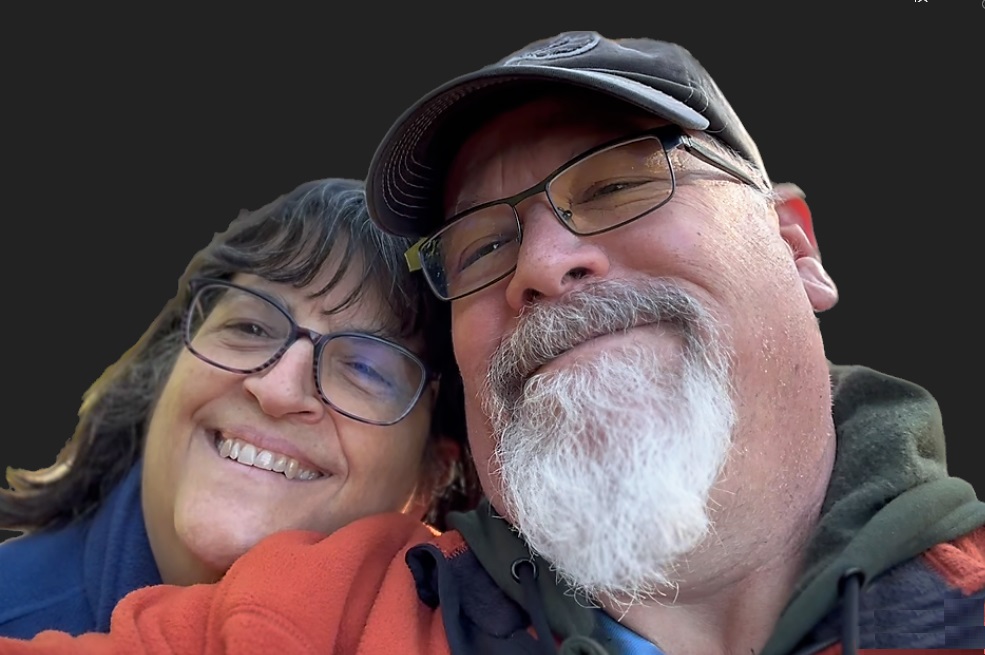
Last week we celebrated my birthday.  Seventy-five more candles have been added to my birthday cake since the time when there was only one candle—figuratively speaking, that is.  Otherwise, at my current age, we would have needed a burning permit.

Seriously, I am very thankful for my many blessings during more than three-quarters of a century of life-- the blessings of love in marriage, loving family and friends, opportunities for meaningful service to others, material sufficiency, and religious and political freedoms for which I owe the blood, sweat, and tears of many.  But there’s more.

Greater to me than any material and relational blessings is God’s gift of faith to believe in His provision of salvation and Eternal Life through Jesus Christ which I received, in 1972 (Ephesians 2: 8-9).  Since then, each spiritual blessing has only made more obvious to me “the goodness of God” (Romans 2: 4).  But strangely, my blessings and successes have tended to draw me away from dependence upon God.  It is through the trials that God teaches me to realize my need to rely upon His help.  This principle is affirmed by New Testament writers like James (James 1: 2-4) and Paul (Romans 5: 1-5).

This blog is the result of my personal “birthday reflections” on “things I know.”  It is also about who I’m hoping to know more clearly—especially, God and myself.  To all who choose to read further, I hope my ponderings will be helpful and seen as humbly expressed.  [Find my last years’ “Reflections at Age Seventy-five” by clicking
HERE.]

Firm Foundation in a Changing Culture
Back to the lone candle on my first birthday cake: when I imagine myself as that lone candle, I can feel the increase in temperature with each added birthday candle.  Like the proverbial frog in a gradually warming pan, the change in temperature is hard to detect.  But, during the past decade, it seems that the culture is approaching the boiling stage.  Each day’s news suggests a new challenge to the moral foundation upon which America was founded.  The boiling water in the pan has become like angry waves pounding against the shoreline.

Although the waves of change have been eroding our moral and political foundation for years, the COVID pandemic has seemingly increased the rate of change in our culture.  During the past three years, we saw the erosion of our individual freedom of speech, freedom to assemble, and freedom to make individual health choices.  All of these changes we later learned were imposed while many were being denied access or persuaded to ignore reliable scientific reporting. 

At the same time, online teaching during the pandemic informed parents of the morally and historically inaccurate content to which their children were being exposed.  Now, as children struggle to regain their social and emotional footing from the lockdowns, they are more easily confused and influenced by media and peer pressures related to gender identity, distorted accounts of American history, and woke ideology.

I can only imagine how the current moral confusion would have affected me as a child.  Even as a mature adult, it is unsettling for me at times.  Yet, I am encouraged to remember that history records many traumatic periods.  The psalmist David wrote:

"For, behold, the wicked bend the bow,
They have set their arrow on the string

To shoot in darkness at the upright in heart.

“If the foundations are destroyed,

What can the righteous do?”  (Psalm 11: 2-3)

Many in our world can relate to David’s response to the uncertain and fearful situations in his world of 1,000 BC.  Yet through the inspiration of God’s Spirit, David gives us a reassuring answer to our frustration and fears:
In the LORD I take refuge…
The LORD is in His holy temple;
the LORD’S throne is in heaven;

His eyes see, His eyelids test the sons of mankind (Psalm 11: 1, 4).

When David felt the foundations crumbling beneath him, he knew where to turn for refuge: “In the LORD I take refuge.”  

Of course, the “foundations” of which the Scriptures speak are not entirely physical.  They are also mental and spiritual in nature.  The Apostle Paul was very aware that “we wrestle not against flesh and blood but against spiritual wickedness in high places” (Ephesians 6: 12).  Paul’s answer is to challenge us to “put on the full armor of God which includes the “helmet of salvation,” the “belt of truth,” and the “sword of the Spirit which is the Word of God (Ephesians 6: 14, 17).  All of these armaments are intended to protect our minds and how we think.

How do we maintain our mental, emotional, and spiritual health in a culture in which the spiritual foundation crumbles and "ancient boundaries" are ignored?  The Apostle Paul’s answer was to “put on the whole armor of God” (Ephesians 6: 11).  He wrote to Timothy with this testimony:  I am not ashamed, for I know whom I have believed, and I am convinced that He is able to protect what I have entrusted to Him until that day.  Note the highlighted references to “knowing, believing, and entrusting.”  All of these involve our minds and reasoning.

Being prepared with God’s mental and spiritual armor to live in a spiritually crumbling culture means we should be a people who “know something!  We ought to know the truth about God, about ourselves, and about the world in which we live.  How about you?  What can you say for sure that “you know?”  Here are some “things I know” based on my recent birthday reflections:

These Things I Know:

I Am Seen
Although there have been many times when I thought I could run and hide from my parents, and later in life, from God Himself, I learned that trying to hide is pointless.  David expressed this so well in Psalm 139: 11-12:

If I say, “Surely the darkness will hide me,
   and the light become night around me”—
even the darkness is not dark to You,
   but the night shines like the day,
   for darkness is as light to You.

In Genesis 16: 14, we are introduced to the “God who sees” (El Roi).  God saw and had compassion on Abraham’s dismissed handmaid, Hagar.  When she and her son, Ishmael, were dismissed to make their way in the wilderness, Hagar is comforted and nourished by God whom she called El Roi.   Even if I am in the remotest part of the sea, David reminds me that, “even there His hand leads me, and [His] right hand shall hold me (Psalm 139: 10)?   God not only sees me but, through the revelation of His Son Jesus Christ, He is “the true light that gives light to everyone was coming into the world (John 1: 9).” 

Before 1972, as a student at Malone College, I was walking in darkness, dead in my trespasses and sin (Ephesians 2: 3-5).  My life was much like that of now beloved theologian, R.C. Sproul, who was on his way to party the night away when he ran into one of the captains of his football team at Westminster College.  The captain showed him Ecclesiastes 11: 3 which states, whether a tree falls to the south or to the north, in the place where it falls, there it will lie.  Sproul was convicted by the Word and Holy Spirit, saw himself as that fallen tree, dead and rotting on the ground.  He went home, was convicted that he was a sinner in need of God’s forgiveness and salvation, and called on God to save him.  Like Sproul, I too was dead and in darkness, but God found me.

I Am Not Alone
I know that I am not alone in this world.  I have a wonderful network of family and friends who love me.  But we’ve all experienced those times, either in a crowd or by ourselves, when a sense of aloneness and loneliness rolls over us.  We ask ourselves, “Does anyone really care about me?  Does God care?  Does He really see me now?”  Or, “Is there really anyone out there with whom I can continually relate?”

In times of our loneliness, the answers come from One who is never far away from us.  Although the Risen Christ ascended into Heaven, He promised His followers, as John 14: 16 records, that He would leave us “a Comforter” (also called “a Helper” or “an Advocate”).  He is the Holy Spirit of God who comes to abide within the life of every Christ-follower.

In his book, Gentle and Lowly: The Heart of Christ for Sinners and Suffers, Dane Ortlund writes, "Our tendency is to feel intuitively that the more difficult life gets, the more alone we are.  As we sink further into pain, we sink further into felt isolation. The Bible corrects us. Our pain never outstrips what He Himself shares in. We are never alone. That sorrow that feels so isolating, so unique, was endured by him in the past and is now shouldered by him in the present (p.48).”  Ortland concludes, "If you are in Christ, you have a Friend who, in your sorrow, will never lob down a pep talk from Heaven. He cannot bear to hold himself at a distance.  Nothing can hold him back.  His heart is too bound up with yours (p. 50)."

But God’s Spirit comforts us.  To “com-fort” is to “COMe with FORTification of faith,” by means of the Word of God.  Someone has said that the Spirit is the locomotive of our faith, but we must be “on the train tracks” of God’s Word for us to know the blessing of the Spirit’s power.  For me, God’s Spirit brings to mind Scriptures that have become real to me.  Here are some of those for your reference:   Psalm 1, 5, 12, 23, 31, 32, 42, 46, 62, 65, 84, 90, 91, 130, 131, and 139; John 1, 14, 17; Romans 5: 1-8 and Chapter 8; 2 Corinthians 1: 1-7; 4: 5-7 and 16-18; Ephesians 1: 1-2: 10; Philippians 3: 4-14; Hebrews 10: 19-39; 1 John 2: 1-2; 3: 1-3.

I Am Kept
Admittedly, most of us are comforted by the likelihood that our food and water will be there when we need it; law enforcement is there to protect us (barring many of our urban landscapes); and, many of us have a savings account and retirement funds.  But none of these are our ultimate “keepers.”  Only God is powerful and all-knowing enough to make and keep His promise that He “will never leave or forsake you ((Hebrews 13: 5).”  In the Gospel of John, chapter 10, Jesus presents Himself as the Good Shepherd.  Jesus says the sheep, representing those of us who know Him personally, they “hear His voice” (v. 3), “He calls them by name” (v. 3), “knows His own” sheep (v. 14), “lays down His life for the sheep” (v. 11), and He gives “eternal life to them, and they shall never perish; and no one shall snatch them out of [His] hand” nor His “Father’s hand” (v. 28-29).

What can be more assuring to us who know Christ than to have a personal relationship with a God who is good, righteous, and faithful to His promises.  Many of you can testify as I have just done that God (El Roi) sees us.  He is near unto us at all times as our Comforter and Advocate, and He keeps us as our Good Shepherd.  But, beyond these three assurances is the fact that God invites us into personal relationship with Him.

I Am Invited
Because of His unfailing love, since the Garden of Eden, God has sought to restore fellowship with the fallen descendants of Adam.  I am one of Adam’s fallen sons who, by His grace and mercy, God called and I responded in faith to come.  

In the Old Testament, God called through His prophet Isaiah, Ho! Everyone who thirsts, come to the waters… (Isaiah 55:1).  In the New Testament, God came as Emmanuel, “God with us.”  Emmanuel, as Jesus, stood on the great day of the feast, and cried out with the same words He spoke through Isaiah centuries earlier, If anyone is thirsty, let him come to Me and drink (John 7: 37). 

Jesus’ audience knew the severity of physical thirst and some responded to His invitation to come and have their spiritual thirst quenched.  Jesus still offers His loving invitation, but the human tendency is to disbelieve, reject, and run from Him.  Truth is, we don’t like what we see in ourselves.  And, we are afraid God won’t like it either.  Yet the Bible makes it clear from Genesis to Revelation that God loves His creation and He loves us. 

I Am Loved
I believe God loves me.  But, do I love myself?  And, what is there that God knows and loves in me that I ought to know and love?

The Bible endorses self-love as long as it is not a selfish love of self.  According to Jesus, the “Great and Foremost Commandment” is to love God with all your heart, and with all your soul, and with all your mind (Matthew 22: 37).  Jesus adds that the second is like it, ‘You shall love your neighbor as yourself’ (v. 39, emphasis added).   Let’s follow the logic of “loving God and loving ourselves.”

Applying ‘Love Logic
:
1) I cannot love my neighbor as God commands if I don’t     
    love myself.
2) If I don’t love myself, I'll tend to hide or run from God. 
3) In spite of what I know and think about myself,
    God knows (Psalm 139) and loves me (John 3: 16).
4) I must come to know God who knows and loves me so
    that I can know myself more nearly as God knows me…
5) … which, in turn, will give me more of God’s love to
    offer back toward Him, toward my neighbor, and toward
    myself.

It seems clear that loving God and loving ourselves are bound tightly with knowing and loving God, and knowing and loving ourselves.  To understand and apply this knowledge, I’ve been digging deeper.  Please stay and follow me as we dive deeper.

Knowing God, Knowing Ourselves
So far, we have discussed “things I know” as a part of my relationship with God.  Because of God’s nearness and love, I know that I am seen, I am not alone, I am kept, I am invited, and I am loved.  All of these assurances point to one purpose of God toward me:  That I might know God; and, the more I come to know God, the more I love Him and want to please Him (1 John 3: 22), and love and enjoy what He loves and enjoys; namely, myself and others. 

In The Gift of Being Yourself:  The Sacred Call to Self-Discovery InterVarsity, 2015), David G. Benner writes, "Christian spirituality involves a transformation of the self that occurs only when God and self are both deeply known… There is no deep knowing of God without a deep knowing of self, and no deep knowing of self without a deep knowing of God. John Calvin wrote, "nearly the whole of sacred doctrine consists in these two parts: knowledge of God and of ourselves (p. 22)."

Ignore Knowing Self
Some of us have emphasized “knowing God” while minimizing the importance of knowing ourselves.  But Benner warns against this view: “One consequence of our tendency to focus on knowing God and ignoring knowing ourselves is that we "may produce an external form of piety, but it will always leave a gap between appearance and reality. This is dangerous to the soul of anyone--and in spiritual leaders it can also be disastrous for those they lead (page 22)
."

Benner concludes, "Knowing God and knowing self are therefore interdependent.  Neither can proceed very far without the other. Paradoxically, we come to know God best not by looking at God exclusively, but by looking at God and then looking at ourselves-- then looking at God, and then again looking at ourselves. This is also the way we best come to know ourselves.  Both God and self are mostly fully known in relationship to each other (p. 27)
.”


Continue in the Word
But what does it mean to "look at God?" Jesus gives an answer in terms of our discipleship.  In John 8: 31-32 (emphasis added), Jesus invites those Jews who had believed Him, If you continue in My word then you are truly disciples of 
Mine and you will know the truth, and the truth will make you free.  The emphasis of Jesus's instruction is continuing in, abiding in, and submitting to God's Word as a disciple in order to know the truth.  Ellicott interprets Jesus’s invitation in terms of Jesus’s intercessory prayer for His disciples, "Sanctify them in the truth: Thy word is truth (John 17: 17).”  And where do His disciples look for truth?  We look to Jesus who said to Thomas, "I am the way, the truth, and the life (John 14: 6)."

The Apostle Paul pictured “knowing God” as the spiritual transformation (and transfiguration) that comes from actively looking at God (emphasis added):  And we all, with unveiled face, beholding the glory of the Lord, are being transformed into the same image from one degree of glory to another (2 Corinthians 3: 18).  In reference to "beholding the glory of the Lord," Jackie Hill Perry, in Holier Than Thou: How God's Holiness Helps Us Trust Him, 2021, B&H Publishing), asks the question, "but where do we look?  What can show us such glory that we might be changed by it?  

Where we look is simple, accessible, and not hidden from us.  It is the Holy Scriptures that put forth a constant picture of God, as He is to be seen and understood.  Inspired by the Holy Ghost, preserved by Him, and interpreted with His illuminative help too, it is there, in the pages scattered with narratives, songs, poems, and letters, that we can behold Christ.
  Perry cites the wonderful account of the resurrected Christ opening the Scriptures to the two confused men on the road to Emmaus (Luke 24: 27).  In this account, our Risen Lord shows how the light of truth from the Word of God can shine forth the glory of Christ.  After Christ had opened the Old Testament Scriptures to them, the men exclaimed, Were not our hearts burning within us while He talked with us on the road and opened the Scriptures to us (v. 32)?”

In summary, when we become His disciples and accept Jesus’s invitation to “continue in His Word,” our lives are transformed 
because we come to know the truth—truth about God, and truth about ourselves.  Maybe you noticed the repeated association between “truth” and “light” in the Scriptures above.  As we are transformed by continuing upon God’s truth, the Word brings light which dispels spiritual darkness.  Or, as Jesus promised, you will know the truth, and the truth will make you free (John 8: 32)."


Ellicott, explains beautifully the transformative power of truth and light: “The light of truth dispels the darkness in which lies the stronghold of evil.  Sin is the bondage of the powers of the soul, and this bondage is willed because the soul does not see its fearful evil.  When it perceives the truth, there comes to it a power which rouses it from its stupor, and strengthens it to break the fetters by which it has been bound.  Freedom from the Roman rule was one of the national hopes bound up with Messiah's Advent.  There is indeed a freedom from a more crushing foe than the legions of Rome.”

My Birthday Gift
Thanks to you the reader for staying with me for my birthday ponderings.  I hope they have been as spiritually encouraging to you as my study and writing of these things have been to me.  If you are a Christ-follower, I hope you are encouraged by the promises of Scripture that you are seen, not alone, kept, invited, and loved by God.  And, above all, that you have a new resolve to come to know God more, and in so doing, to love and enjoy Him; and, to love and enjoy what He loves and enjoys; namely, you, other people, and His creation in which you live.  Please use the “Comments” link below if  you’d like to share insights or questions; or, you may contact me at silviusj@gmail.com .

If you do not have a personal relationship with God through Christ that gives God’s love, joy, and peace, I urge you to contact me at silviusj@gmail.com . To learn more about the Good News (Gospel) of Christ and His Salvation, check out the
 simple outline, “Steps to Peace with God” by clicking HERE. It provides helpful Scripture and a prayer.

This is eternal life, that they may know You, the only true God,
and Jesus Christ whom You have sent
.  -- John 17: 3 

---------------------
Acknowledgement:
Our thanks to God’s Spirit for His inspiration in writing this blog; hopefully, it reflects His will and truth.   Thanks also to our granddaughter by marriage, G.S., for the gift of David G. Benner’s The Gift of Being Yourself; to our granddaughter, Kiara, for the gift of Jackie Hill Perry’s Holier Than Now; and, to Steve, our son by marriage, for the gift of Henri Nouwen’s The Selfless Way of Christ. 


Friday, May 5, 2023

Minding the Children – 3. What Can I Do?

“What Can I Do?” This question is being asked by parents, grandparents, teachers, pastors, and medical health professionals all over America and beyond.  Each of them play a role in one of the greatest challenges of our age—stewarding the health of children and young adults.  Health professionals across our nation report a desperate need for an effective approach to stem the tide of poor mental health outcomes and suicides.  In fact, addressing mental health is one of the top three health concerns in all medical centers nationally.

We thank many of you who have already read the first two articles entitled “Minding the Children.”  If you are now asking even more strongly, “What Can I Do?”, we thank God for your compassion and concern.  It is just like our Creator to love and care about “our neighbor,” especially “these little ones” as Jesus called them (Matthew 18: 1-6).  Compassion and restoration is the motivation of Robb and MaryEllen Fogg, directors of the Community Health Initiative, and co-authors of this article.

We have presented a complicated issue with lots of moving parts in both defining the problem and in offering a path to restoration.  So, this final part of our series will simply serve a sort of GPS to everyone who is asking, “What Can I Do?”  We hope it will lead you or someone you care about to begin the good journey toward restoration.  You will be guided through a series of stops along the journey starting with identification of the problem faced by so many children, adolescents, and even adults—hormonal dysregulation and resultant emotional dysfunction.  Then, we will expose the real roots of the problem and point you to a series of online videos and other resources needed for overcoming the dysfunction.

As you navigate through the links below and become more informed of the problem and the program’s path toward restoration, try to identify characteristics and behaviors you have observed in yourself or your family and friends. If you are a person of faith in God, pray for a mind of understanding and a heart of love and compassion.  None of us have reached a perfect physical and emotional state.  But we are called to bear one another's burdens, and so fulfil the law of Christ. (Galatians 6: 2).  For the whole law can be summed up in this one command: “Love your neighbor as yourself (Galatians 5: 14).”   

We hope the resources below will equip you and/or loved ones with the understanding and practical tools that will bring flourishing where there has been dysfunction, frustration, fatigue, and despair.
 The “Acorns to Oaks” program itself is available online free to enrollees, and comes from people who understand from their own experience what hormonal dysfunction is and have a passion to be of help. 

INTRODUCTION TO THE PROBLEM
• “Minding the Children   1.  What Can I Do?”
A brief holistic view of childhood education starting in the womb and including the necessities for proper childhood development.  We explain the influence of childhood trauma (Adverse Childhood Experiences, or ACE’s, on mental, emotional, and physical health.


Go HERE

EXTENT OF THE PROBLEM
• “How Childhood Trauma Affects Health across a Lifetime” [VIDEO of a TED Talk by Nadine Burke Harris, MD Pediatrician]

Go HERE

HPA-Dysfunction 
• "Animated Tour of the Brain Showing Dysfunction" [VIDEO Animation]

•
 "Negative Effects of HPA-Dysfunction," 
by Robb Fogg [Technical Paper]

•
 Dysregulations That Come with "Fight or Flight" [VIDEO by Robb Fogg]

•
 Brief Explanation of How to Turn Off "Fight or Flight" [VIDEO by Robb Fogg]


Go
HERE


Go HERE

Go HERE


Go HERE

INTRODUCTION TO THE PROGRAM
• “Minding the Children” 2.  Path to Restoration”
Robb and MaryEllen Fogg share their personal testimony and explain their free online program called “Acorns to Oaks.”  This program allows children and parents to cooperate in an interactive manner to assess the current health status of their child or adolescent.  Users of the program who give disciplined attention to improving their health scores on each of five biological baselines (Hydration, Nutrition, Sleep, Breath, and Play) will progress in improving their physical, mental, and social well-being.

Go HERE

ENROLLMENT IN THE PROGRAM
• This link allows children and adolescents, supervised as necessary by parents, to enroll in “Acorns to Oaks.” Each enrollee in invited to complete the Daily Health Survey which will generate a score for each of five biological baselines: Hydration, Nutrition, Sleep, Breath, and Play.  Each enrollee is then given access to the unique Interactive Tracker which reports scores for each of the baselines.  As enrollees make progress in improving their baselines, they will be able to see their scores with color coding on their own personal Life Fuel Dashboard accessed through their “Acorns to Oaks” phone app. 

Go HERE


INCENTIVES FOR ACHIEVEMENT
One incentive is the gift of "getting one's life back" and the experience of "living in the present" rather than bearing the weight of past adversities and being anxious about the future.  Plus, achievers will be afforded a "Nature Imersion Experience" in a beautiful outdoor setting where personal disciplines and biological baselines can be further enhanced.  


Now, the Readers' Turn:
We have discussed the alarming prevalence and consequences of adverse childhood experiences among adolescents, young adults, and parents.  Robb Fogg has launched a multi-faceted program to address HPA Dysfunction and to bring freedom and restoration to those locked in a cycle of cognitive, emotional, and spiritual turmoil.   If you or someone you know appears to be struggling under the effects of dysfunction and wants to find help, we urge you to avail yourself of "Acorns to Oaks" using the appropriate links above.

Finally, we hope you sense that we have a personal interest in helping those who are struggling.  We urge you to share your experiences, questions, and ideas using the “Comment” link below.  Your insights and experiences that will further add to the value of this discussion.  You may also e-mail us at
silviusj@gmail.com . To contact or offer financial support or expertise to Robb and MaryEllen Fogg, directors of the Community Health Initiative, please contact them at robb@10000atoms.com

Sunday, April 30, 2023

Minding the Children – 2. Path to Restoration

For many of us, especially adults, a favorite pastime is to looking through old photo albums.  While older adults enjoy “leafing through” prints in old photo albums, younger adults and adolescents "flip through” their digital albums on their hand-held devices. 

Regardless of our method, our photo collections bring many memories—some good, some not so good!  In fact, some children and adults try to blank out bad memories of experiences that have left deep emotional or even physical scars on their lives.  Experts in child health and education consider the prevalence of adverse childhood experiences (ACE’s) and the resulting emotional dysfunction as a major health crisis in America and worldwide. 

In 
Part 1 of  "Minding Our Children" (Click HERE), we discussed the necessities that each child should receive in order to grow and mature physically, mentally, and emotionally.  As the child’s body, mind, will, and emotions mature in a healthy way, they work together to shape the heart of the child as a person preparing to navigate life’s challenges.  The child’s physical, emotional, and spiritual health continue to mature under good parenting in a stable home life, and by formal education that complements what the child learns at home.  While young children cannot decide their heredity or environment, both of these are important determinants of health and character.  Many children inherit unfavorable genetic traits which may be compounded by adverse childhood experiences (ACE’s) which, in turn, impact physical and emotional health, ability to think, make good choices, and learn.  Although God’s Spirit can override our flesh and its limitations, humanly speaking ACE’s can rob anyone of the mental and emotional health necessary to surrender and walk within the power of the Spirit of God. 

Having pointed out the serious and widespread problem of adverse childhood experiences and the associated theory and selected terminology in
Part 1, we now turn from theory to practical application and solutions to the problem.  Here we offer personal experience and insights through an interview with a man who has personal and professional experience with the effects of ACE’s on the quality and longevity of life.

Interview with Robb Fogg

My friend and brother in Christ, Robb Fogg, is a veteran biology teacher in southwest Ohio.  Our interview format below is a composite of numerous conversations with Robb about how he and his wife, MaryEllen have addressed his personal challenges that have resulted from many adverse childhood experiences.  We will also discuss how God has been using his experience with HPA-D to launch a multifaceted program to address this widespread problem among children and adults.

[JOHN ●]  Robb, thank you for co-authoring with me on Part 1, and taking time for this interview.  We want to hear from you as a teacher whose love and compassion for his students and their families has moved you and your wife MaryEllen toward a full-scale effort to provide a way out of the mental, emotional, and spiritual confusion and anxiety so common among students and families.
[ROBB ●]  Thank you for the opportunity to share what God has been showing me through my own life experience and through my teaching and research. 

[●]  First, give us a brief sketch of personal experience God has provided for you which has led up to the Community Health Initiative that you, MaryEllen, and colleagues now lead? 
[●]  When I entered the learning community at Cedarville University and you, Doc, became my academic advisor, I came from a very challenging childhood.  Looking back with what I have learned since then, I was the owner of the incredibly high ACE Score of 13!  In retrospect, I now believe I am a perfect example of the truth that “with God, all things are possible (Matthew 19: 26).”  By God’s grace and love extended through the campus community and my church, I graduated with a degree in biological science education.   

For the past 28 years, I’ve been teaching biology.  Most of those years I tried to engage my students from a social-practical perspective--Biology is life!  Living it, exploring it, enjoying the wonder right under our noses.  But, right under my nose, and within my skin, was a load of biological dysfunction and hypervigilance that was dominating me and keeping me from realizing how much it was affecting me and my family.  Like many polarized-thinking people, I could see my problem but I couldn’t solve it by myself.

[●]  How did you begin to make sense of your dysfunction?
[●]  Six years ago, MaryEllen and I were talking about a difficult experience I had as a child.  She said to me, "If you could go back in time what would you tell yourself?" I began to do the research and for the next 6 years, MaryEllen helped me process the research at a personal level.  When I began to understand the extensive problems that my dysfunction can cause, I realized how much it had affected me and my family across our lifetimes.  I also found evidence that HPA-Dysfunction is passed on genetically to seceding generations.  This is termed epigenetic inheritance.  Epigenetic inheritance occurs through environmental influence upon cytoplasmic components that regulate how our inherited genes (DNA) are expressed during development of our offspring.  Once I saw that I could reset my own HPA-Axis initially through drinking enough water (hydration) and Navy Seal breathing techniques, things just started falling into place and I began trying to present my findings to my students, family, and friends.

[
●]  Were there any other influences on your thinking?
[●]  Yes, besides the loving encouragement of MaryEllen, I was also influenced by a TED Talk by pediatrician Nadine Burke Harris, in 2014 (How Childhood Trauma Affects Health across a Lifetime).  I would highly recommend that your readers take time to watch this excellent 15-minute talk.  It could revolutionize to your thinking as it did mine.

[●]  As a biology teacher you began to understand how ACE’s were hindering your students’ learning and flourishing.  How prevalent are these negative effects among students?
[●]  According to my research, inner city students had ACE Scores of 8 or above.  One researcher reported that an ACE score of 6 correlates with PTSD.  Events like the COVID pandemic, inflation, hurricanes, and urban unrest are known to increase students’ ACE Scores.   Occurrence of HPA-Dysfunction increases as you go from upper (5%) to middle (15-20%) to lower socioeconomic class (50-80%).
[
●]  In simple terms, can you explain how chronic stress leads to HPA-Dysfunction and the resultant behavioral outcomes you have observed? 
[●]  Thank you.  Our neurohormonal system is incredibly complex and when a person’s stress becomes repeated and excessive, the system becomes dysregulated.  In his book, The Body Keeps the Score: Brain, Mind, and Body in the Healing of Trauma, Bessel van der Kolk M.D clearly explains our brain’s response to chronic stress; namely, the left side of the brain largely goes offline or becomes dysregulated.  It loses the ability to solve problems.  At the same time, the right side can identify the problems but has no solutions except to stir the emotions and feed messages to the adrenal gland which churns out adrenaline.  For obvious reasons, this condition is called “making your own coffee.”  The responses to the excess adrenaline are anger, anxiety, and energy expenditure.  Another byproduct of HPA-D is cortisol which interferes with sleep, creates insulin resistance, and can cause body wide inflammation that often leads to leaky gut.  I believe we have listed numerous other physiological and behavioral consequences of HPA-dysregulation.

[
●]  Your thesis is that HPA Dysfunction is tied to poor physical health and lifestyle.  What particular nutritional and lifestyle factors are you targeting?
[●]  Each person who enrolls in our “Acorns to Oaks” program to address HPA-D and hypervigilance must first register by completing our “Intake Form.”  Then, when they complete our “Daily Health Survey,” they will be introduced to five biological baselines and given a score for each baseline based on the health status data they provided in the Survey.  Each enrollee is then given access to our unique interactive tracker according to their current scores for each of the baselines.  The five baselines are as follows: Hydration, Nutrition, Sleep, Breath, and Play.   As enrollees make progress in improving their baselines, they will be able to see their scores with color coding on their own personal “Life Fuel Dashboard” accessed through their acornoasis.com phone app.  

Because God created us for relationships, with Him and with our fellow human beings, we have designed our habit tracker so that individuals can progress through the program in the context of families, teams, and communities.   For example, each parent can have his or her own dashboard and can see his son or daughter’s dashboard.  This unique perspective allows a parent to support the underlying biological stress rather than react negatively to the son or daughter’s dysfunctional behavior.

[
●]  Do you think children’s medical centers are making progress in research and clinical treatment of HPA-dysfunction in children?
[●]  Reports of mental health crisis in our children are dominating the news.  Addressing mental health is in the top three health concerns in all medical centers nationally.  Professionals across the health industry are reporting a desperate need for something to stem the tide of poor mental health outcomes and suicides.  A nurse who works in a children’s hospital told me that their staff is so overwhelmed with this problem among children that they are trying to treat the secondary effects of stress instead of addressing the cause.  The HPA-D has the children totally filled with anxiety and they don't know why.  This nurse stated that our approach will help dysfunctional individuals regain their sensory bearings.

[●]  As men of faith, you and I would agree that God’s Spirit and Word can overcome mental and emotional hindrances to a person’s repentance and acceptance of God’s gift of salvation through Christ’s death and resurrection.  But do you ever think that you are inviting hurting people to bypass repentance and spiritual courses of action?
[
●]  Doc this is a great question! I would take it back one step and consider that the total dysregulations caused by HPA-D hinder people from getting a good look at the loving offer God makes through his Son.  The dysregulations of HPA-D dampen the senses and interfere with a person's ability to make sense of abstract ideas.  As Christians, we understand that saving faith in Christ comes by hearing, and hearing by the Word of God (Romans 10: 17).  But, consider how abstract the following statement of the Christian Gospel might sound to someone unfamiliar with ideas of Christianity:  An all-powerful being entered our timeline, took on the biology of His own creation, arranged to be the ransom payment, was killed and came back to life in order that all mankind might have life, for all time, for anyone who would call on his name.  Abstract, right? 

What’s more, Jesus challenges His would-be followers to do more than “know the Scriptures” or “know about Him.”  He wants us to know Him deeply and personally!  To do this requires more than just to “know the Scriptures” or to “know about Him.”  Jesus said, If you continue in (remain in, think deeply about) My word, then you are truly My disciples; and you will know the truth, and the truth will set you free (John 8: 31-32).”  Isaiah 26: 3 promises that God will keep him in perfect peace, whose mind is stayed on Him. 

But HPA-D prevents the “quiet mind,” one necessary to contemplate abstract spiritual things.  It is like the static of radio entering your thoughts.  The higher your ACE Score, the louder the static interference.  Depression is showing up as people are having a harder time quieting their thoughts.  Hypervigilant people constantly process threats making abstract constructs challenging.  The Apostle Paul wrote that Satan, the god of this world has blinded the minds of the unbelieving so that they might not see the light of the gospel of the glory of Christ, who is the image of God (2 Corinthians 4: 4).  In contrast, “God is not the author of confusion” (1 Corinthians 14: 33).”  God arranges the details in our life path so that we might reach out to Him.  He did this so that they might seek God, and perhaps they might reach out and find him, though he is not far from each one of us (Acts 17: 27).” 

As a small boy under so much stress I reached out for God as if reaching for a light switch in a dark room.  I found Him and he found me.  Now, God is giving MaryEllen and I the motivation and enough understanding of biology and faith to be ambassadors to those He is calling into His Kingdom.

[
●]  So, I’m thinking that when a person is burdened with shame and other negative emotions, they may be less likely to seek spiritual help.  Am I right?
[●]  You are right!  Let's assume that you are experiencing dysregulations to some degree, and that you are trying to stop drinking or trying to live a pure life.   You go to the spiritual leaders for help and you bear your soul to receive spiritual counseling.  But you gain no insight on how to turn off the biochemical effects of the HPA-D.  You may decide, along with many others, that you will stop bringing your missteps into public view.  The idea of accountability and self-discipline within a spiritual context doesn't seem to work.  People walk away from the faith community because of the incongruence of the situation.  If someone chides you in the process, can you understand the added discouragement you would experience.  People leave the church.

Since using our method, I have found that my mind is more at peace because it doesn’t race as much.  I can turn off my racing thoughts and enjoy what is happening in the present.  I don’t worry about the past or the future because God provides what we need each day.  When I turn on the left side of my brain, I am able to process Life in the Spirit the way God intends.  In other words, by following our disciplined program to improve the five baselines, we can restore peace of mind, order to our thinking, and Joy in our hearts.  Philippians 4: 4-7 instructs the Christ-follower to
Rejoice in the Lord always; again, I will say, rejoice…Be anxious for nothing, but in everything by prayer and supplication with thanksgiving let your requests be made known to God. And the peace of God, which surpasses all comprehension, will guard your hearts and your minds in Christ Jesus.

The fruit of the Holy Spirit is among other things Joy!  But HPA-D chemically dampens the feeling of Joy.  In place of Joy, hormonal dysregulation causes anger, anxiety, selfishness (hypervigilance), self-doubt, loneliness, road rage and even the feeling of shame.  Learning to reset my HPA-D allows me to have a greater biochemical and spiritual capacity for Love, Joy, and Peace.

[
●]  What advice would you give to pastors and lay leaders?
[●]  Having been a pastor, I know the overwhelming feeling of trying to help people overwhelmed with family malfunctions.  Families, especially if a parent or parents suffered as children, are in a very difficult situation.  Spiritual Leaders in our community need to empower our families to establish strong mental health habits by establishing our biological baseline.  

When a family enrolls in our “Acorns to Oaks” program and takes our “Daily Health Survey” they can identify the baseline issues and take positive steps themselves.  The parent can view a summary of their children’s biological baselines so the parent can help the child work toward a more homeostatic life-style. You can see that our approach gives a community a tool to quickly identify the underpinnings of extensive malfunctions and provide practical solutions.  [CLICK on the graphic to enlarge.]

As I noted above, the church must adopt a more Christ-like compassion toward those who have given up on themselves and the church, and are suffering in emotional paralysis, addiction, and shame.  You and I have discussed the compassionate way in which Almighty God extended comfort to the Prophet Elijah when he was on empty physically, emotionally, and spiritually. God addressed each of these needs beginning with Elijah’s need for bread and water (1 Kings 19).

[
●]  Yes, and the same God came in the flesh as Christ, the Messiah. He gave us a model of comfort when he began a conversation with a hypervigilant, rejected, Samaritan woman who had had five husbands and was at the time in a live-in situation (John 4).  Jesus didn't come to her with a prescription from the Holy Scriptures even though they do have the answers.  Instead, He asked her for something that she had come to the well to get-- something which He knew she needed in both the physical and spiritual sense--water! By starting the conversation around His own basic physical need as a man, God in human flesh, Jesus was able to lead Her to "living water." When she believed and drank of this "living water" spiritually, her life began to be spiritually transformed.  This hypervigilant, rejected, Samaritan woman then cried out, "Come see the Man who told me all about myself!"

[
●
]  Jesus spoke to the Samaritan woman with compassion and empathy.  Beyond these, He COM+FORTED her, meaning "to COME with ‘FORT-ification’ of faith for a path forward.” 
 You and I have referenced a passage from 2 Corinthians 1: 3-4 which means so much to both of us.  Here, God invites the anxious and distressed to receive His abundant comfort through our Comforter (John 16:7).  Notice the highlighted phrases:
Blessed be the God and Father of our Lord Jesus Christ,
the Father of mercies and God of all comfort,
who comforts us in all our affliction
so that we will be able to comfort those who are in any affliction
with the comfort with which we ourselves are comforted by God.
Our Community Health Initiative depends upon our knowledge and technology, but we will fail if we don't reach out to distressed people with the comfort of Christ.

[
●]  Amen! And I believe the story you and MaryEllen are writing is clearly Spirit-led.  You thank God for calling you out of spiritual and emotional dysfunction, and yet we can see that God also used the compassion and comfort of MaryEllen.  I can see how this same spirit is being multiplied through your Community Health Initiative--an integration of faith and science, powered by God’s Spirit who guides with the Light from God’s Word and wise application of the biological and behavioral sciences.
[●]   Thank you.  That sums it up very well.

[
●]  In spite of your offering of a positive, proactive, faith-science based program of community health, why is there still institutional and social reluctance and resistance to your program?
[●]  “Adverse childhood experiences are the single greatest unaddressed public health threat facing our nation today” according to Dr. Robert Block, American Association of Pediatrics (2017).  The implications clearly extend beyond health to education, public safety, and our economy.  So why is it unaddressed?  I believe there are at least five resistances to progress:
1) Social resistance--Facing the notion of childhood stress is not very popular; yet this is the cause of HPA-D.
2) Hypervigilance often makes a person extremely defensive against efforts to help them.
3) Allostatic load drains energy and hampers the problem-solving part of the brain.
4) The church has “spiritual answers” but needs to follow Christ’s example of ministry to the “whole person.”
5) The medical health establishment is too focused on high tech and pharmaceutical approaches to simply prescribe personal discipline of attaining quantifiable baselines: water, good nutrition, breathing, sleep, and play.

[
●]  Would you elaborate on the apparent resistance from the medical community? 
[●]  Sure. Nadine Burke uses the contaminated well example: “You can write prescriptions for 100 cases of diarrhea or you can go find out what's in the well.’’ Instead of treating the symptoms, our approach addresses the base biological malfunctions.  Thus, by turning off the negative effects of HPA-D it reduces the hormonal dysfunctions and the subsequent physiological miscues.  For example, simply helping a person reach quantifiable hydration baseline relieves headache, brain fog, and constipation.  Or consider our breathing baseline--on three separate occasions we lowered blood pressure from 220/180 to 140/80 within two minutes in response to Navy Seal Breathing Techniques.focused on high tech and pharmaceutical approaches to simply prescribe personal discipline of attaining basic baselines: water, good nutrition, breathing, sleep, and play.

[
●]  Thank you, Robb; and please thank MaryEllen for sharing you with me for this interview.  I understand that your goal is to put an upgraded system into every school in a 5-state area.  Students could come and take the “Daily Health Survey” and begin to work with their biological baselines using the “Life Fuel Dashboard” to help them identify some of the root causes of their out-of-control feelings.
[●]  That is our goal.  We estimate the price tag on this data machine is $100,000.  We are currently seeking funds and expertise to help us put this community resource into play.  

But, as we said earlier, our leading edge must be in the power and wisdom of God, delivered with His comforting Spirit. I want to comfort others in their affliction with the comfort with which I was comforted.  Our invitation is open!  Visit us at “Acorns to Oaks” (Click HERE.)

NOW, READERS' TURN:

We have discussed the alarming prevalence and consequences of adverse childhood experiences among adolescents, young adults, and parents.  Robb Fogg has launched a multi-faceted program to address HPA Dysfunction and to bring freedom and restoration to those locked in a cycle of cognitive, emotional, and spiritual turmoil.

If you or someone you know appears to be struggling under the effects of dysfunction and wants to find help, we urge you to avail yourself of Robb’s Beta Test using the following links: 

Click
HERE to Enroll in the Beta Testing
Click
HERE for “Negative Effects of HPA Dysfunction,” by Robb Fogg
Click
HERE for a video explaining Hormonal Malfunctions

Finally, we hope you sense that we have a personal interest in helping those who are struggling.  We urge you to share your experiences, questions, and ideas using the “Comment” link below.  Your insights and experiences that will further add to the value of this discussion.  You may also e-mail us at
silviusj@gmail.com . To contact or offer financial support or expertise to Robb Fogg, please contact him at robb@10000atoms.com